

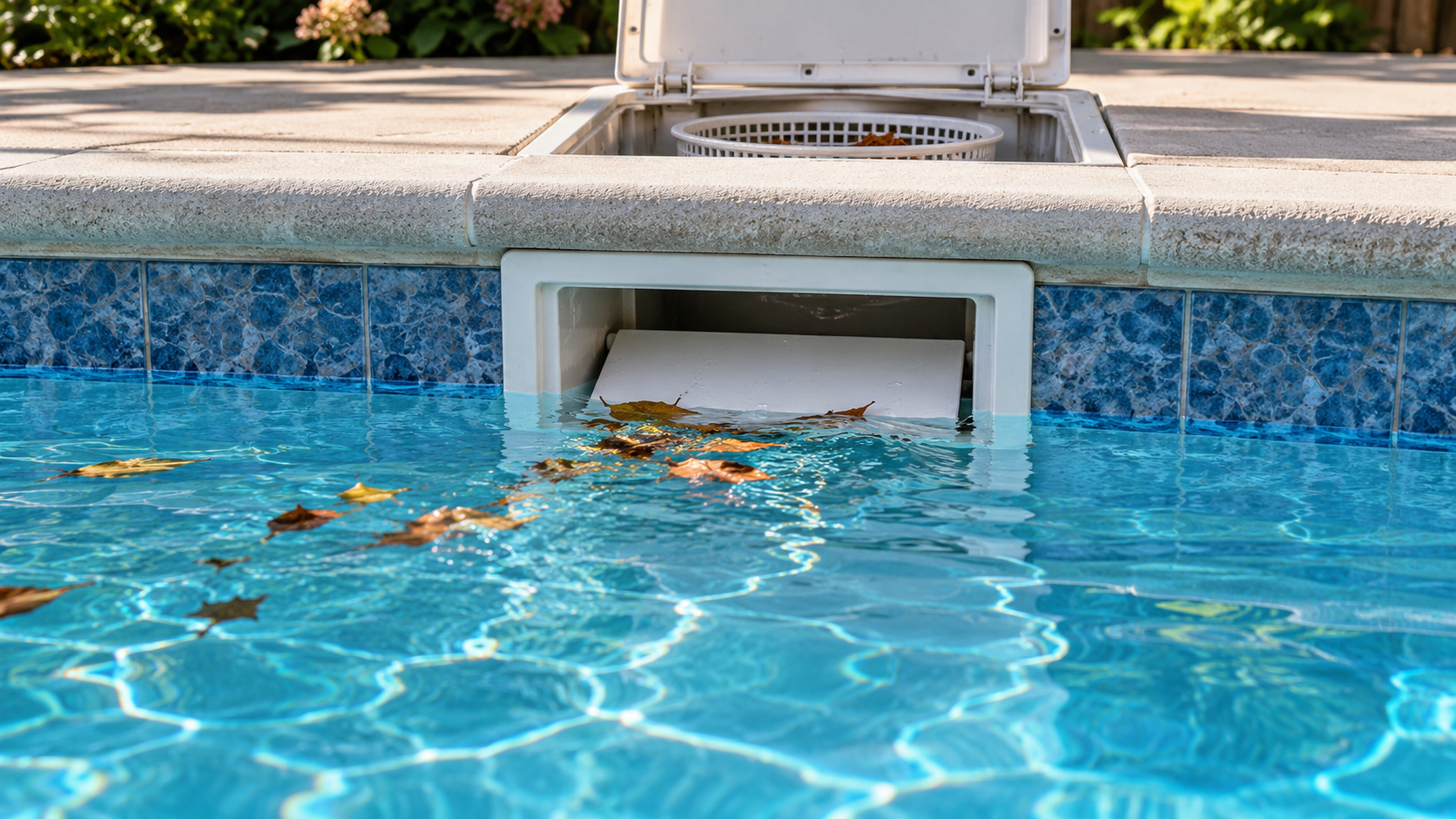
Swimming Pool Wall Skimmer Explainer
A wall skimmer uses the pool’s circulation pump to draw surface water through a rectangular opening near the waterline. Floating leaves, insects, and oils tend to remain near that upper layer, so pulling a thin sheet from the surface removes them before they sink. The water enters the skimmer throat, passes through a removable basket that catches larger debris, and then travels through plumbing toward the pump and main filter.
A hinged weir door at the mouth floats near the water surface. While the pump runs, flow tips it inward and water spills over its upper edge. The narrowed surface layer increases the sweeping effect immediately outside the opening. When the pump stops, buoyancy brings the door more upright, helping keep trapped debris from washing back into the pool as waves move water in and out of the skimmer throat.
The basket protects downstream equipment by intercepting objects too large for the pump impeller or filter. It must be emptied before blockage severely reduces flow. Some skimmers include a float valve or diverter that balances suction with a main drain or closes if the skimmer water level falls, depending on the system design. These components are not universal, so plumbing layout and valve positions follow the pool’s specific instructions.
Water level is critical. If it is too low, the skimmer can draw air, cause the pump to lose prime, and reduce circulation. If it is too high, water may pass above the weir without the concentrated surface-sheet effect. Wind and return-jet direction determine where floating debris travels, so a skimmer on the wrong side of the circulation pattern may collect poorly even when suction is adequate.
The pump is switched off before the basket, weir, or plumbing is serviced. A missing basket sends debris toward the pump; a stuck weir restricts flow or fails to retain leaves. Cracks, clogged lines, and air bubbles in the pump basket require attention. Suction fittings and drain covers are safety-critical components that remain compliant and intact, and swimmers stay clear during maintenance procedures directed by the equipment maker.
The skimmer succeeds by exploiting where debris floats. Pump suction establishes circulation, the weir focuses that circulation into the thinnest useful surface layer, and the basket separates large material before the water continues to filtration. It cannot clean every point instantly; wind, return flow, water height, and basket condition shape performance. A freely moving weir and clear basket let modest continuous flow do useful work across the whole pool surface.
The circulation pump draws surface water over a floating weir and through a basket that captures large debris before the water reaches the pump. Key terms include skimmer, suction, weir, surface flow, basket, float valve, prime, and return jet.
Its buoyancy keeps the top edge close to the surface, focusing suction on a thin debris-rich layer and helping prevent backflow when the pump stops.
Packed debris restricts the flow path, reducing water reaching the pump and increasing the chance of air entry or poor surface cleaning.
Explore more "Explainers"
Discover additional explainers across politics, science, business, technology, and other fields. Each explainer breaks down a complex idea into clear, everyday language—helping you better understand how major concepts, systems, and debates shape the world around us.