

On This Day in Business: June 7, 1955
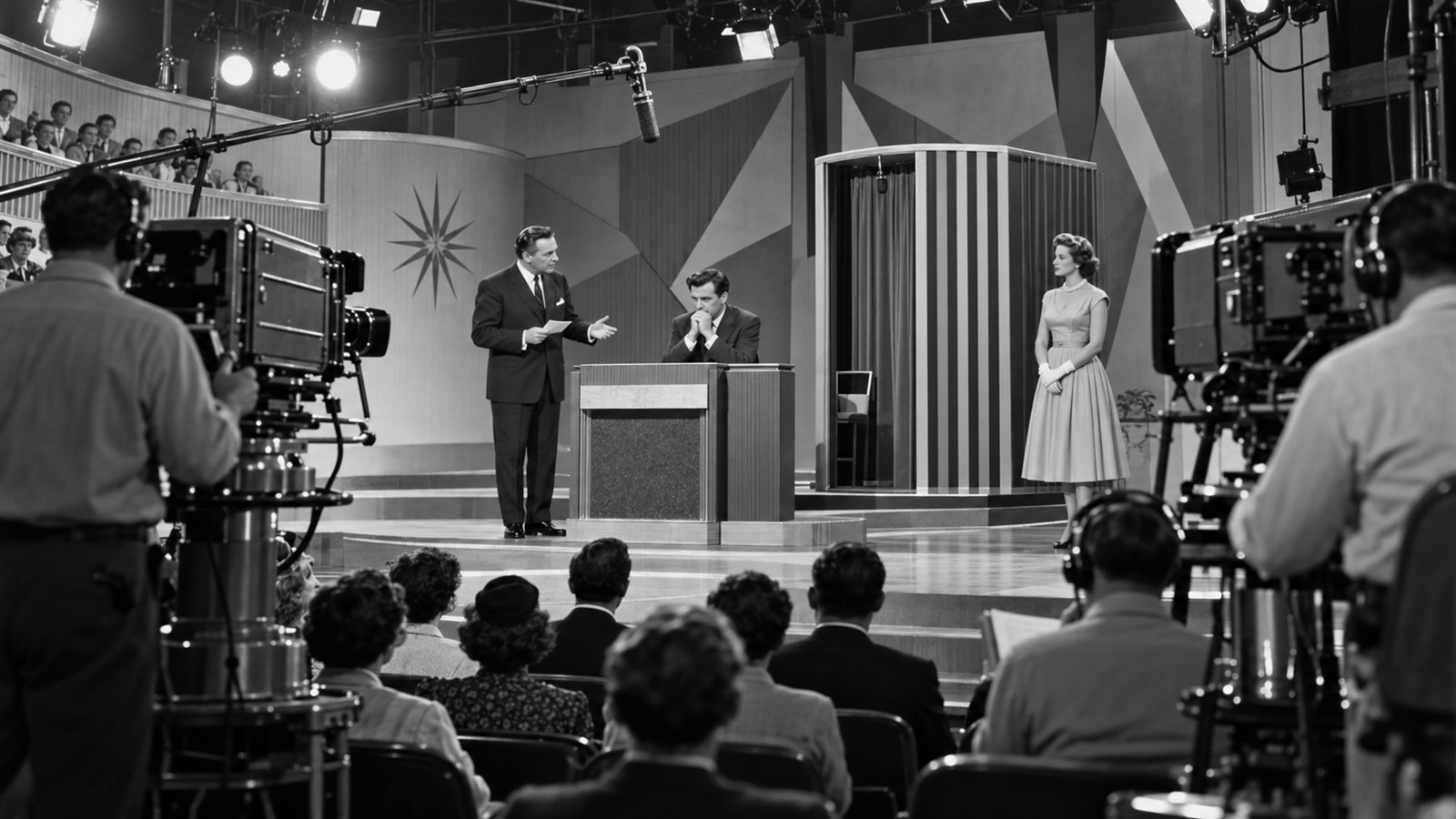
On June 7, 1955, The $64,000 Question made its live-camera debut on CBS and quickly became a national television phenomenon. The program adapted the radio quiz Take It or Leave It but multiplied the top prize from $64 to $64,000, a sum large enough to transform a contestant's life. Host Hal March guided players through increasingly difficult questions, while an isolation booth, security rituals, music, and carefully timed pauses turned knowledge into weekly suspense. Revlon sponsored the program and integrated its advertising into the broadcast. Within weeks, the audience reached tens of millions, proving that a single format could concentrate public attention at extraordinary scale.
The show's economics reflected the sponsor-controlled era of television. A consumer brand could finance a program, attach its identity to a popular experience, and reach households simultaneously through a national network. The prize was large, but it functioned as production expense and promotion: viewers returned to see whether contestants would risk accumulated winnings for the next question. Stories continued from week to week, lowering the need to rebuild audience interest from nothing. The format also created celebrities from ordinary participants and offered newspapers and radio abundant material, extending the sponsor's exposure beyond the paid broadcast slot.
Success encouraged competing quiz shows and ever larger prizes, but it also increased pressure to preserve drama. Later investigations revealed that producers on several programs had supplied answers or guided outcomes. The resulting scandal damaged contestants, sponsors, networks, and public confidence, even where the practices differed among shows. Congressional hearings and regulatory attention followed. Networks moved toward greater control over programming and away from arrangements in which one advertiser dominated a show. The episode demonstrated that an entertainment product built on apparent authenticity carries hidden liabilities when commercial incentives reward a result that audiences believe is unscripted.
The debut matters because it joined content, advertising, and audience psychology in a remarkably effective package. The same integration that created value also concentrated risk: if the contest was not what viewers believed, every associated brand suffered. Modern reality programs, influencer promotions, and gamified platforms still operate at that boundary between genuine participation and produced drama. Clear rules, independent oversight, and honest disclosure protect more than individual contestants. They preserve the asset that makes the format valuable—the audience's willingness to care about an uncertain outcome. The $64,000 Question showed how quickly attention can become a market and how quickly lost trust can shrink it.
The television format expanded a familiar radio quiz into a life-changing $64,000 prize and a highly theatrical studio event.
Isolation booths, security rituals, music, and cliffhangers made knowledge into serialized drama that viewers followed each week.
Revlon financed the program and gained national exposure through an era when sponsors often controlled television production.
Huge ratings encouraged rival programs, escalating prizes, and commercial pressure to deliver emotionally satisfying outcomes.
Quiz-show manipulation scandals later damaged audiences' trust and helped shift programming power from sponsors to networks.
The business lesson is that formats built on authenticity require safeguards strong enough to resist the incentives created by success.
Explore more of "On This Day ..."
Discover more events from the same date across news, politics, technology, sports, and other fields. Each link highlights significant moments that shaped history on different fronts.