

On This Day in Business: June 18, 1971
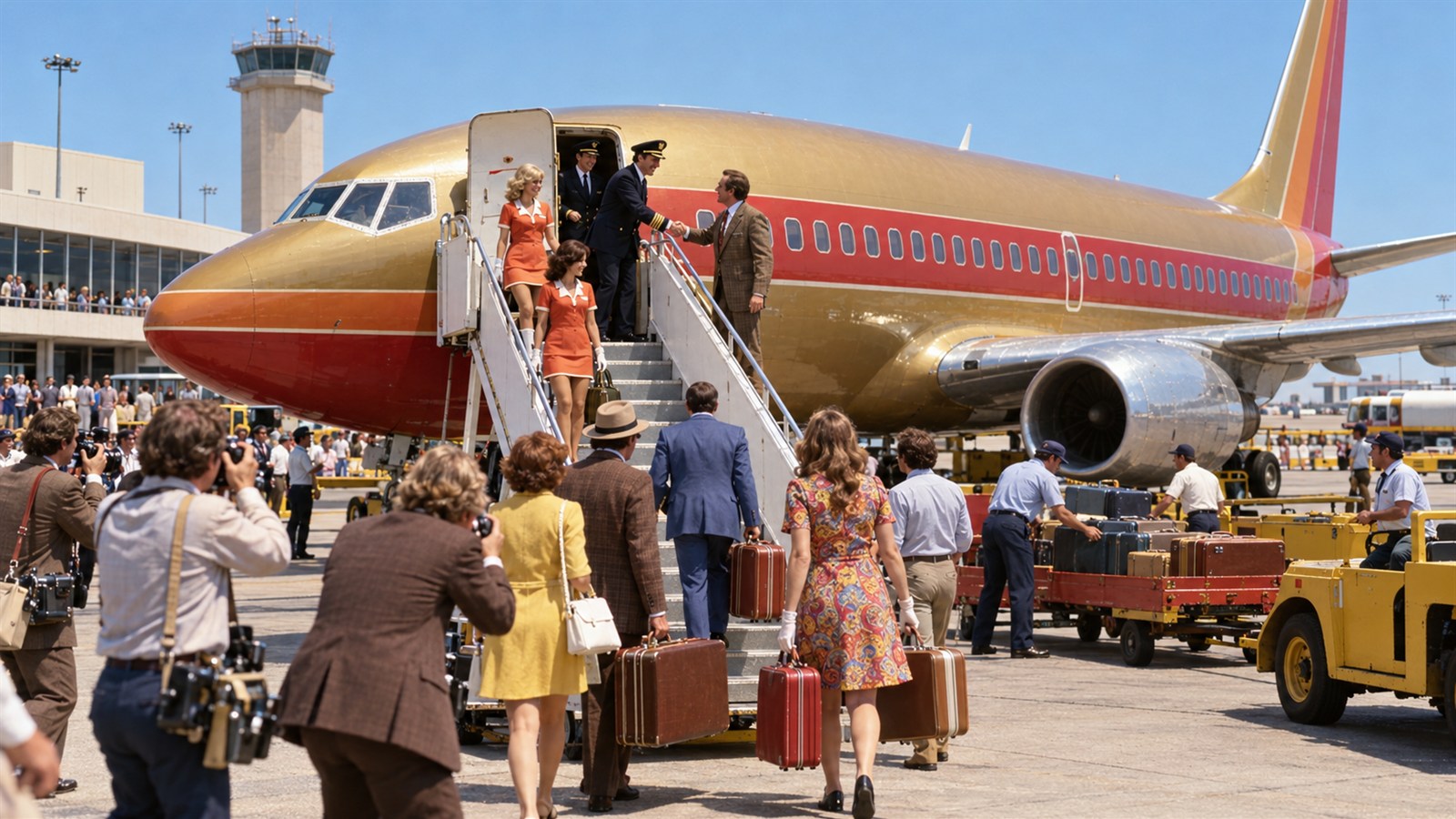
On June 18, 1971, Southwest Airlines began passenger service with three Boeing 737 aircraft linking Dallas Love Field, Houston, and San Antonio. The inaugural flights followed years of legal challenges from established airlines that sought to prevent the new intrastate carrier from operating. Southwest charged $20 one way on its Texas routes and promoted frequent, friendly, uncomplicated travel. Because it stayed within one state, the airline initially operated outside the federal route-regulation system that constrained interstate competitors. The first departures turned an idea drawn famously on a cocktail napkin into a working airline with schedules, crews, maintenance, tickets, and customers.
Southwest's model depended on operational choices reinforcing one another. A single aircraft type simplified pilot training, maintenance, and parts. Short routes and quick turnarounds kept airplanes earning revenue for more of the day. Point-to-point flying reduced reliance on complex connecting hubs, while simple fares made the offer easy to explain. Employees created a lively service culture that distinguished a low-price product from a joyless bargain. None of those practices was sufficient alone. Their combined effect produced lower costs and a recognizable experience, allowing price to attract passengers without making the brand feel purely transactional.
The airline survived early cash pressure by selling one of its four aircraft and designing a schedule that still required the remaining three to cover the planned flights. That constraint encouraged fast ground operations. As regulation changed and routes expanded, Southwest carried its system into new markets, though growth repeatedly tested the culture and simplicity that made it effective. The company listed shares under the ticker LUV, a reference to Love Field and its branding. Long profitability and strong customer recognition made Southwest influential, even as later technology, labor, fleet, and service disruptions showed that an admired operating model still requires renewal.
The first flights matter because strategy is strongest when many decisions fit together. Cheap fares were credible because fleet, scheduling, airports, labor practices, and turnaround routines supported them. A competitor could copy one visible feature without reproducing the system. Southwest also showed that constraints can sharpen design: legal boundaries focused the first network on a dense Texas triangle, and scarce aircraft forced better utilization. The lesson is not that every company should be low-cost or playful. It is that a market position becomes durable when the operating choices behind it are mutually reinforcing and clear to employees. The promise passengers heard in advertising had to be recreated on every departure.
Three Boeing 737s connected Dallas, Houston, and San Antonio when Southwest finally began service after legal battles.
Intrastate routes allowed the startup to pursue simple low fares outside the federal route regulation applied to larger rivals.
One aircraft type, short routes, quick turns, and point-to-point scheduling worked together to keep costs and complexity down.
A lively employee culture made the low-price experience distinctive rather than presenting passengers with an anonymous bargain.
Selling one early aircraft forced the schedule to use the remaining fleet more intensively and reinforced fast ground routines.
Southwest demonstrates that advantage comes from a connected operating system, not from copying one visible pricing or marketing tactic.
Explore more of "On This Day ..."
Discover more events from the same date across news, politics, technology, sports, and other fields. Each link highlights significant moments that shaped history on different fronts.