

On This Day in Business: June 26, 1974
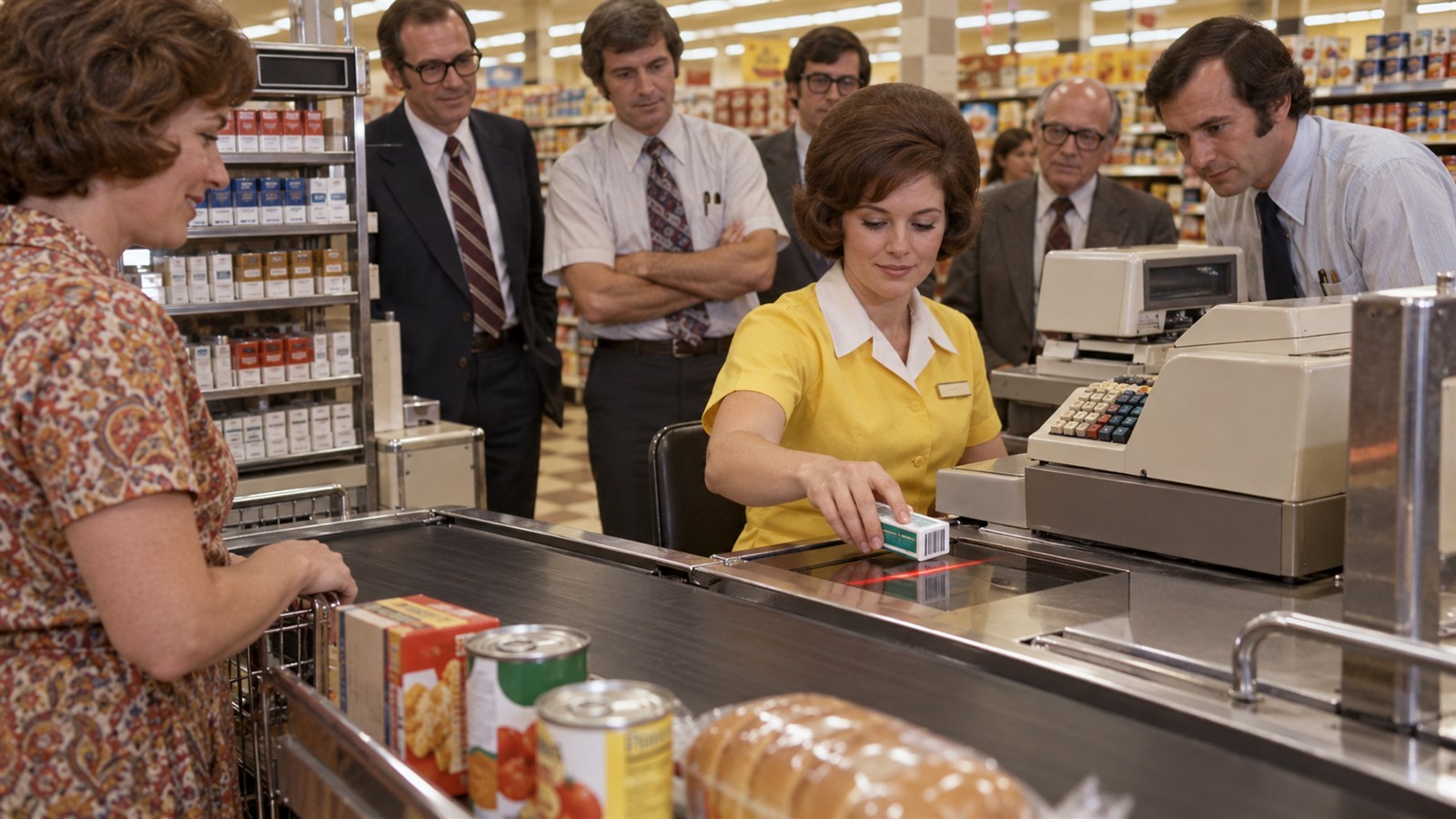
On June 26, 1974, a cashier at Marsh Supermarket in Troy, Ohio, scanned a ten-pack of Wrigley's Juicy Fruit gum using the new Universal Product Code system. At just after 8 a.m., the laser reader recognized the black bars, retrieved the price, and completed what is widely regarded as the first commercial UPC transaction. The event looked ordinary—a grocery item passing over a checkout counter—but it represented years of work by retailers, manufacturers, equipment companies, and standards organizations. A common machine-readable identifier could now connect a physical product with digital price and inventory records.
The barcode's value depended on agreement. Manufacturers had to print the same kind of symbol, retailers needed compatible scanners and databases, and each product required a unique number. A technically elegant code owned by one company would have been less useful than a standard accepted across the industry. Grocery stores faced substantial installation expense and the work of labeling shelves, entering prices, and training cashiers. The return came from faster checkout, fewer keying errors, better sales data, and eventually more precise replenishment. Adoption accelerated as participation made the system useful to more partners.
The scan changed operations beyond the cash register. Item-level sales data allowed retailers to measure promotion results, manage categories, reduce stockouts, and negotiate with suppliers using evidence. Manufacturers gained more consistent identification across distributors and stores. Warehouses used related codes to track cases and shipments. The familiar beep therefore marked the creation of a data trail through the supply chain. The technology also shifted power toward organizations able to analyze large transaction records, making information systems and data governance increasingly important parts of retail competition.
The milestone matters because standards turn isolated automation into shared infrastructure. The laser and symbol were necessary, but the durable innovation was a governance system that assigned identifiers and allowed many companies to invest with confidence that equipment would interoperate. Modern QR codes, radio-frequency tags, and product passports extend the same idea with more information. Their success still depends on common definitions, accurate source data, and incentives for each participant. The first gum scan illustrates how a tiny customer interaction can represent a much larger coordination achievement. When physical goods receive reliable digital identities, businesses can manage movement, price, and demand with a precision that manual records cannot match. The first item was intentionally mundane. Success did not require customers to learn a new ritual; the cashier handled a familiar purchase through improved infrastructure. Technologies often spread fastest when the innovation disappears into an existing task and produces better information without demanding attention from every user.
A ten-pack of Juicy Fruit gum became the first retail product scanned with a Universal Product Code in Troy, Ohio.
The checkout event linked a printed identifier on a physical package to a store's electronic price and transaction records.
Manufacturers, retailers, equipment makers, and standards bodies had to agree on symbols and unique product numbers.
Stores invested in scanners, databases, shelf preparation, and training before gaining speed and fewer keying errors.
Item-level data later improved replenishment, promotion analysis, supplier negotiation, warehousing, and category management.
The barcode became infrastructure because shared governance and interoperability made every participant's investment more valuable.
Explore more of "On This Day ..."
Discover more events from the same date across news, politics, technology, sports, and other fields. Each link highlights significant moments that shaped history on different fronts.