

On This Day in Business: July 11, 1893
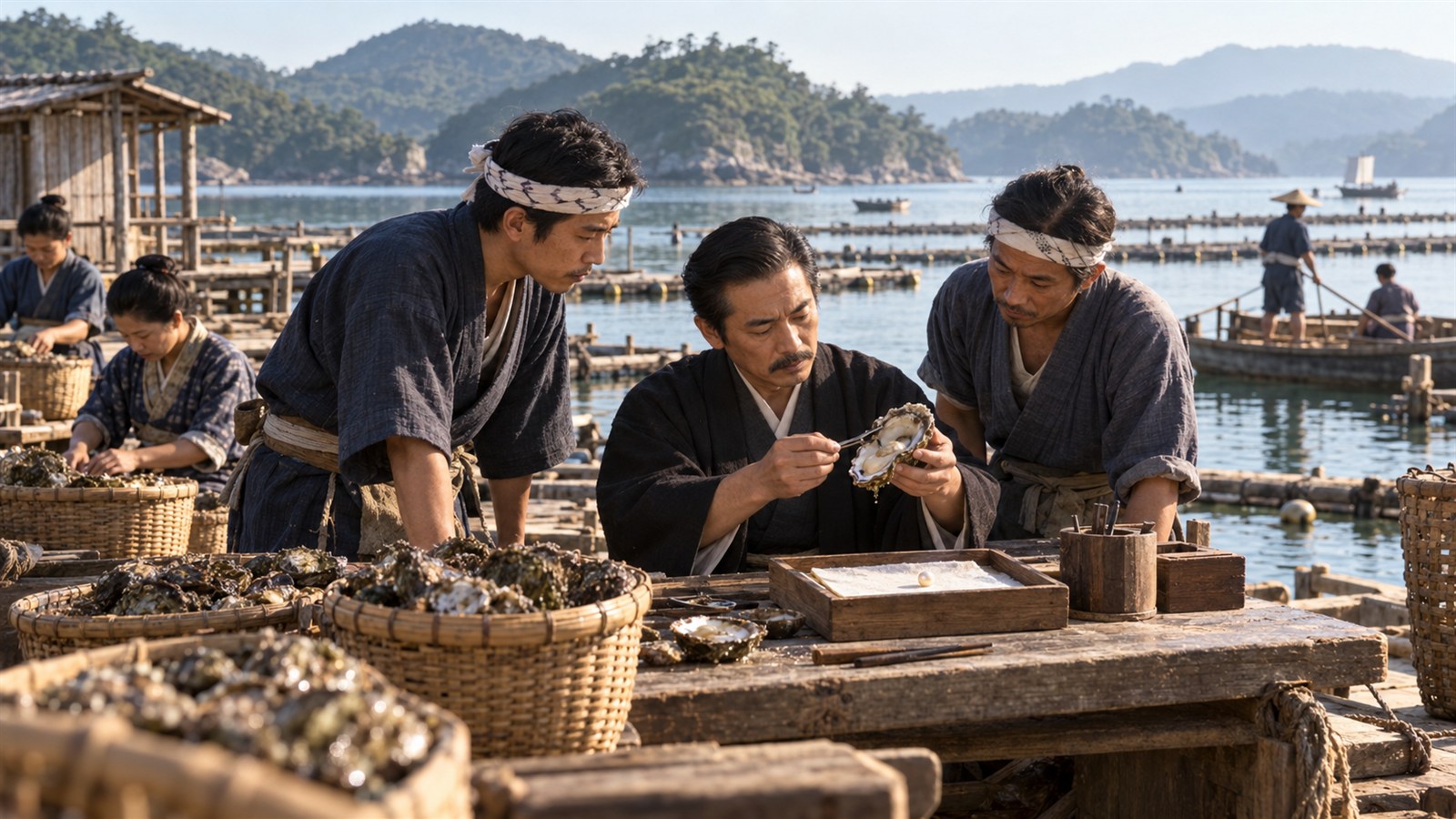
On July 11, 1893, Kokichi Mikimoto achieved an early success in pearl cultivation at his operation in Japan's Ago Bay. Working with his wife, Ume, and local assistants, he had placed irritants into oysters and returned them to the sea in hopes that nacre would form around them. Many oysters died from disease, red tides, storms, and imperfect technique. The surviving result was a hemispherical cultured pearl attached to its shell rather than the fully round pearl Mikimoto ultimately sought. Even so, it offered evidence that careful human intervention could make pearl formation more predictable.
Natural pearls were rare because finding one required opening many wild oysters. That scarcity supported high prices but made supply uncertain and encouraged destructive harvesting. Cultivation changed the problem from discovery to managed production. Operators had to understand oyster biology, water quality, grafting, timing, cleaning, disease, and weather. Results took years and could fail after substantial labor. Mikimoto protected methods, experimented with farms in different locations, and worked to convince jewelers and customers that cultured pearls were genuine pearls produced with assistance rather than imitations.
Japanese researchers and technicians later developed reliable techniques for round cultured pearls, and Mikimoto expanded farms, processing, grading, jewelry design, and retail presentation. The business combined aquaculture with luxury branding. Standardization made pearls available in matched strands and at volumes the natural market could not supply, while careful sorting preserved differences in luster, color, shape, and price. Cultured production disrupted traditional pearl fisheries and created a global trade whose reputation depended on both technical quality and consumer education.
The 1893 success matters because biological production rarely follows a factory timetable. Mikimoto had to invest before knowing how many oysters would survive or what quality they would produce. The first hemispherical pearl was not the final product, but it narrowed uncertainty and justified further experimentation. His business also demonstrates that a process innovation can expand a luxury market without making every output identical. Cultivation increased supply, while grading and brand trust maintained distinctions that customers valued. The enduring lesson is that difficult natural processes can become commercial systems when observation, patience, quality control, and credible explanation advance together. Mikimoto also invested in presentation. Pearls were cleaned, matched, drilled, set, and sold through carefully designed retail spaces, connecting farm output with fashion and gift buying. That vertical attention helped the company explain cultured origin while controlling perceived quality. It shows how a producer of a novel material may need to shape the final customer experience to earn trust.
Mikimoto and his partners inserted material into oysters and returned them to Ago Bay to encourage nacre growth.
An early cultured hemispherical pearl was produced on July 11, 1893, after repeated biological and environmental setbacks.
Cultivation replaced the uncertain hunt for rare natural pearls with a managed but still risky production process.
Oyster health, grafting skill, water conditions, storms, disease, and long growth periods determined output and quality.
Round-pearl techniques, grading, jewelry design, marketing, and education later supported a global cultured-pearl industry.
The experiment shows how patient process innovation can expand supply while quality differences preserve a luxury market.
Explore more of "On This Day ..."
Discover more events from the same date across news, politics, technology, sports, and other fields. Each link highlights significant moments that shaped history on different fronts.