

On This Day in Business: July 19, 1900
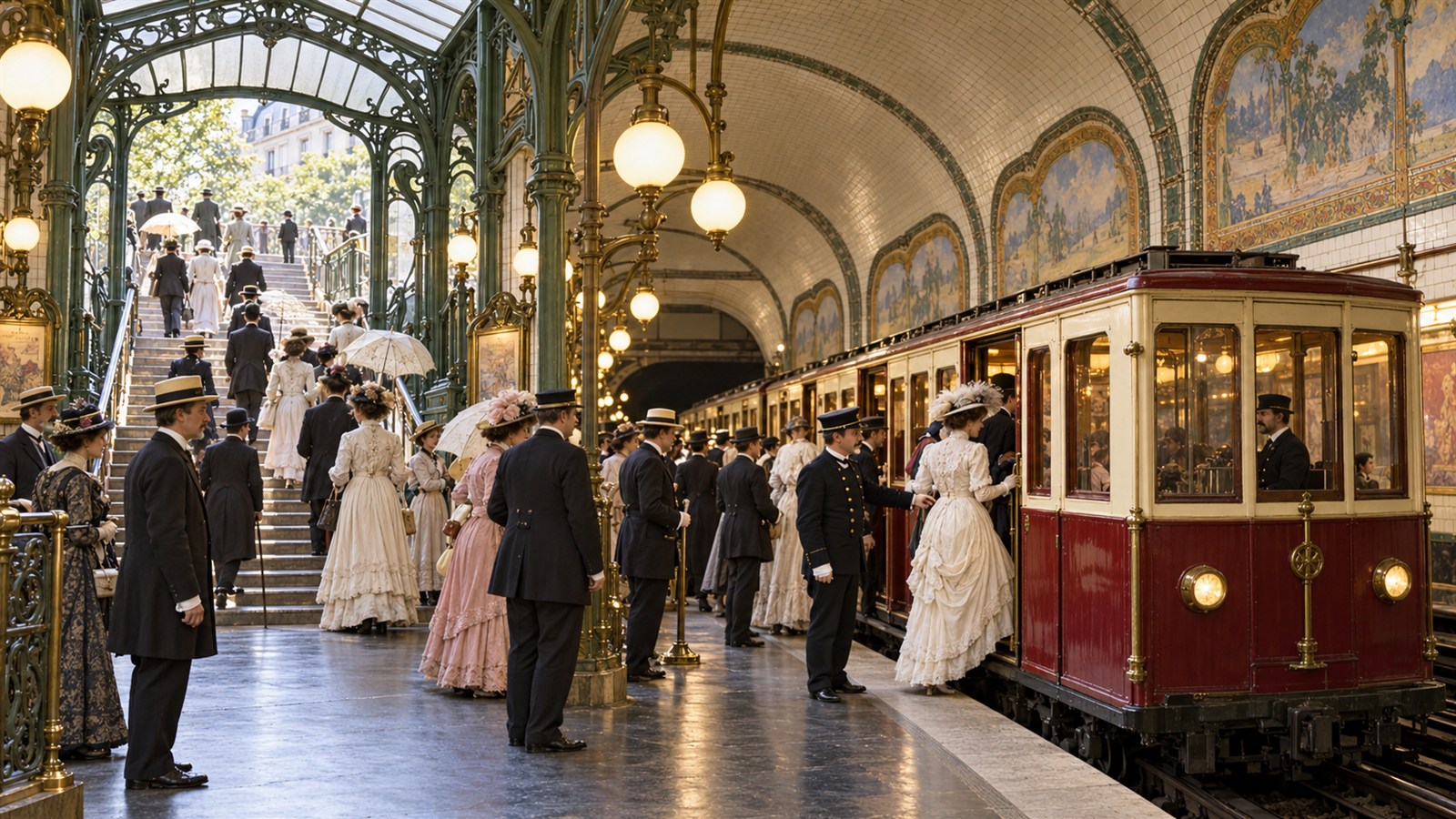
On July 19, 1900, Paris opened the first section of its Métropolitain railway between Porte Maillot and Porte de Vincennes. The line arrived during the Exposition Universelle, when visitors crowded the capital and the city wanted a modern transportation system independent of national railway companies. Electric trains ran underground beneath major streets, linking districts across the city. Engineer Fulgence Bienvenüe directed construction, while Hector Guimard designed distinctive Art Nouveau entrances that made the new infrastructure visible and approachable at street level.
A metro creates value through frequency and connection. Stations must be close enough for access but far enough apart for efficient travel. Power, signals, ventilation, tunnels, platforms, cars, staff, fares, and maintenance must function as one system. Construction disrupted streets and required major public authority before passenger revenue existed. Standard gauges, clear routes, and transfer points allowed later lines to form a network whose usefulness increased as coverage expanded.
The first line proved popular and encouraged rapid growth. Metro service changed the practical geography of Paris by shortening journeys between homes, workplaces, shops, entertainment, and railway terminals. Businesses gained access to wider labor and customer markets, while land near stations acquired new advantages. The network also supported tourism and major events. Crowding, safety, financing, labor, accessibility, and modernization became continuing responsibilities as the system aged and ridership patterns changed.
The opening matters because urban productivity depends on reliable movement. A fast trip does more than save a passenger minutes; it expands the range of jobs, suppliers, services, and customers reachable within a day. The Paris Metro also shows that infrastructure communicates through design. Guimard's entrances gave a technical system a recognizable public identity and signaled where the network could be entered. The enduring business lesson is that network value comes from coordinated operations, not isolated assets. A beautiful station or powerful train matters only when the entire journey works predictably. Fares also shaped access. A public transport network must attract frequent use while collecting enough revenue or subsidy to maintain expensive assets. Simple ticketing and regular service reduce the planning burden on riders, making the system useful for ordinary trips rather than special occasions. That repetition is what turns construction spending into lasting urban capacity and commercial activity. Stations also concentrated foot traffic. Cafes, shops, hotels, offices, and entertainment venues could benefit from predictable flows of riders at different hours. That commercial effect was not automatic; entrances, sidewalks, signs, and connecting services shaped whether passengers moved efficiently into the surrounding district. Transport planning and street-level business development therefore became closely connected.
Paris built an electric underground railway to move residents and exposition visitors independently of national rail lines.
The first Metro section opened on July 19, 1900, between Porte Maillot and Porte de Vincennes.
Tunnels, power, signals, trains, stations, fares, staff, and maintenance had to operate as one coordinated service.
Additional lines and transfers increased the usefulness of every station by expanding the destinations riders could reach.
Faster urban travel widened labor and customer markets while changing commercial value around station locations.
The opening shows that infrastructure creates productivity when the complete journey is frequent, connected, and dependable.
Explore more of "On This Day ..."
Discover more events from the same date across news, politics, technology, sports, and other fields. Each link highlights significant moments that shaped history on different fronts.