

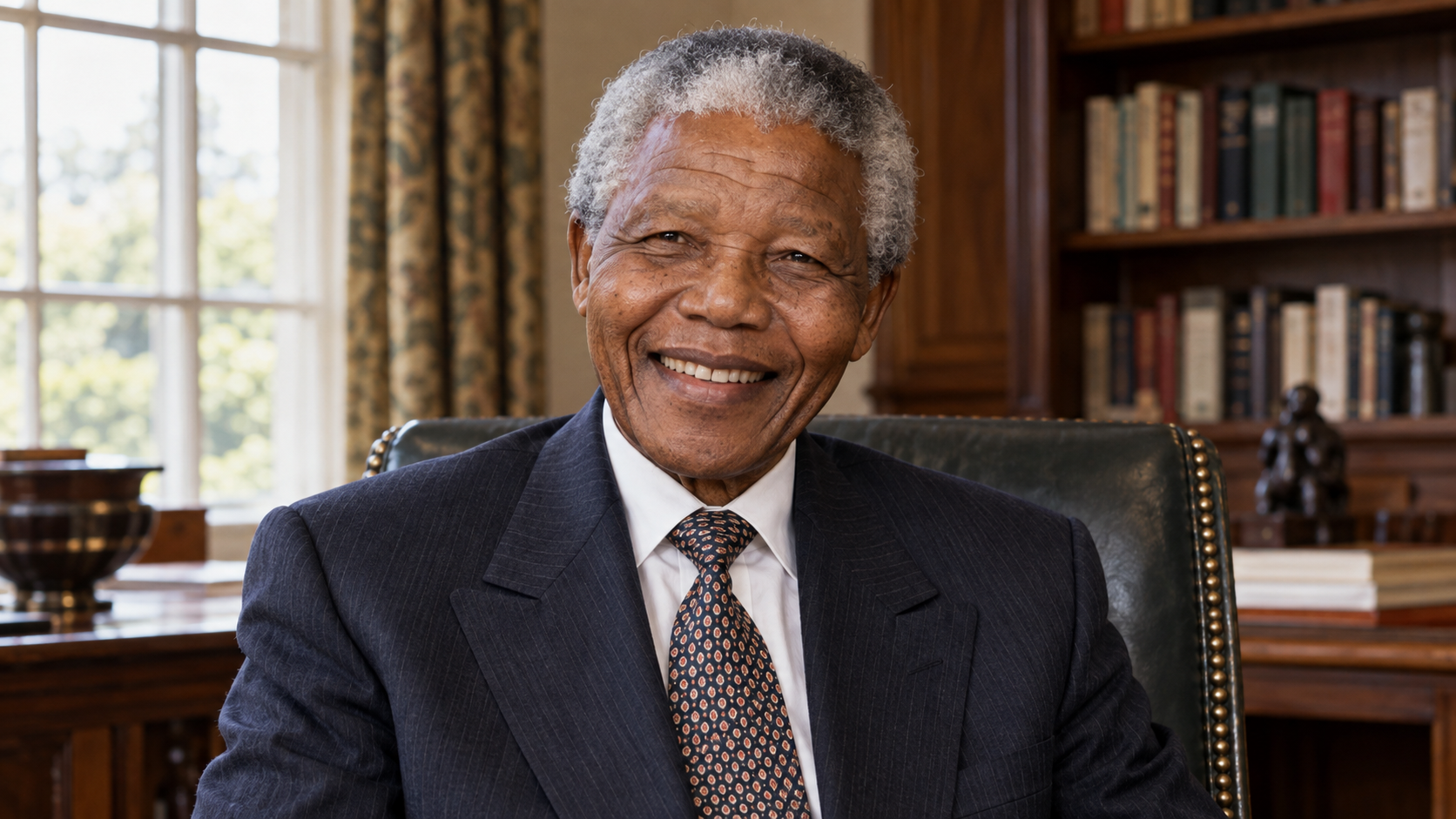
“Let a new age dawn!”
Nelson Mandela closed his Nobel lecture in Oslo on December 10, 1993, with this short appeal. He shared the Peace Prize with F. W. de Klerk during South Africa’s transition away from apartheid. Mandela was then president of the African National Congress; he had not yet become the country’s president. The surrounding address gave the closing image a political meaning. He spoke about democracy, human rights, equality, and the responsibilities attached to their shared recognition. The new age was an aspiration for a different public order, not a statement that all the work had already been completed. The speech’s final sentence looks forward from a difficult and unfinished transition.
Dawn is a useful image because it suggests possibility without describing the whole day that follows. Political change can open an opportunity while leaving institutions, habits, and relationships still to be built. A negotiation may establish principles, but people must learn whether those principles will protect them in practice. Mandela’s brief conclusion takes its substance from the commitments preceding it. Removed from that context, it could become a general expression of optimism. Read with the address, it points toward a society whose legitimacy rests on equal human standing. The image encourages hope while leaving readers to examine the arrangements through which the promised change will reach ordinary lives.
The award itself should not be confused with a guarantee about the transition’s future. Honoring negotiators recognizes important work without resolving every disagreement among the people affected. Mandela’s speech also placed his recognition alongside the efforts of others, rather than presenting national change as one individual’s accomplishment. Those distinctions prevent a familiar political simplification: turning a major public moment into proof that one leader alone created a new society. The quotation can carry emotional force, but its historical value depends on preserving the collective struggle and the remaining tasks. It marks an ambition expressed in December 1993, before the democratic election of 1994, rather than a retrospective description of an already settled outcome.
For readers considering other moments of political transition, the sentence raises a practical question about what follows a declaration of renewal. Do new rules create ways to participate, challenge authority, and protect people who previously lacked influence? Are institutions capable of carrying commitments beyond the personalities who announce them? Hope can help sustain public effort, but it needs procedures and evidence to become credible. A promise of a new era deserves assessment through the rights people can exercise and the burdens they continue to face. Mandela’s closing appeal remains meaningful because its optimism belongs to a demanding political purpose: the beginning of change calls for continuing responsibility, rather than allowing celebration to stand in for the work still ahead.
Mandela delivered the lecture on December 10, 1993, sharing the prize with F. W. de Klerk.
He was president of the ANC at the time, before becoming South Africa’s president in 1994.
The dawn metaphor looks toward a democratic future; it does not declare the transition’s work finished.
The preceding speech gives the short line its substance through commitments to rights and equality.
Political renewal involves collective effort and institutions that outlast individual leaders.
Readers can assess a promise of change through meaningful participation, usable rights, and protection against arbitrary authority.
Explore more "Quotes of The Day"
Discover more notable quotes from influential voices across politics, science, business, technology, sports, and culture. Each quote offers insight into how ideas, beliefs, and decisions shape the world around us.