

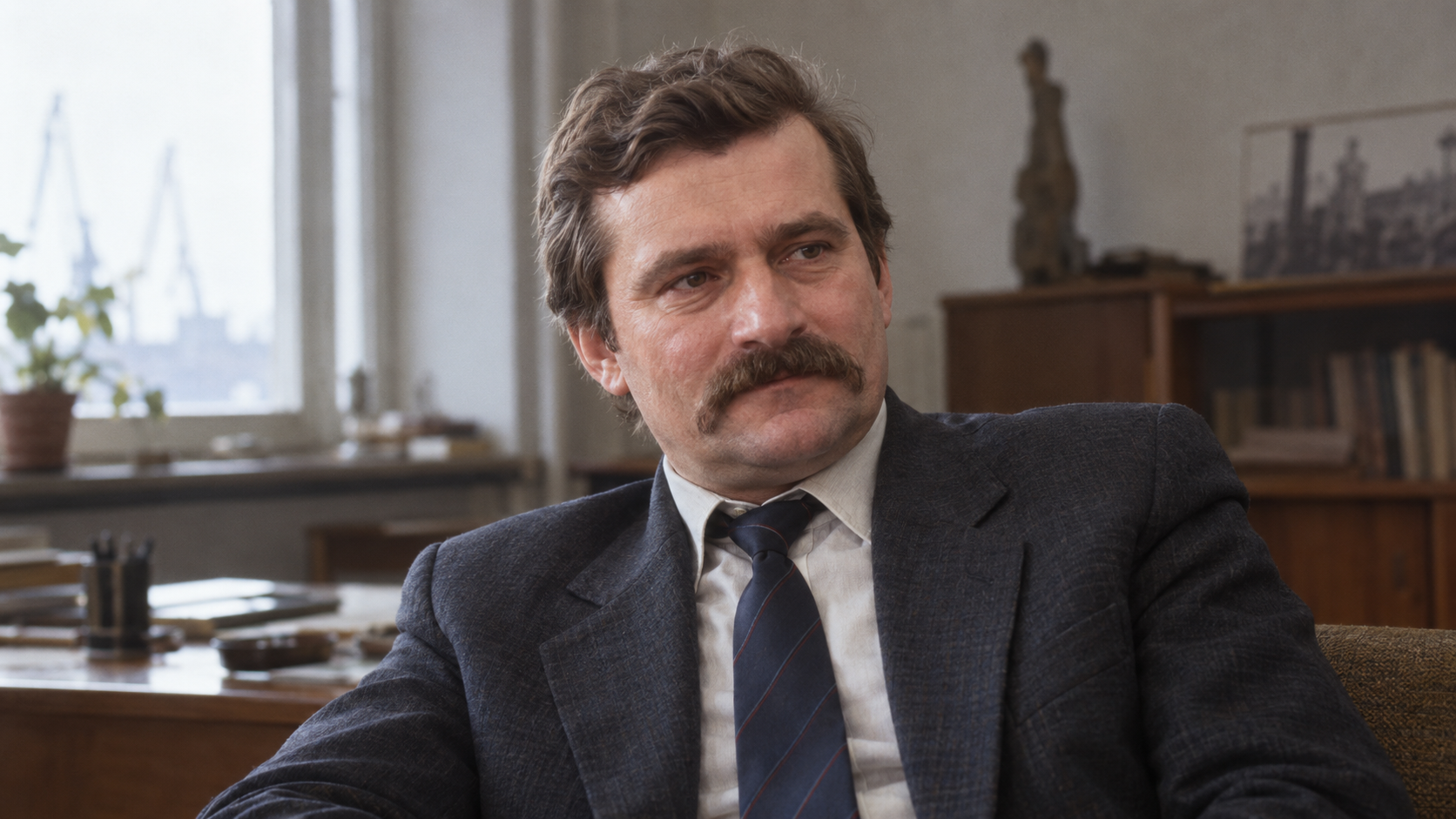
“But this was, above all, a great lesson in hope.”
Hope becomes a political force when it keeps people working together through circumstances that appear to close every door. Lech Wałęsa made that connection in his Nobel lecture of December 11, 1983, speaking of Poland’s long experience of invasions, lost independence, and frustrated demands for freedom. The English translation places this sentence after his acknowledgment of bitterness and helplessness. Its opening word matters: he was turning from what suffering had taken away to what collective memory might still sustain. The statement describes a lesson drawn from hardship, rather than suggesting that hardship itself was something people should welcome.
Wałęsa was the leader associated with Solidarity, the Polish movement that brought workers’ demands and wider civic aspirations into a common struggle. He did not travel to Oslo to deliver this lecture himself; it was read on his behalf. His Nobel recognition therefore reached a political movement facing constraints, rather than a government celebrating a completed transition. In the speech, national history becomes a way to connect the present with earlier efforts to recover freedom. The emphasis falls on persistence across setbacks. Recognition from abroad could strengthen that persistence, but it could not replace the work of people inside Poland.
The distinction between hope and prediction is useful whenever a public campaign encounters resistance. A prediction says that a particular result will happen. Hope allows people to keep making responsible choices even when the result remains uncertain. An organization can possess the second without being able to defend the first. That difference protects it from promises its leaders cannot keep. It also makes room for negotiations, changes of strategy, and honest acknowledgment of losses. In this reading, historical memory supplies reasons to continue participating; it does not supply a timetable for victory or a guarantee that every decision will succeed.
There is also a responsibility in the way leaders invoke their country’s past. Shared memories can build cooperation, but they can become selective stories that silence disagreement or elevate grievance above other people’s rights. A careful reader should ask whose experiences the story includes and what action the speaker wants it to support. Wałęsa’s sentence invites that examination because it transforms painful history into a resource for public agency. Its enduring challenge is practical: can a community carry its losses without allowing them to exhaust its ability to organize, deliberate, and imagine a political future that remains open? A durable political hope must leave room for disagreements within the community it hopes to serve.
The sentence comes from Wałęsa’s December 11, 1983 Nobel lecture in English translation. It follows a description of Poland’s historical bitterness and helplessness.
The lecture was read on his behalf. His wife’s acceptance of the award the previous day was a separate ceremony and speech.
Hope here means sustaining public effort through reversals. It is connected to national memory and the collective work associated with Solidarity.
It does not mean that suffering is desirable or that a democratic outcome is guaranteed. A lesson in hope can coexist with uncertainty.
Ask whether an appeal to history encourages participation and dialogue. A hopeful story should still permit people to question strategy.
Shared memory becomes more useful when it includes different experiences and leads to concrete civic work rather than permanent grievance.
Explore more "Quotes of The Day"
Discover more notable quotes from influential voices across politics, science, business, technology, sports, and culture. Each quote offers insight into how ideas, beliefs, and decisions shape the world around us.