

On This Day in Politics: April 15, 1865
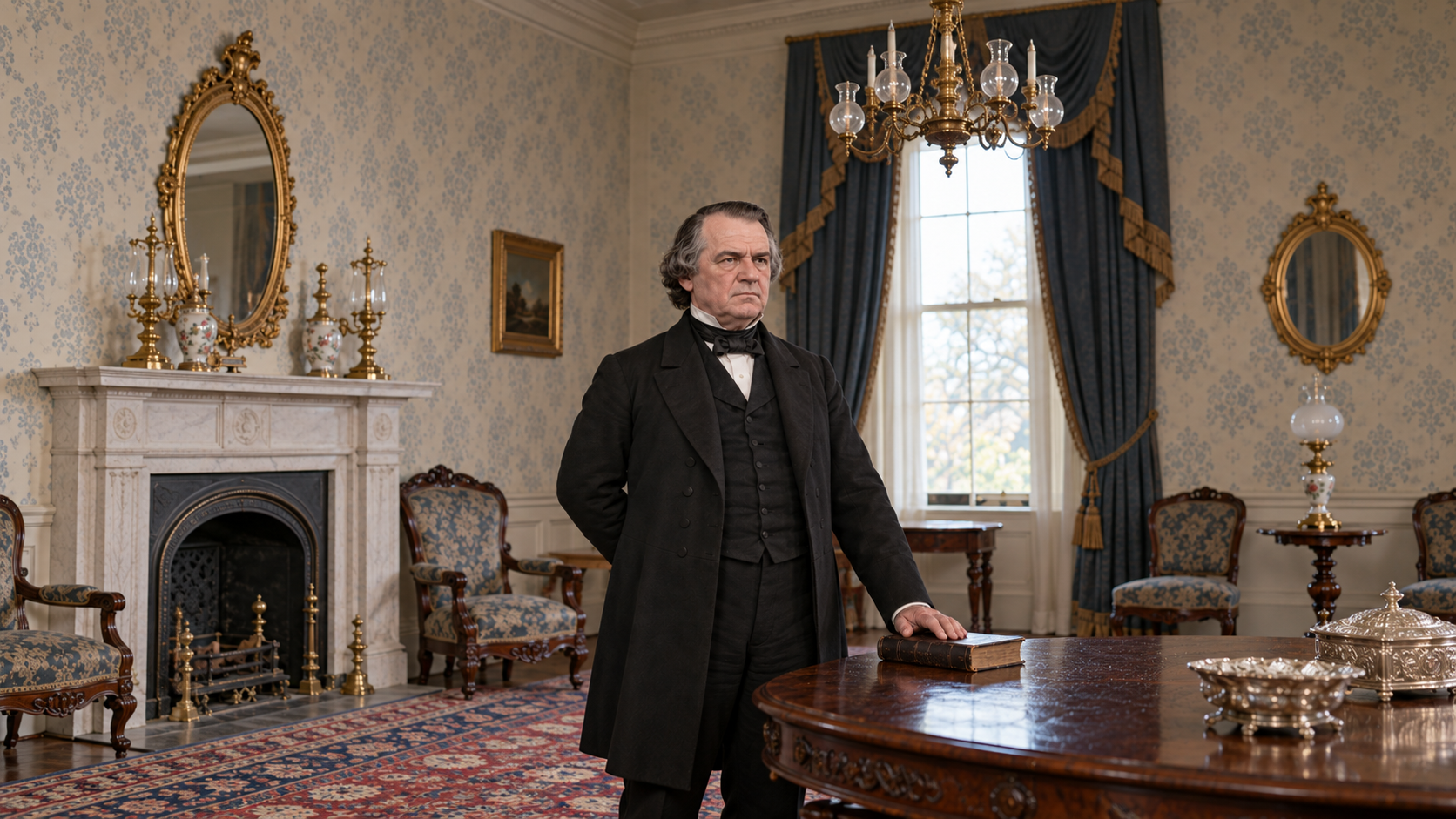
On April 15, 1865, Andrew Johnson took the oath of office as the seventeenth president of the United States. Abraham Lincoln had died that morning after being shot at Ford’s Theatre the previous evening. Chief Justice Salmon P. Chase administered the oath at Washington’s Kirkwood House hotel, where Johnson was staying, in the presence of cabinet members and other officials. The small ceremony differed sharply from the public inauguration held only weeks earlier. It demonstrated continuity in the presidency during a national emergency, while placing responsibility for the final stages of war and the beginning of Reconstruction in a new leader’s hands.
Johnson’s route to that room reflected the unusual politics of the wartime coalition. A Tennessee Democrat, he had remained loyal to the Union when his state seceded and later served as its military governor under Lincoln. The National Union ticket paired him with Lincoln in the 1864 election to broaden support beyond the Republican Party. Johnson had also been a target of the assassination conspiracy, but George Atzerodt did not carry out the planned attack against him. After learning of Lincoln’s shooting, Johnson visited the dying president at the Petersen House. Lincoln’s death transformed the vice president’s position within hours.
The brief proceedings were reported as a solemn acceptance of unexpected responsibility. A contemporary New York Times dispatch described arrangements for the oath at Johnson’s hotel rooms and recorded his short remarks afterward. He said he would perform the duties of the office and would need the support of those around him. The surviving signed oath, dated April 15, provides another direct record of the transfer. These documents capture an immediate institutional priority: establishing the new president’s authority while the government confronted bereavement and uncertainty. They do not establish that the incoming administration had already resolved the difficult questions of peace, citizenship, or federal power.
Those questions soon produced a deep conflict with Congress. Johnson favored rapid restoration of Southern state governments, while congressional Republicans sought stronger safeguards against former Confederate control and greater protection for formerly enslaved people. His policies and vetoes helped turn Reconstruction into a struggle between the executive and legislative branches. The orderly succession on April 15 therefore should not be confused with agreement over the country’s future. The ceremony preserved the functioning of the presidency, but the administration it inaugurated became central to disputes over civil rights and the terms of reunion. Its significance lies in both the resilience of constitutional succession and the consequences of leadership during a historic transition.
Johnson took the presidential oath on April 15, 1865.
Chief Justice Salmon P. Chase administered it.
The ceremony took place at Washington’s Kirkwood House hotel.
Johnson had been Lincoln’s National Union running mate.
His signed oath survives as a record of the transfer.
His Reconstruction policies soon brought conflict with Congress.
Explore more of "On This Day ..."
Discover more events from the same date across news, politics, technology, sports, and other fields. Each link highlights significant moments that shaped history on different fronts.