

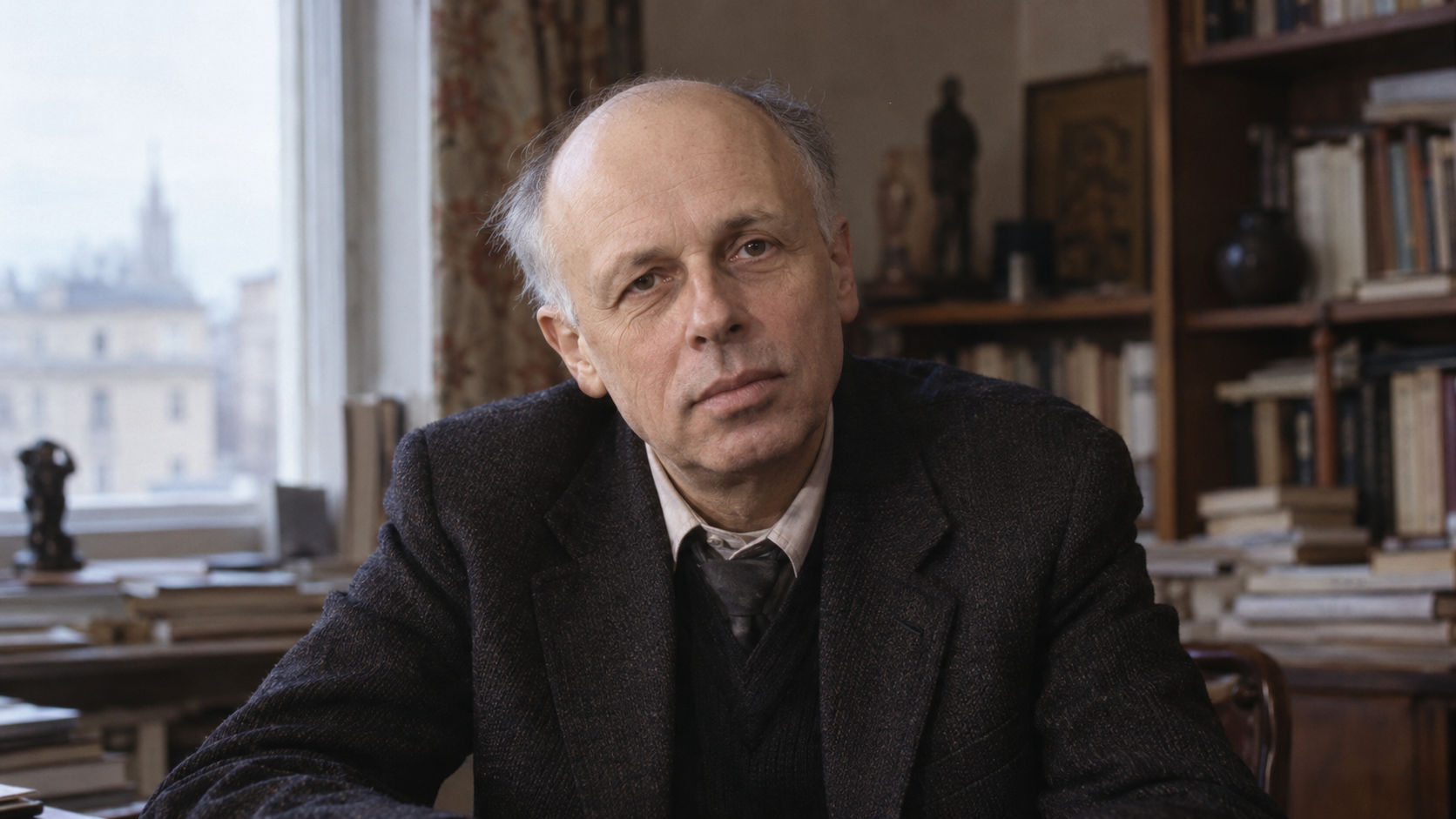
“We need reform, not revolution.”
Andrei Sakharov’s call for reform appears inside an urgent defense of people suffering under political repression. In his Nobel lecture, dated December 11, 1975, the Soviet physicist and human rights advocate argued that peace, progress, and human rights depend on one another. He could not deliver the lecture in Oslo himself; his wife, Elena Bonner, read it for him. The featured sentence comes from the published English translation. It follows a passage urging the protection of innocent victims without requiring the destruction or wholesale condemnation of the regimes responsible. The distinction is a choice about the purpose of political action.
Sakharov’s lecture did not treat reform as a reason to stay silent. It defended freedom of information and conscience, called attention to prisoners, and urged international action on behalf of individual people. At the same time, it sought a tolerant, pluralistic society able to learn from different systems. That combination is central to the sentence. A demand can be uncompromising about the rights it protects while remaining open to the means through which protection is achieved. The speech’s immediate concern was the fate of people deprived of liberty, rather than the satisfaction of a slogan or a total political victory.
This distinction raises a difficult question for any campaign: how will success be measured? If success means only defeating an adversary, people harmed by the conflict may disappear from view. If it means improving their situation, releases, safeguards, access to information, and changes in treatment become outcomes worth evaluating in their own right. That approach does not require approval of an unjust institution. It does require attention to what a proposed strategy will actually accomplish. A sweeping promise can sound more ambitious than a particular reform while leaving the people it invokes with fewer practical protections than they had before.
The quotation should also retain its historical limits. Sakharov was making a judgment within his own human rights argument; he was not resolving every debate about when reform is possible or when institutions become impossible to repair. Readers can examine the principle without turning it into an automatic answer. The useful test is whether a demand increases freedom and dignity for identifiable people, and whether its advocates remain willing to learn from evidence. In the lecture, protecting a person and building an open society belong to the same task. Political change earns its meaning through those human consequences. Reform earns its name by protecting the people who would otherwise bear the cost of political upheaval.
The sentence is from Sakharov’s 1975 Nobel lecture, Peace, Progress, Human Rights. The English text is preserved by both NobelPrize.org and the Sakharov Foundation.
Elena Bonner read the lecture in Oslo because Sakharov was unable to attend. The quotation is presented as a translation.
Reform is linked here to protecting victims, expanding civil freedoms, and learning without rigid ideological assumptions.
The passage does not endorse silence about repression. Sakharov paired his preference for reform with specific demands for human rights.
Measure a strategy against the situation of the people it seeks to protect. Particular safeguards can have value before a broader struggle is resolved.
Keep the historical claim distinct from a universal formula. The possibility and adequacy of reform must still be examined in each setting.
Explore more "Quotes of The Day"
Discover more notable quotes from influential voices across politics, science, business, technology, sports, and culture. Each quote offers insight into how ideas, beliefs, and decisions shape the world around us.