

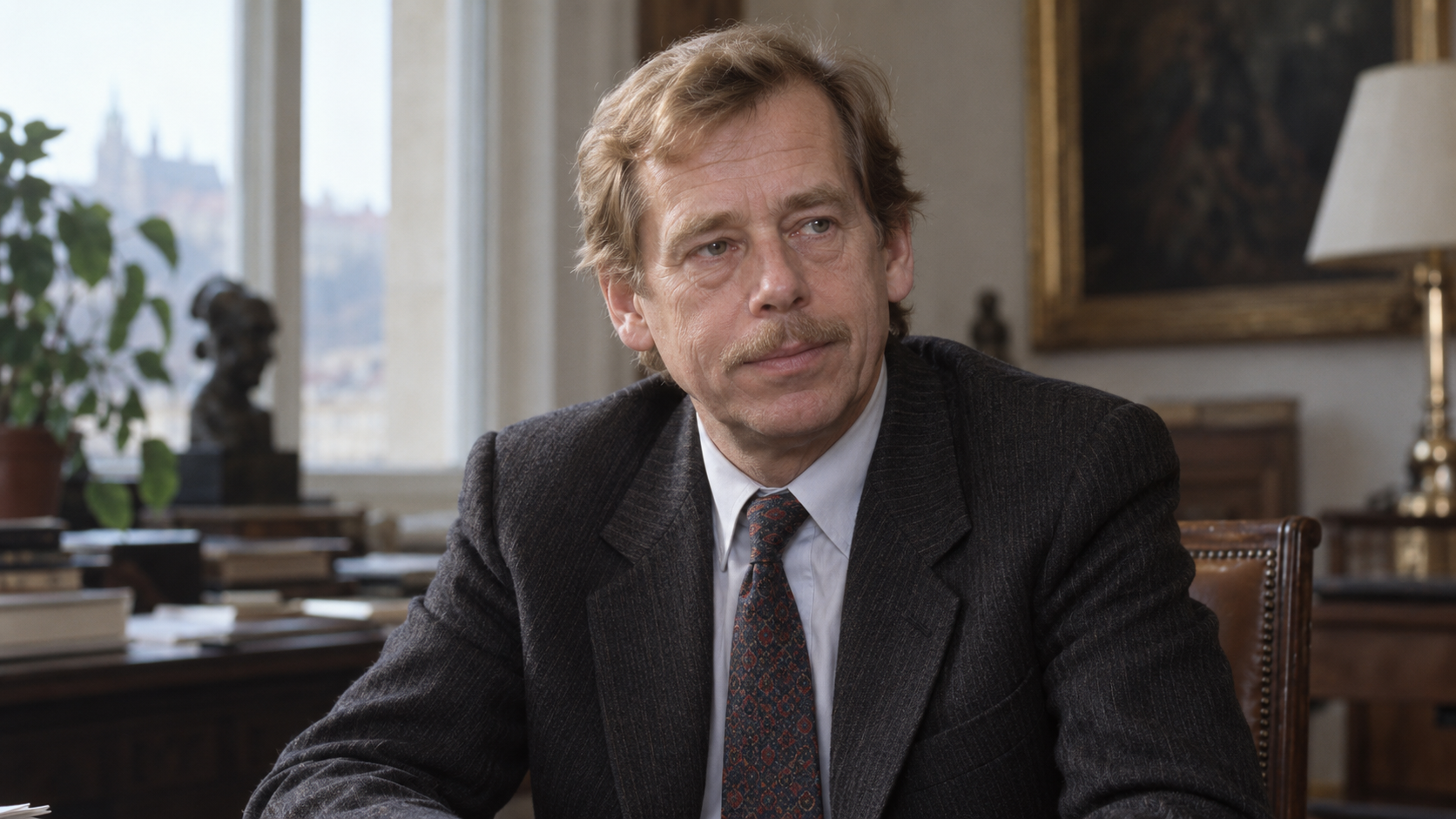
“We are still incapable of understanding that the only genuine backbone of all our actions if they are to be moral is responsibility.”
A change of government does not automatically change the habits with which people exercise power. Václav Havel pressed that uncomfortable point when he addressed a joint session of the United States Congress on February 21, 1990. Newly president of Czechoslovakia after the collapse of communist rule, he spoke both about Europe’s political transformation and about the moral demands that would survive it. This sentence is quoted from the English translation edited by Paul Wilson. Its subject extends beyond presidents: the connection between responsibility and moral action applies to institutions, professions, and ordinary citizens who help determine what a society accepts.
Havel’s argument moves from the extraordinary speed of political events to the slower work of conscience. A former dissident and playwright had become a head of state, and the speech treats that journey as a reason to accept responsibility rather than retreat from public affairs. In its philosophical passage, he criticizes the tendency to put narrow interests ahead of obligations extending beyond personal success. He is offering a moral argument about political conduct, not a technical recipe for economic reform or a claim that one person’s conscience can settle every disagreement. The address belongs to an unfinished democratic transition.
Responsibility adds a question that competence alone cannot answer: what do we owe the people affected by our choices? An official can follow a procedure expertly while avoiding its consequences. A business can meet a numerical target while refusing to hear those bearing the cost. In both cases, the missing connection is between an action and an obligation to answer for it. Havel’s image of a backbone suggests support rather than decoration. Moral language has little strength when it appears only in a preface to decisions that will be made exactly as before, regardless of the evidence or the harm.
Conscience nevertheless needs company. People can be sincere and mistaken, and confidence in one’s own moral judgment can itself become an excuse for unchecked authority. Democratic responsibility therefore becomes stronger when it is joined to open criticism, clear rules, and opportunities for those affected to speak. A useful application of this quotation is to follow a decision all the way through: identify who made it, who benefited, who carried the burden, and who can require an explanation. The speech’s challenge is not satisfied by admiring a principled leader. It asks whether responsibility actually supports the conduct of public life. Responsibility grows stronger when conscience is joined to public reasons that others can examine and challenge.
Havel delivered the address in Washington on February 21, 1990 as president of Czechoslovakia. The featured wording follows Paul Wilson’s English translation.
Another contemporary English transcript adds commas around the conditional phrase. The substantive wording and attribution agree.
The quotation links moral action with an obligation beyond personal advantage. Responsibility supplies structure to choices rather than a ceremonial statement of values.
Havel was discussing conscience during a democratic transition. He was not claiming that new institutions could dispense with rules or expertise.
Trace a public decision from its stated purpose to its consequences. Responsibility includes being available to explain those consequences.
Combine conscience with scrutiny. People affected by a policy need meaningful ways to challenge both its assumptions and its results.
Explore more "Quotes of The Day"
Discover more notable quotes from influential voices across politics, science, business, technology, sports, and culture. Each quote offers insight into how ideas, beliefs, and decisions shape the world around us.