

AI Model Monitoring Explainer
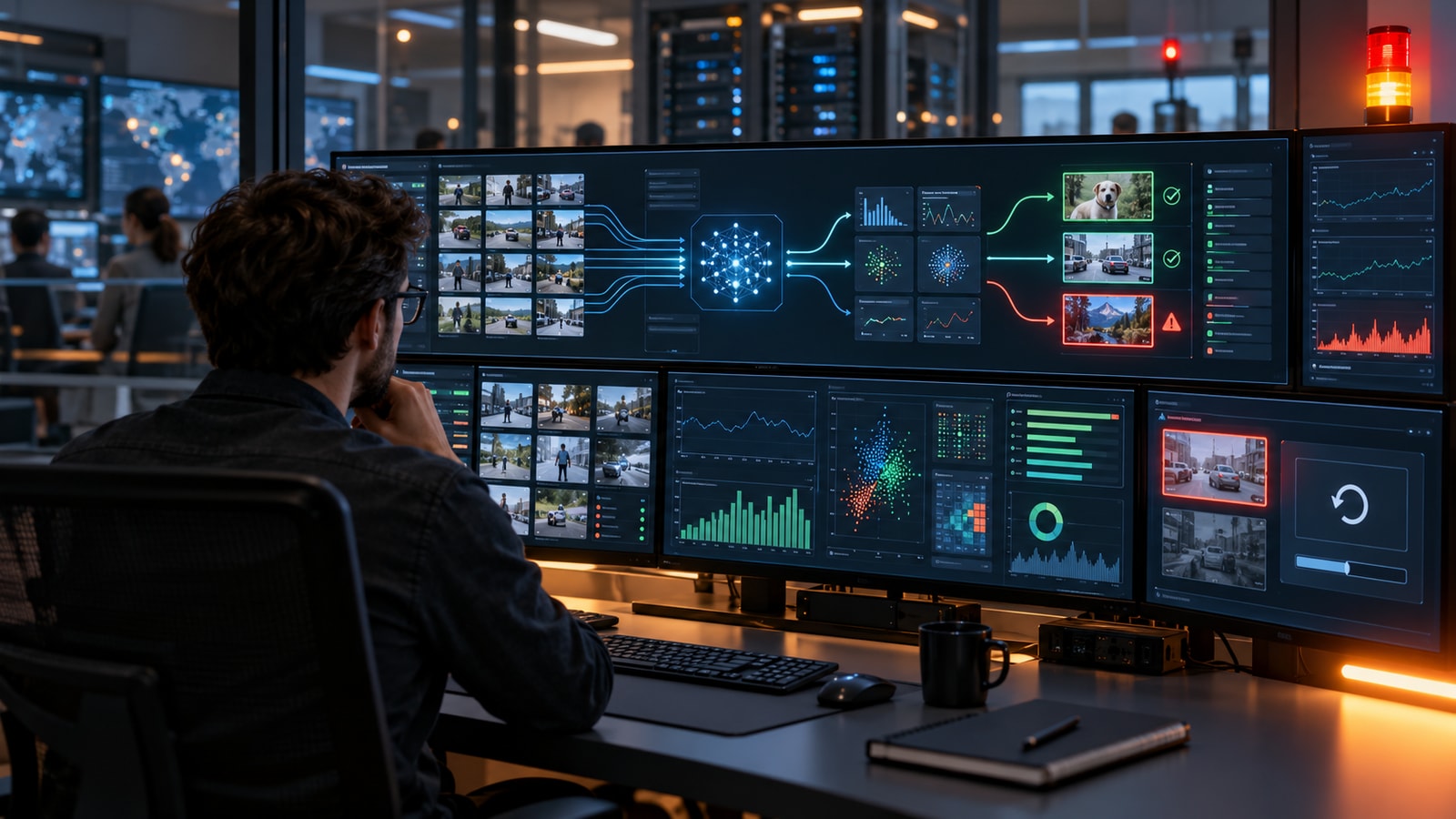
AI model monitoring is the repeated measurement of a model and its surrounding service after deployment. Teams compare production behavior with baselines and alert when performance, data quality, safety, fairness, or operations move beyond acceptable limits.
Signals may include missing features, input distributions, prediction distributions, error rates, calibration, subgroup outcomes, latency, cost, and human overrides. Some signals are available immediately, while true outcome labels may arrive much later.
Monitoring requires choices about reference data, metrics, thresholds, frequency, and ownership. A threshold that is too tight creates alert fatigue; one that is too loose may allow meaningful degradation to continue unnoticed.
An alert is the start of a response, not the solution. Teams need playbooks for investigation, rollback, retraining, restriction, or escalation. Monitors themselves should be tested because broken collection or stale baselines can hide real problems.
AI model monitoring repeatedly checks deployed models, their inputs, outputs, performance, fairness, safety, and operational health against defined baselines.
Key terms include model monitoring, baseline, production data, metric, threshold, alert, ground truth, drift and response playbook.
Operational failures may be visible immediately, while outcome labels can take days or months.
Teams often combine early proxy signals with later direct performance measurements.
The alert should identify an owner, evidence, severity, and allowed actions.
Without a playbook, monitoring can produce dashboards without reducing risk.
Explore more "Explainers"
Discover additional explainers across politics, science, business, technology, and other fields. Each explainer breaks down a complex idea into clear, everyday language—helping you better understand how major concepts, systems, and debates shape the world around us.