

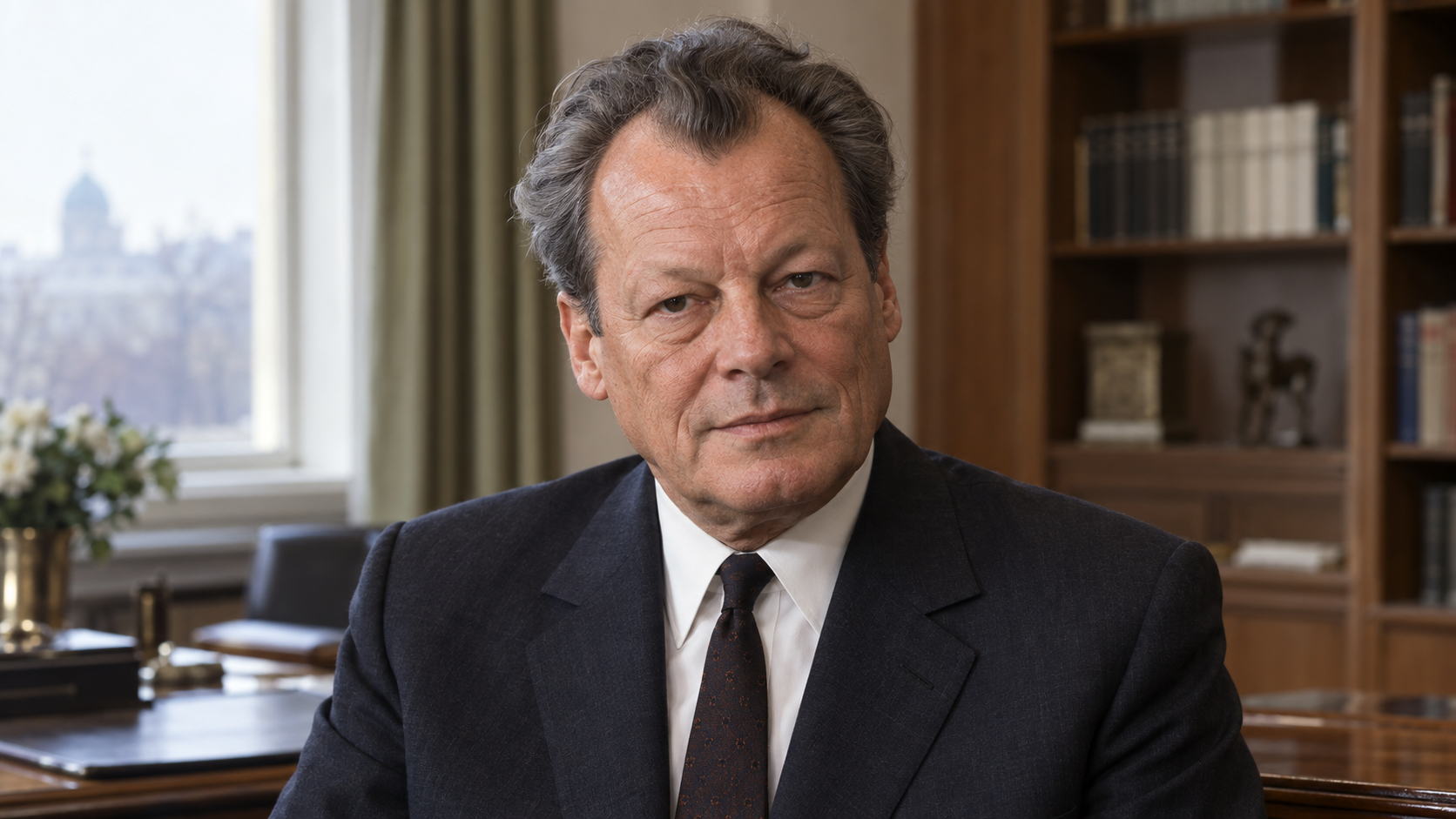
“Wars must be eliminated, not merely limited.”
Willy Brandt opened his 1971 Nobel lecture with a demand that peace policy aim beyond containing individual wars. The West German chancellor spoke during the Cold War, when divided Europe lived with fortified borders, military alliances, and the possibility of escalation. His government's approach to relations with Eastern Europe sought to reduce tension through contact and negotiation. The quotation compresses the ambition behind that work into a blunt statement: making war smaller is not the same as making it unnecessary. Brandt's lecture presented peace as a political responsibility that required practical organization, rather than a wish expressed whenever fighting became unbearable.
The distinction is important because limiting a conflict can save lives while leaving its underlying machinery intact. A ceasefire, an arms agreement, or a protected channel of communication may prevent immediate disaster. Each can also become a step toward something more durable if leaders use the breathing room to address unresolved interests. Brandt's line asks them to hold that larger purpose in view. It does not make partial improvements worthless. It challenges the assumption that recurring violence is simply the natural condition of international affairs, with diplomacy confined to managing its scale after the decisive choices have already been made.
The hardest question concerns means. An aspiration to eliminate war can justify patient cooperation, but it can also become a slogan used to excuse coercion in the name of a supposedly final settlement. A responsible reading therefore connects the end to the methods used to pursue it. Negotiated obligations, political participation, and opportunities to revise agreements peacefully matter because people rarely stop disagreeing about borders, security, or justice. Institutions must be capable of handling those disagreements. The task is not to force everyone into one permanent viewpoint; it is to prevent differences from making armed conflict appear the only available instrument of change.
Brandt's statement offers a demanding measure for contemporary diplomacy. Readers can ask whether a policy merely contains the next crisis or also makes future crises less likely. Those questions need evidence: more reliable communication, fewer incentives for surprise attacks, and procedures that allow disputes to be heard. Progress may be slow, reversible, and uneven. None of that removes the obligation to attempt it. The quotation's enduring force lies in the gap between what leaders often accept and what they should still seek. Preventing catastrophe today and building a political order less reliant on violence tomorrow are connected responsibilities, and neither should become an excuse for neglecting the other.
The quotation appears at the beginning of Brandt's 1971 Nobel lecture in its authorized English translation. Its setting was a Europe still divided by the Cold War.
Brandt's peace policy emphasized political engagement across that division. The line sets an ambition against which such practical measures could be judged.
Limiting war and preventing war are different achievements. Immediate measures to reduce suffering can matter while the larger conditions for peace remain unfinished.
The danger is turning a noble objective into permission for coercive shortcuts. Peaceful methods and institutions must be part of the goal itself.
The quotation asks whether diplomacy changes the conditions that repeatedly generate confrontation. That question goes beyond celebrating a temporary pause.
Its modern relevance is a standard of direction rather than a prediction of easy success: immediate restraint should help create stronger ways to resolve the next dispute.
Explore more "Quotes of The Day"
Discover more notable quotes from influential voices across politics, science, business, technology, sports, and culture. Each quote offers insight into how ideas, beliefs, and decisions shape the world around us.