

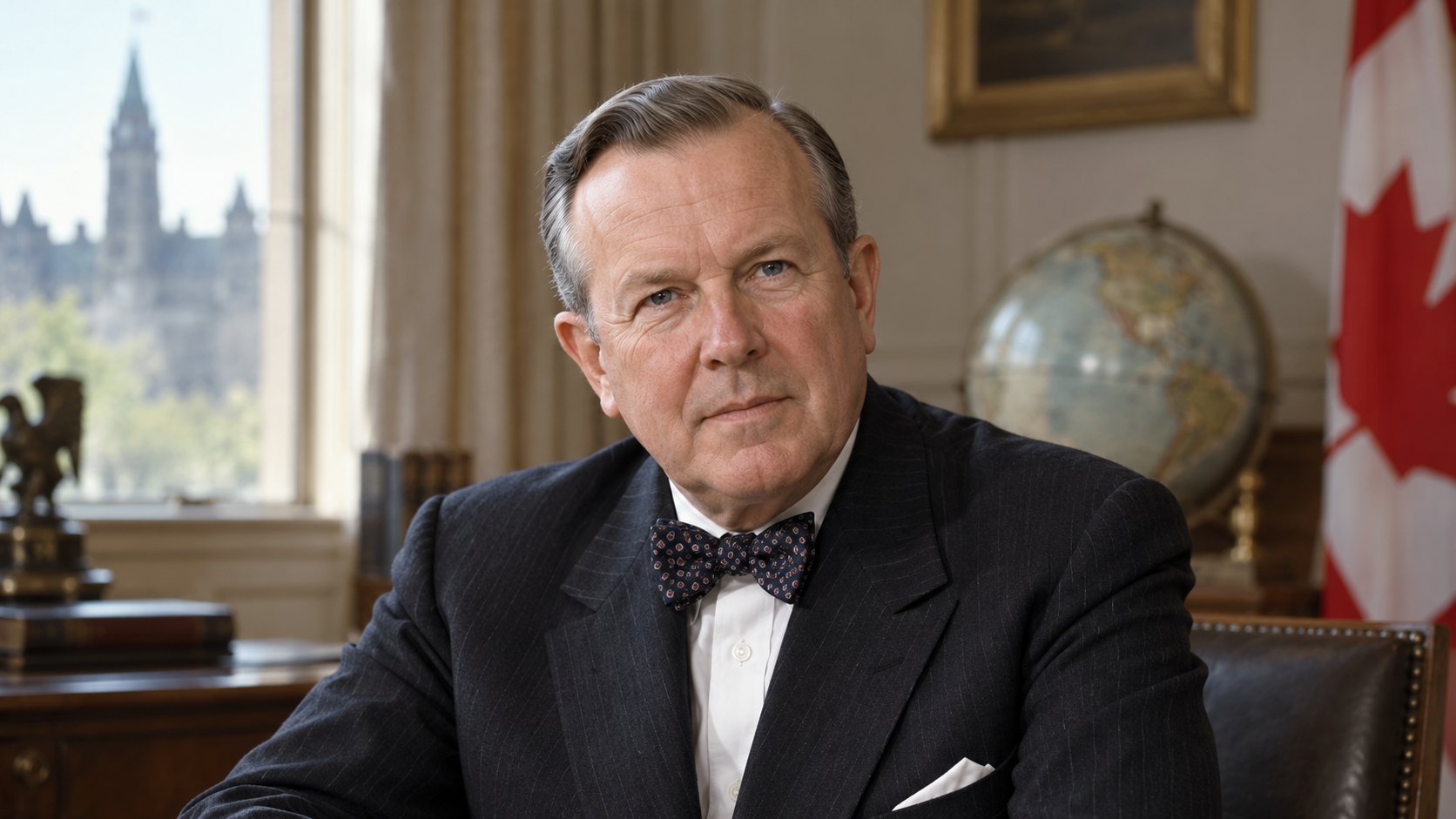
“Peace, however, must surely be more than this trembling rejection of universal suicide.”
Lester B. Pearson delivered his 1957 Nobel lecture against the background of a world threatened by nuclear war. The Canadian diplomat had received the peace prize after his role in efforts to resolve the Suez crisis. In the lecture, he examined several dimensions of peace rather than treating it as a single condition. His description of a fearful refusal to commit collective suicide challenged an idea that could sound reassuring: if governments avoid a catastrophic war, they have achieved enough. Pearson insisted that survival under constant dread was too narrow a goal. Peace needed positive political foundations as well as the absence of immediate destruction.
The quotation makes a distinction between restraint and confidence. Restraint matters enormously when a wrong calculation could kill millions. But a relationship sustained only by the fear of retaliation leaves its participants searching for threats and preparing for betrayal. Pearson's question is what else must exist to make that relationship less dangerous. Rules, communication, institutions, and conditions that allow people to live with dignity all become part of the answer. In this reading, peace is an ongoing political undertaking. It is something societies build through decisions and habits, not a temporary interval when their weapons happen to remain unused.
There is a serious objection to such ambitions: leaders must deal with the dangers they face, not the international community they wish existed. A government cannot simply exchange its defenses for an expression of goodwill. Pearson's wider approach can be read as addressing that problem rather than ignoring it. Negotiation and institutions offer ways to manage disagreement while immediate security concerns persist. They also create opportunities to discover where an opponent's interests overlap with one's own. Positive peace does not require the disappearance of conflict. It requires methods that make political conflict less likely to become organized violence and less dependent on permanent emergency.
The line remains relevant whenever success in foreign policy is measured only by whether a confrontation stopped short of war. Avoiding war deserves recognition, but the next questions matter too: are channels of communication stronger, are obligations clearer, and are people safer in their ordinary lives? Fear can compel a pause without resolving the pressures behind it. Pearson's language asks readers to look beyond that pause and consider what makes cooperation durable. His challenge is not a promise that danger can be abolished quickly. It is an invitation to treat human survival as the beginning of political responsibility, and to judge peace by what it enables people to do.
Pearson gave the lecture in 1957 as a Canadian diplomat and former secretary of state for external affairs. He would become prime minister later, in 1963.
The nuclear danger surrounding the speech helps explain its stark language. Pearson was asking what peace should mean when mutual destruction had become a realistic possibility.
The quotation challenges a definition of peace based entirely on fear. It suggests that a stable order needs constructive relationships as well as deterrence.
That ambition does not settle every security dilemma. Its value is to keep immediate restraint connected to the longer task of reducing the causes of confrontation.
The line encourages a second look at diplomatic breakthroughs: preventing a disaster is essential, but durable institutions and public confidence also matter.
It gives readers a way to distinguish a tense stalemate from a developing peace without dismissing the importance of either immediate safety or patient negotiation.
Explore more "Quotes of The Day"
Discover more notable quotes from influential voices across politics, science, business, technology, sports, and culture. Each quote offers insight into how ideas, beliefs, and decisions shape the world around us.