

On This Day in Politics: May 10, 1994
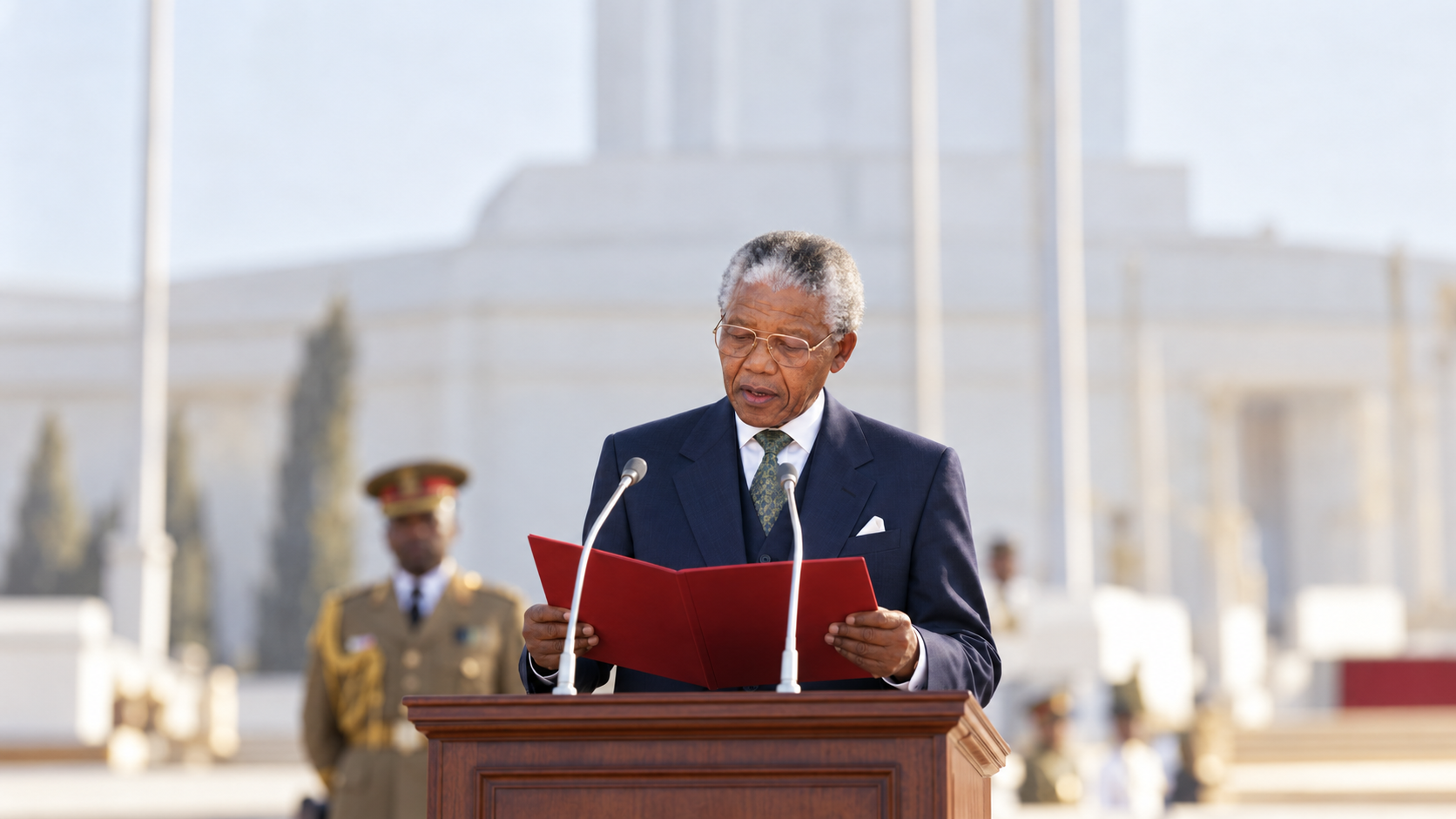
On May 10, 1994, Nelson Mandela was inaugurated as president of South Africa at the Union Buildings in Pretoria. He became the country’s first Black president following the first national elections in which South Africans of all races could participate. The ceremony made visible a profound change in political authority after decades of apartheid. It followed a separate constitutional step: the newly elected National Assembly had chosen Mandela as president on May 9. The public inauguration therefore celebrated and formalized the transition produced by the election and parliamentary process, rather than serving as the moment when voters selected their new representatives.
Mandela’s journey to the presidency had included more than twenty-seven years in prison and negotiations that helped move the country toward democratic government after his release in 1990. In the April 1994 election, the African National Congress won a majority in the new National Assembly. Albertina Sisulu nominated Mandela for president when Parliament met, and no other candidate was nominated. The new political arrangements also brought former opponents into a Government of National Unity. Thabo Mbeki and F. W. de Klerk became deputy presidents, reflecting the negotiated framework within which the transition would proceed. The ceremony joined a decisive break with minority rule to an effort to govern through cooperation.
In his inaugural address, Mandela linked political freedom to responsibilities that were still ahead. He appealed for reconciliation and a society in which South Africans could live with dignity, while acknowledging poverty, deprivation, and discrimination. The speech recognized the contribution of many people and organizations to the struggle against apartheid, rather than presenting the new government as the achievement of one individual. It also thanked international guests and supporters. These themes gave the occasion its wider significance: the transfer of office carried expectations of both equal citizenship and material improvement, with the new administration expected to translate its commitments into practical public action.
The inauguration did not instantly remove the inequalities created by apartheid or eliminate political conflict. It established a new basis for addressing those problems through democratic institutions and a government accountable to a much broader electorate. The Union Buildings, long associated with the state that had enforced racial exclusion, became the setting for a different claim to national authority. May 10 is remembered for that combination of symbolism and institutional change. Mandela’s appearance before the country and visiting leaders marked the beginning of his presidency, while his address emphasized that sustaining freedom would require shared effort beyond the ceremony. The celebration was an opening to the work of democratic government, not its completion.
The inauguration took place at the Union Buildings in Pretoria on May 10, 1994.
The National Assembly elected Mandela president the previous day, May 9.
The April elections were South Africa’s first national elections open to voters of all races.
Albertina Sisulu nominated Mandela for president; no competing nomination was made.
Thabo Mbeki and F. W. de Klerk became deputy presidents in the Government of National Unity.
Mandela’s inaugural address connected reconciliation and equal citizenship with the continuing fight against poverty and discrimination.
Explore more of "On This Day ..."
Discover more events from the same date across news, politics, technology, sports, and other fields. Each link highlights significant moments that shaped history on different fronts.