

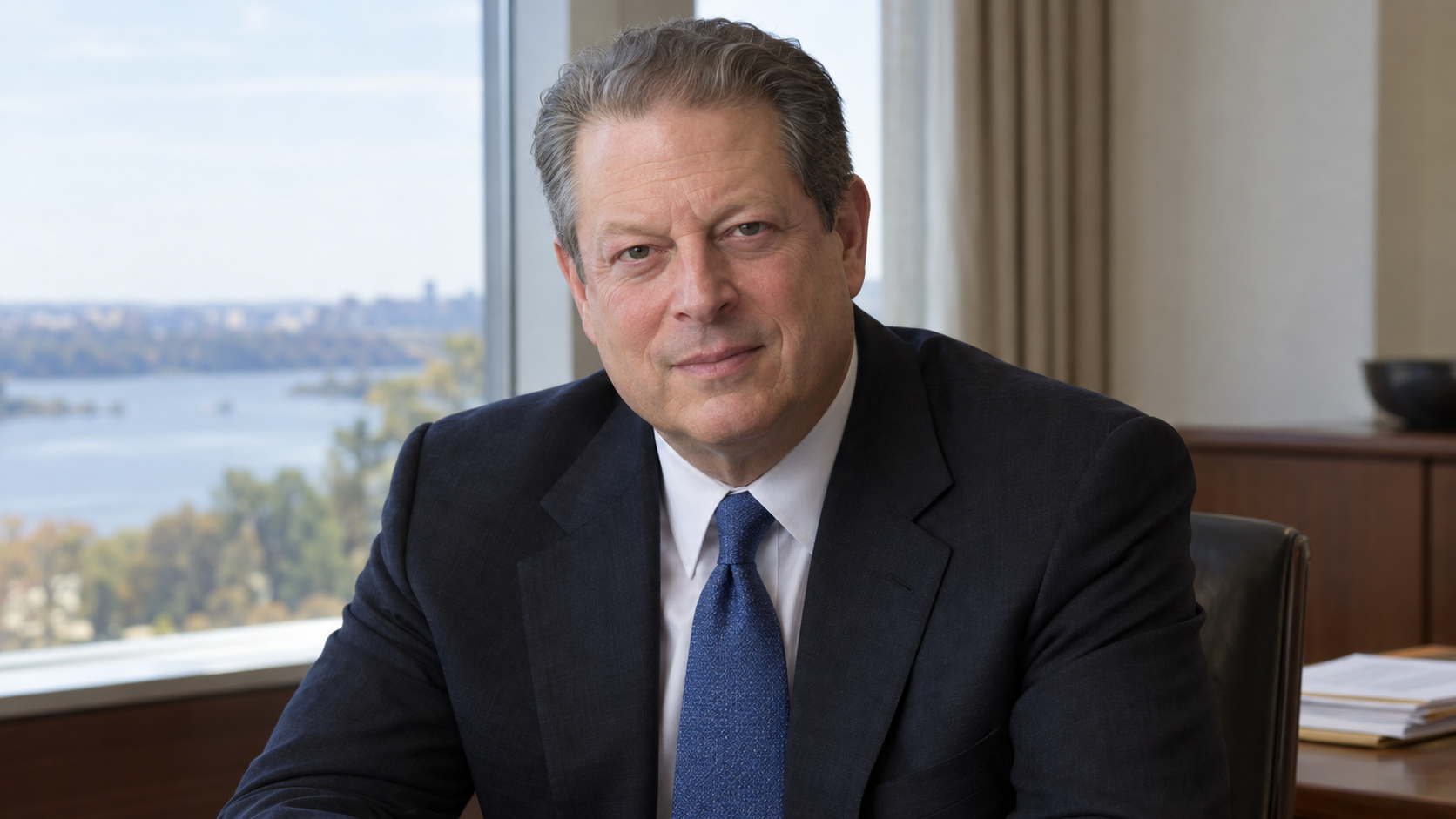
“We have everything we need to get started, save perhaps political will, but political will is a renewable resource.”
Al Gore closed his 2007 Nobel lecture with this statement about the political capacity to confront climate change. Speaking in Oslo on December 10, the former United States vice president accepted the peace prize jointly awarded to him and the Intergovernmental Panel on Climate Change. His lecture connected scientific understanding with the need for coordinated public action. The ending drew on the language of renewable energy to describe something less tangible: the determination to make decisions and sustain them. In context, it was a call to begin and organize, rather than a claim that every technical or economic difficulty had already disappeared.
Political will is often described as if it were a fixed quantity stored inside a leader. Gore’s metaphor makes it a resource that people can help replenish. Voters, researchers, local organizers, public officials, and businesses can change what appears politically possible by making a problem visible and building support for particular responses. That process requires more than a burst of enthusiasm. A commitment becomes useful when it produces a budget, an enforceable rule, or a workable arrangement between institutions. The quotation’s optimism rests on the possibility that public motivation can be rebuilt through organized action instead of waiting for ideal conditions.
There is an important limit to this argument. Treating determination as renewable does not mean that public support will automatically recover after it has been damaged. People can resist a policy because its costs are unfairly distributed, because its administration is confusing, or because earlier promises were broken. Those concerns require substantive answers. Leaders cannot solve them by insisting that everyone should care more. The distinction between motivation and implementation is especially significant in climate policy, where a broadly shared goal may still leave difficult disagreements about affordability, infrastructure, responsibility, and the pace of change. A durable commitment must survive those practical questions.
For readers today, the sentence provides a useful alternative to political fatalism. A failed vote or a period of public frustration does not establish that a problem can never be addressed. It does, however, give reason to examine what a coalition lacked and what might rebuild trust. The most productive use of Gore’s idea is therefore specific: identify the decision that needs support, explain its consequences clearly, and make participation possible for those affected. Renewal happens through visible work. Political confidence becomes stronger when people can see that their involvement changes a policy and that the policy delivers a credible result.
Gore delivered this closing line in his Nobel lecture on December 10, 2007. The award recognized his and the IPCC’s work concerning human-caused climate change. His speech tied the climate challenge to international cooperation and decisions that would outlast a single political moment.
The full lecture called for concrete action and discussed the urgency of changing course. Reading the conclusion with that argument prevents the quotation from becoming a general promise that enthusiasm alone can solve a problem.
The renewable-resource metaphor describes public resolve as something that can grow again. It gives citizens a role in changing political possibilities instead of assigning all responsibility to a leader’s private strength of character.
Its strongest limitation concerns implementation. A popular objective does not settle questions of cost or fairness. Political will needs policies people can understand, institutions able to carry them out, and a willingness to revise arrangements that do not work as intended.
The line can help evaluate a stalled initiative by shifting attention toward the sources of support: reliable information, trusted messengers, accessible participation, and evidence that a proposed response will improve people’s lives.
It also suggests a test for leadership. A leader who wants renewed commitment must explain the next concrete decision and make the burden credible. Repeating an urgent message is less effective when the people asked to act cannot see a workable path.
Explore more "Quotes of The Day"
Discover more notable quotes from influential voices across politics, science, business, technology, sports, and culture. Each quote offers insight into how ideas, beliefs, and decisions shape the world around us.