

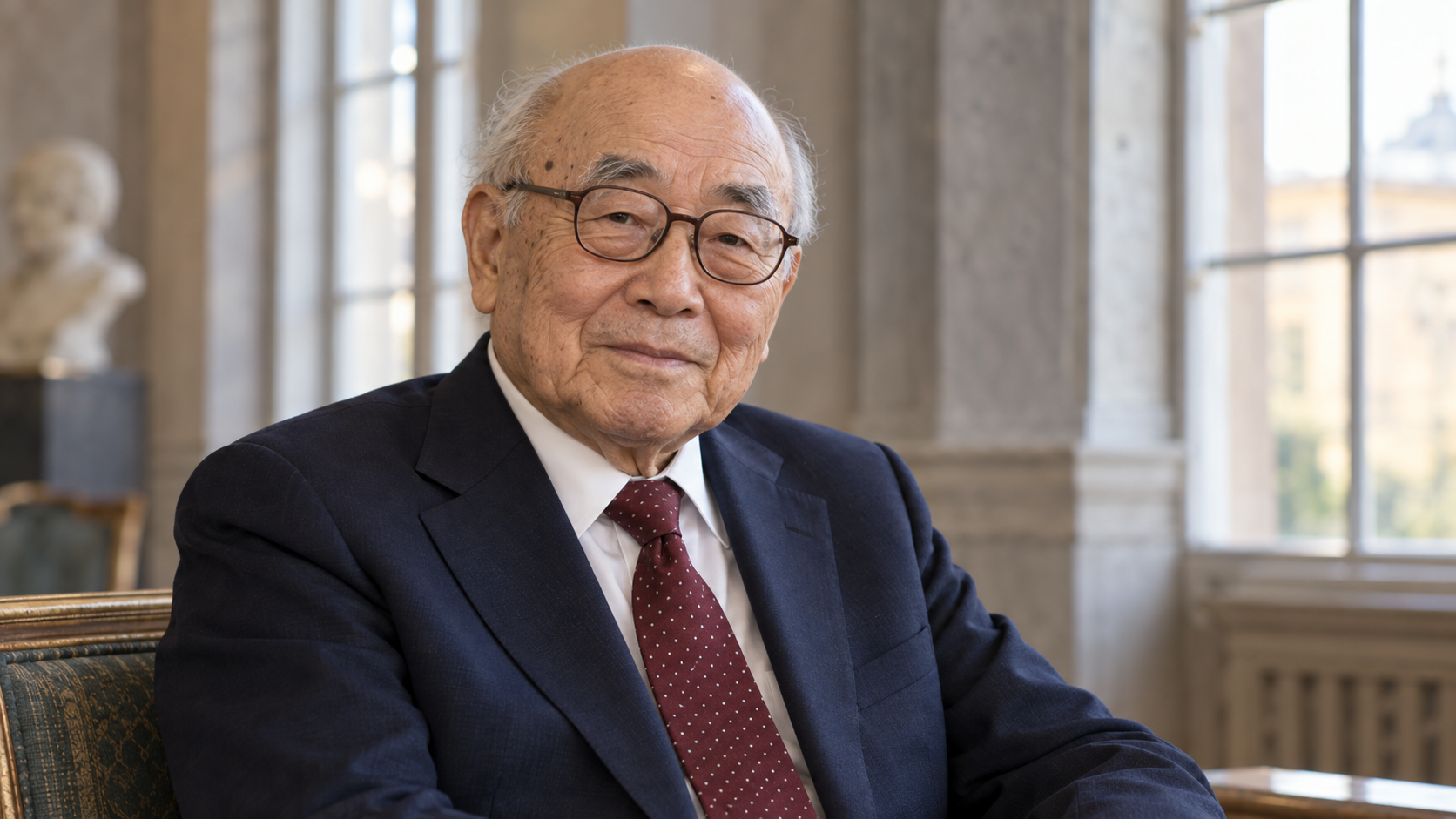
“Let not humanity destroy itself with nuclear weapons!”
Terumi Tanaka delivered this appeal at Oslo City Hall on December 10, 2024, in the Nobel lecture for Nihon Hidankyo. The Japanese organization of atomic bomb survivors received that year’s Nobel Peace Prize; Tanaka spoke as one of its co-chairs, rather than as an individual prize recipient. A survivor of the bombing of Nagasaki, he connected personal testimony with a warning addressed to humanity. The closing sentence made the stakes unmistakable. His account asked listeners to consider the consequences of nuclear weapons through the experience of people who had lived through their use, and to carry that knowledge forward.
The word humanity gives the appeal a scope that extends beyond any government or alliance. Nuclear decisions are made within political institutions, but their consequences can reach people who have no voice in those decisions. That gap raises a question about responsibility: whose security is being assessed, and whose exposure is being overlooked? A survivor’s testimony does not settle every debate about strategy. It does require those debates to recognize human vulnerability. Abstract descriptions of capability, balance, or advantage can leave out the ordinary lives that would be interrupted, damaged, or ended by a catastrophe.
Testimony also changes how knowledge passes between generations. A personal account records experience in a way that numbers alone cannot, while careful documentation makes that account available for examination and learning. Education can connect the two without treating emotion as a substitute for evidence. Teachers, archives, museums, and public institutions have different roles in preserving memory and helping people understand it. Their work becomes particularly valuable when an event grows distant from living experience. Keeping a record accessible allows future citizens to ask informed questions about choices that may otherwise seem remote from everyday concerns. Translation and contextual explanation matter because an audience should understand both what happened and how the witness describes it.
For readers thinking about politics, Tanaka’s sentence places prevention within a long horizon. The relevant question is not simply whether a danger has materialized today, but what habits, institutions, and decisions reduce the possibility that it will. Dialogue, public scrutiny, and sustained attention can be assessed by that purpose, while disagreements about particular measures remain open to examination. The quotation offers a shared human standard for such scrutiny. Its urgency comes from a witness asking others to imagine consequences before they occur, and to accept that avoiding catastrophe requires work even when the most immediate outcome is the absence of disaster.
Tanaka spoke for Nihon Hidankyo during its Nobel lecture on December 10, 2024. The peace prize recognized the survivors' organization, rather than Tanaka individually.
The sentence appears near the close of the official English text. It draws a universal appeal from survivor testimony and the effort to transmit that testimony to younger generations.
The warning asks political debate to include the people who would bear the consequences of nuclear use. It connects decisions about security with human vulnerability.
It does not resolve every strategic disagreement by itself. Its value is to keep the consequences of catastrophe within discussions that can otherwise become highly abstract.
Preserving testimony requires reliable archives, accessible education, and attention to context. These help future audiences understand experiences they cannot hear directly from every witness.
Prevention often has an invisible result: a disaster does not occur. The quotation asks readers to assess political decisions over that longer horizon, rather than only through immediate outcomes.
Explore more "Quotes of The Day"
Discover more notable quotes from influential voices across politics, science, business, technology, sports, and culture. Each quote offers insight into how ideas, beliefs, and decisions shape the world around us.