

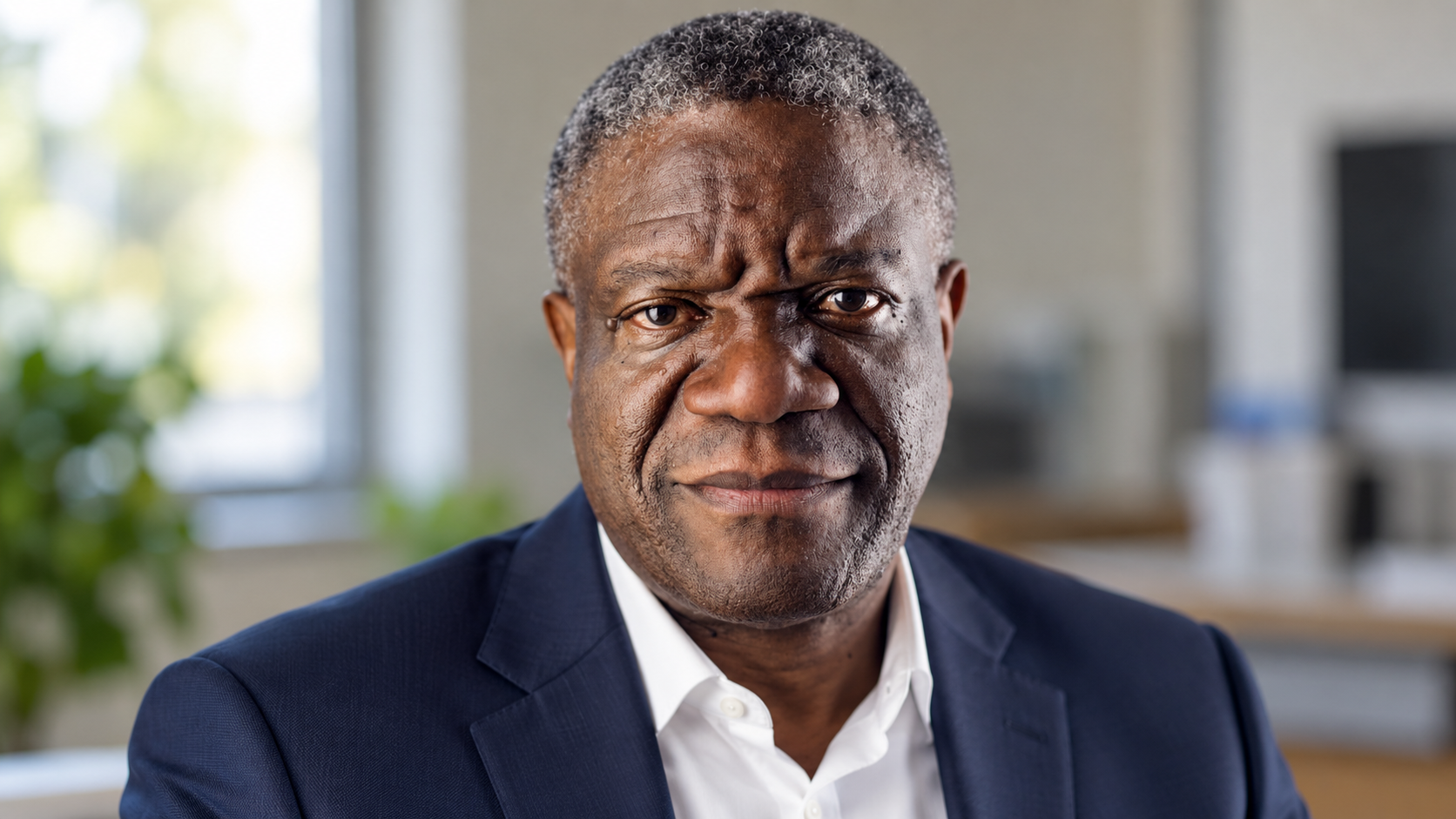
“justice is everyone’s business”
The Norwegian Nobel Committee identifies this as Denis Mukwege’s basic principle in its announcement of the 2018 Nobel Peace Prize. The Nobel Peace Center repeats the attribution, using different capitalization and punctuation around the same words. The short statement belongs to the work of a Congolese physician whose care for survivors of sexual violence has been accompanied by advocacy against impunity. The committee’s account links responsibility to people and authorities at several levels, rather than placing it entirely on a hospital or on those harmed. That context makes the quotation relevant to health while preserving its wider moral and civic purpose. Treatment responds to injuries and immediate needs; protection and accountability address questions that clinical work alone cannot settle. The principle names a shared concern, without establishing the precise first occasion on which Mukwege expressed it. It should be understood beside his work and advocacy, rather than presented as an isolated slogan about any dispute.
Everyone’s business can sound like an invitation for outsiders to take control of a survivor’s story. A responsible interpretation moves in the other direction: shared responsibility should reduce the burden on the person harmed while respecting that person’s choices. Support may involve healthcare, psychological assistance, practical resources, or appropriate legal services, with different people accountable for different tasks. No single participant has unrestricted authority simply because the goal is important. Confidentiality, informed decisions, and the avoidance of further harm remain essential considerations. These are ethical applications of the principle, not a claim that the quotation supplies a detailed legal process. Its breadth asks institutions and communities to examine their own responsibilities instead of assuming that the problem ends when medical treatment is complete. It also leaves room to distinguish immediate care from the longer pursuit of accountability. Both can matter, but their timing and form should not be imposed on the survivor as a condition of receiving help.
For health services, the statement can prompt reflection on how support connects with needs beyond the clinical encounter. A team may need clear pathways to other expertise and an honest account of what it can offer. For the wider public, it raises questions about whether concern is matched by dependable institutions, prevention, and appropriate action. Those questions require knowledge of local circumstances and respect for the people affected; the words alone cannot decide which intervention is suitable. The quotation should also avoid becoming a reason to demand public disclosure or an inspiring account from someone whose privacy deserves protection. Mukwege’s principle is strongest when responsibility spreads outward while control over personal information remains with the individual wherever appropriate. It recognizes that caring for the consequences of violence and addressing the conditions that permit it are connected responsibilities. The practical challenge is to make those responsibilities specific, sustained, and accountable, so that a declaration of concern becomes a form of support people can actually rely on.
The 2018 Nobel Peace Prize announcement attributes this basic principle to Mukwege. The Nobel Peace Center reproduces it.
Its setting is his medical work with survivors and his advocacy against sexual violence and impunity.
Shared responsibility extends beyond treatment to appropriate protection, support, and accountability.
That responsibility does not give others permission to control a survivor’s choices or disclose private information.
Services can consider whether dependable pathways connect people with relevant clinical, practical, and legal support.
The aim is to distribute responsibility without placing new demands on the people harmed.
Explore more "Quotes of The Day"
Discover more notable quotes from influential voices across politics, science, business, technology, sports, and culture. Each quote offers insight into how ideas, beliefs, and decisions shape the world around us.