

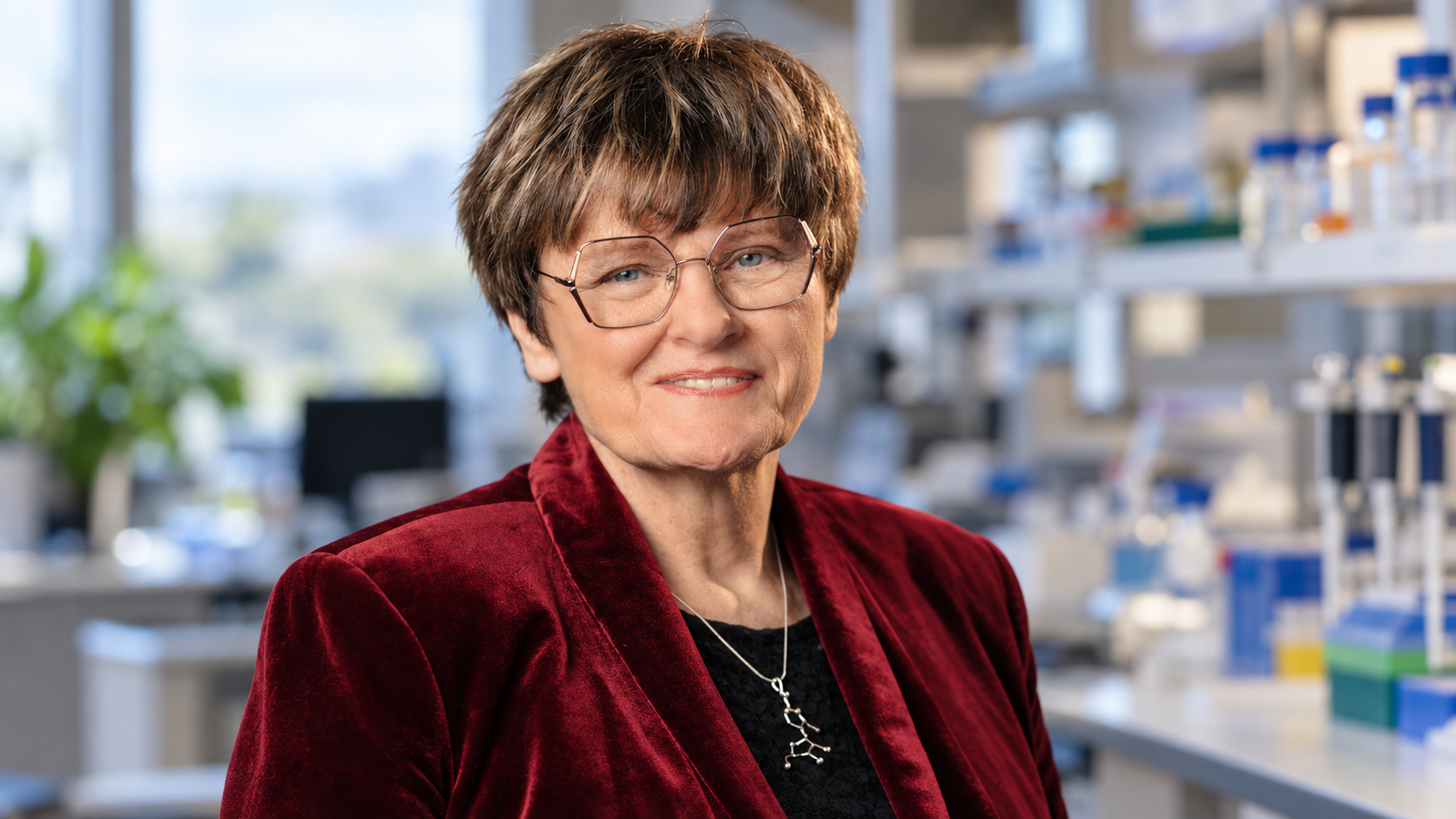
“focus on things that you can change”
Katalin Karikó returns to this idea in interviews about her scientific life. The selected words are a clause shared by her 2023 Nobel telephone interview and a 2024 conversation in Issues in Science and Technology. In the Nobel interview, she identifies a principle she learned from reading Hans Selye as a teenager, so the thought should not be presented as an idea she claims to have originated. She uses it to describe directing attention toward what she can do next, rather than becoming absorbed in comparisons with the progress of colleagues. In the later interview, advice about focus appears beside a discussion of physical and mental health and learning to handle stress. The context is research and professional experience, not a treatment protocol. Karikó’s words speak to the allocation of limited attention: identifying a useful action while acknowledging that other outcomes depend on decisions or circumstances beyond one person’s control.
Scientific work offers a concrete setting for that distinction. A researcher can frame a question, examine a result, improve a method, or ask for a colleague’s perspective. The response of nature to an experiment cannot be commanded by determination, and funding or recognition is not distributed solely according to an individual’s effort. Karikó’s advice can help preserve attention for the task while leaving those realities visible. It should not become a claim that every setback is overcome by concentrating harder. Conditions, support, and opportunities still matter, and some barriers require collective action rather than private resolve. Nor does useful focus forbid disappointment or the expression of a legitimate concern. The question is whether attention can be brought back to an available step when doing so serves a worthwhile purpose. That step may be to seek help, reconsider a plan, or rest, rather than to continue an experiment without regard to its cost or prospects.
For readers outside a laboratory, the clause can prompt a careful inventory of responsibility. Which part of a difficult situation belongs to one’s next action, and which part requires another person, an institution, or a change in conditions? Making that distinction may clarify expectations without removing uncertainty. It can also expose occasions when someone is being asked to carry responsibility for an outcome they do not control. The quote should therefore be used with equal attention to agency and limits. In health-related discussions, it does not mean that illness is prevented or cured by better focus, or that distress is evidence of poor discipline. Its strongest application remains practical and bounded: choose an action that is available, assess what it accomplishes, and remain willing to revise. Karikó’s account gives that process a scientific setting where persistence must coexist with learning. The point is purposeful attention guided by the task, rather than an obligation to feel confident about every result.
The selected clause appears in Karikó’s 2023 Nobel interview and her 2024 interview in Issues in Science and Technology.
She credits a principle learned from Hans Selye, rather than claiming to have invented the idea.
The advice concerns directing attention toward available action while recognizing limits to control over results and recognition.
Effort does not erase institutional barriers or make every setback a personal failure.
A useful application identifies realistic responsibilities, possible sources of support, and the next step worth attempting.
The quotation is professional reflection, not a claim that concentration determines health or cures disease.
Explore more "Quotes of The Day"
Discover more notable quotes from influential voices across politics, science, business, technology, sports, and culture. Each quote offers insight into how ideas, beliefs, and decisions shape the world around us.