

Melanoma Explainer
Melanoma is a cancer that begins in melanocytes, the cells that produce pigment. It is less common than some other skin cancers, but can invade nearby tissue and spread elsewhere. This explainer focuses on melanoma of the skin. It can develop in an existing mole or appear as a new spot, and it does not always look like the familiar picture of a dark, irregular mole.
Changes in size, shape, color, or behavior can be important warning signs. A spot that looks different from a person’s other spots also deserves attention. The ABCDE reminder highlights asymmetry, border irregularity, color variation, diameter, and evolution. These are clues to seek assessment, not a diagnostic checklist. A melanoma can be small, lack dark pigment, or occur in a place that receives little sun.
Ultraviolet exposure from sunlight or tanning devices contributes to the risk of many melanomas, while personal and family history, moles, and other factors also matter. Anyone can develop melanoma, including people with darker skin. Skin tone and the absence of frequent sunburns do not make a changing lesion automatically harmless. Reducing avoidable UV exposure helps lower risk, but does not eliminate the need to notice concerning changes.
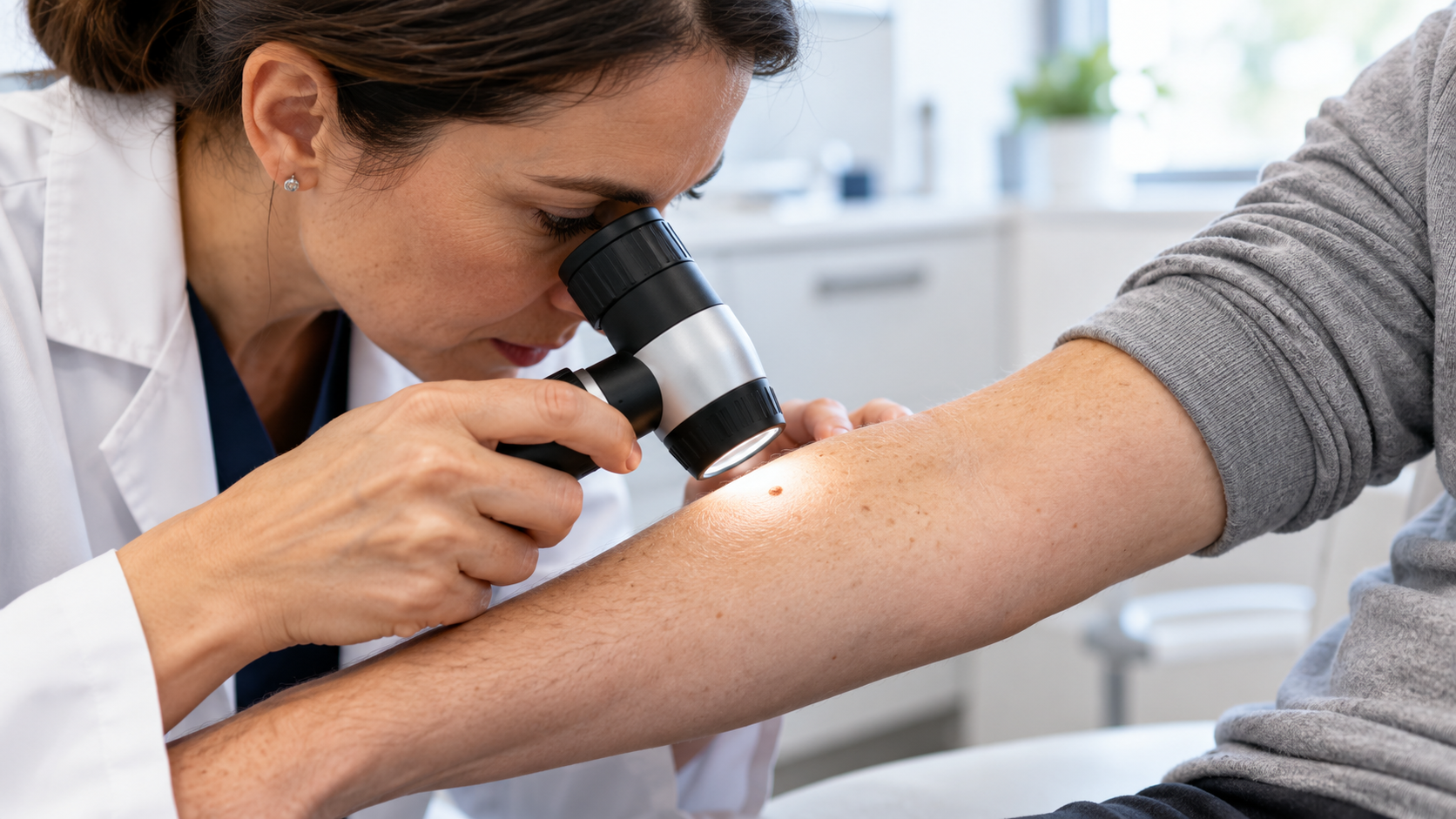
A clinician examines the skin and may use a dermatoscope to see features in greater detail. A suspicious lesion is generally assessed with a biopsy, in which tissue is examined by a laboratory. If melanoma is found, its depth and other features help determine further assessment and treatment. Care depends on stage and individual circumstances. Early and advanced melanoma can require very different approaches, so one patient’s treatment does not describe every case.
A changing spot may become uneven, develop several colors, grow, bleed, or otherwise behave differently. Some melanomas resemble a pink bump, a bruise, or a mark beneath a nail. The important point is not to wait for every textbook feature. A new or evolving concern should be evaluated, especially if it stands out from the surrounding pattern of moles.
Photos can help document changes for a clinician, but image comparison is not a substitute for an examination. Ordinary benign spots can look worrying, while some cancers appear subtle. An app or a visual rule cannot reliably settle every case. The purpose of noticing a change is to prompt appropriate assessment, rather than to label the spot as cancer or dismiss it at home.
A skin examination considers the lesion and the wider context, including other moles and health history. Dermoscopy magnifies structures that are difficult to see with the unaided eye. When tissue is removed, a pathologist evaluates it for cancer and records features relevant to care. Looking suspicious and being confirmed as melanoma are separate steps in that process.
Staging describes the extent of a confirmed cancer. Features of the original melanoma and, when appropriate, evaluation of lymph nodes or other sites help establish it. Not everyone needs the same tests. The depth of a melanoma in the skin is different from its surface diameter, so judging seriousness from the size of a visible mark can be misleading.
Surgery is central to treatment for many localized melanomas. Depending on the findings, other treatments may be considered, including medicines that affect immune responses or target particular cancer-cell changes. These options have distinct benefits and risks. The care team chooses a plan using the cancer’s characteristics and the person’s health, rather than assuming that the newest treatment is appropriate for every stage.
Follow-up can include skin examinations and other monitoring tailored to the situation. A previous melanoma can affect future risk, and new changes still need attention. Sun protection and avoiding tanning devices remain useful, but they cannot replace follow-up. The overall aim is timely diagnosis, treatment suited to the confirmed disease, and continued awareness without treating every harmless mole as an emergency.
Explore more "Explainers"
Discover additional explainers across politics, science, business, technology, and other fields. Each explainer breaks down a complex idea into clear, everyday language—helping you better understand how major concepts, systems, and debates shape the world around us.