

On This Day in Business: September 6, 1522
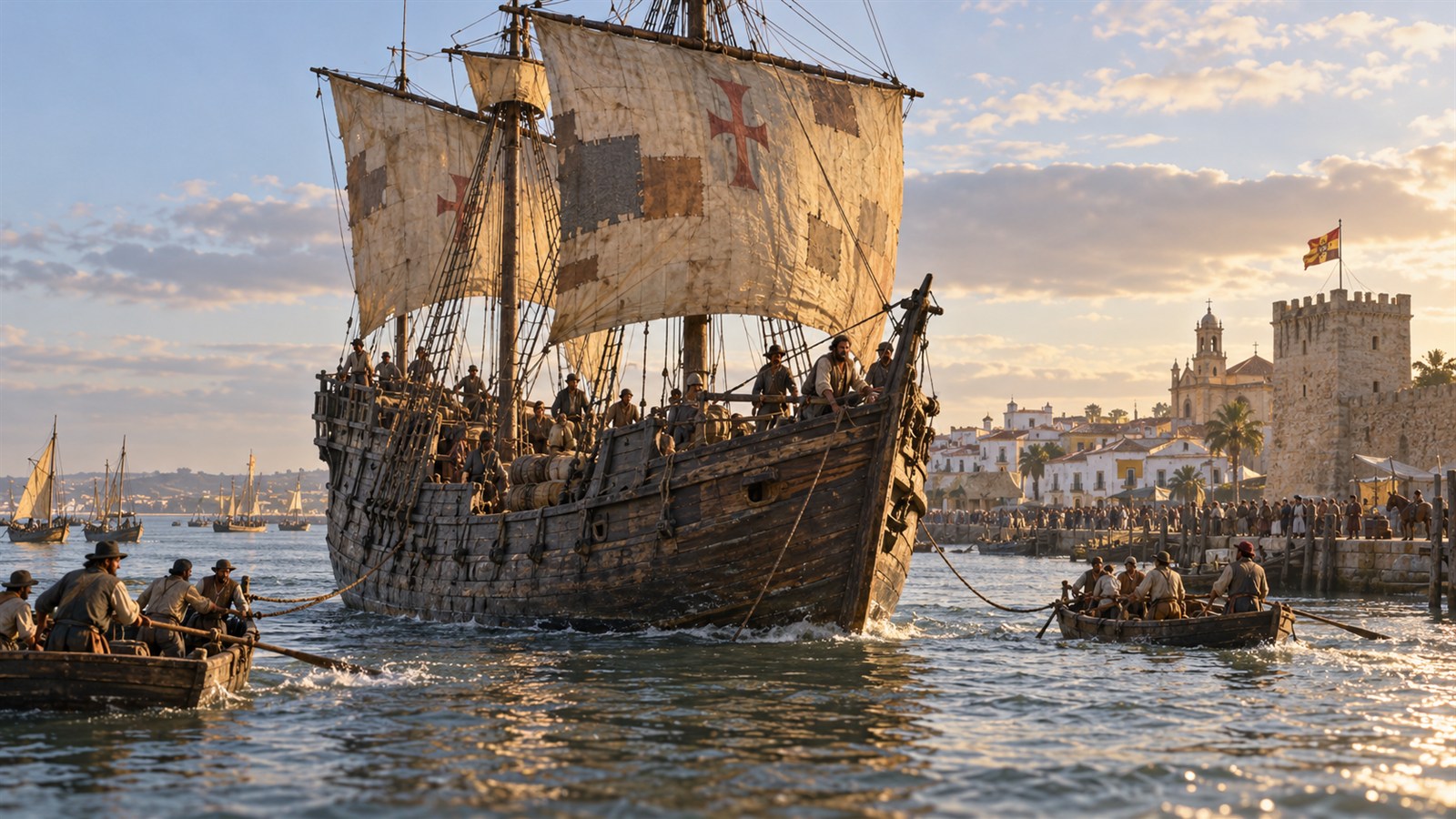
On September 6, 1522, the battered ship Victoria reached Sanlúcar de Barrameda in Spain with Juan Sebastián Elcano in command. It was the only vessel from the expedition begun three years earlier under Ferdinand Magellan to complete the voyage around the world. Just eighteen exhausted European crew members returned aboard the ship, along with a valuable cargo of spices. The expedition had started as a commercial search for a westward route to the Spice Islands. Its survival proved that the world's oceans formed a connected system and that a ship could return to its point of departure by continuing in one direction.
The voyage was a high-risk business venture backed by the Spanish Crown and private capital. Five ships, supplies, wages, trade goods, and years of uncertainty had to be financed before any cloves could be sold. Geography, weather, hunger, disease, mutiny, combat, and rival imperial claims destroyed most of that investment. Magellan died in the Philippines, leadership changed repeatedly, and the remaining crews reduced their fleet as manpower disappeared. Victoria's cargo helped offset costs, but the greater return was information: the expedition measured distances, identified passages, recorded markets, and exposed the immense logistical challenge of reaching Asian trade through the west.
That information altered commercial calculation. The route through the strait at South America's southern end and across the Pacific was too long and difficult to become an immediate substitute for Portuguese routes around Africa. Yet the circumnavigation clarified the scale of the planet and connected previously separate European ideas about Atlantic, Pacific, and Indian Ocean trade. Maps became more accurate, governments refined territorial claims, and merchants could evaluate future expeditions with evidence purchased at extraordinary human cost. Knowledge generated by one voyage became an asset used by many later navigators and states.
The expedition also belongs to the history of coercive empire, not simply heroic exploration. Its commercial ambitions were tied to competition for overseas territory, control of trade, and violent encounters with local societies. Remembering that context gives the business lesson its full weight: global markets are built through institutions and power as well as discovery and exchange. Victoria's return on September 6 demonstrated the possibility of worldwide maritime connection while revealing its price. Modern supply chains now move goods around the planet routinely, but they inherit the central problems the voyage made visible—distance, risk, financing, information, political authority, and responsibility toward the people encountered along the route. The surviving logs and charts further show how accounting and observation travel together. Quantities of food, distance, cargo, wages, losses, and exchange were recorded because a commercial expedition needed evidence as much as courage. Those records converted a singular ordeal into reusable organizational knowledge.
Victoria reached Sanlúcar de Barrameda on September 6, 1522, completing the first circumnavigation.
Only eighteen European crew members returned aboard the sole surviving ship of the original five.
The expedition began as a financed search for a westward commercial route to the Spice Islands.
Its spice cargo carried value, but the voyage's largest asset was new geographic and logistical knowledge.
The route proved possible while also showing that Pacific distance made regular trade extremely difficult.
The achievement expanded global commerce and empire, leaving a legacy that includes both connection and coercion.
Explore more of "On This Day ..."
Discover more events from the same date across news, politics, technology, sports, and other fields. Each link highlights significant moments that shaped history on different fronts.