

On This Day in Business: September 24, 1869
On September 24, 1869, a scheme to corner the U.S. gold market collapsed in a day remembered as Black Friday. Financiers Jay Gould and James Fisk had accumulated gold and encouraged others to buy, expecting limited government sales to push the price higher. Their plan also relied on influence near President Ulysses S. Grant's administration. As speculation intensified, gold climbed rapidly in New York's Gold Room. The market turned when the Treasury announced it would sell $4 million in government gold, expanding supply and destroying the assumptions behind the corner.
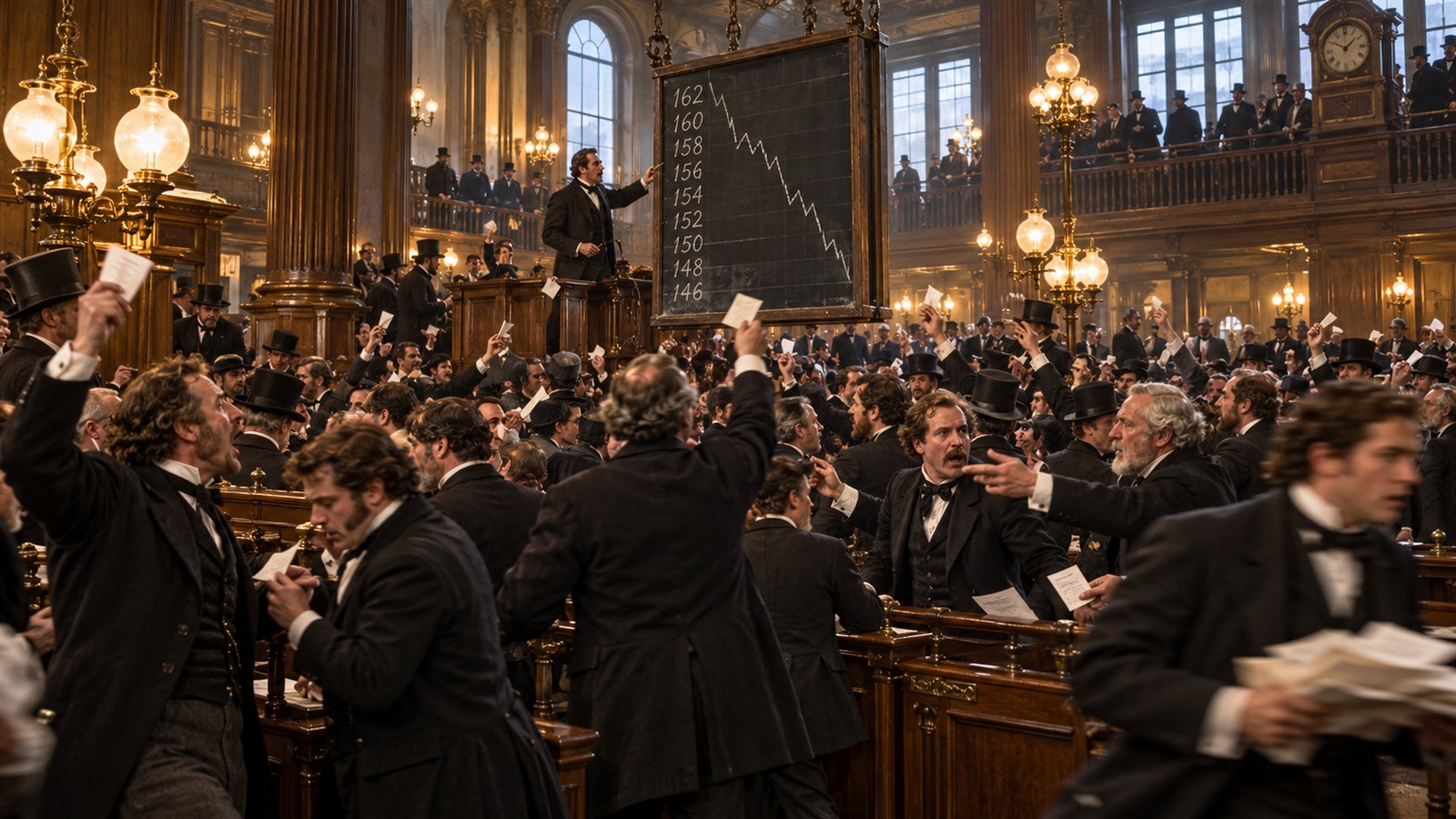
Prices whipsawed with extraordinary speed. Gold reached about 162 in greenback terms before falling toward 135, ruining traders who had borrowed to bet on continued increases. The crash closed brokerage firms, damaged stock values, and disrupted agricultural trade because gold affected the conversion value of crops sold abroad. A photograph of the Gold Room bulletin board preserved by the Library of Congress records the frantic quotations. The crisis demonstrated how manipulation in a specialized market could travel through credit, collateral, exports, and public confidence.
The scheme exploited a post-Civil War monetary system in which paper greenbacks were not freely convertible into gold. The exchange rate therefore fluctuated, creating both legitimate hedging needs and opportunities for speculation. Gould and Fisk understood that government sales could determine supply, so information and political access became as valuable as capital. Their actions show why markets require rules against manipulation and misuse of inside influence. Price discovery cannot function fairly when powerful participants manufacture scarcity while concealing their own selling.
Congress investigated the episode, although Gould and Fisk avoided major legal punishment and comprehensive federal commodities regulation remained decades away. The financial losses and public scandal nevertheless became a durable warning about concentrated positions, leverage, and conflicts between market actors and government. September 24 also gave the phrase Black Friday an American financial meaning long before retailers used it for shopping after Thanksgiving. The business lesson remains current: markets can transmit useful information only when participants trust the supply of information itself. When insiders distort both price and expectations, the collapse of a trade can impose costs on firms and households that never chose to join the speculation. The crash also exposed the asymmetry between private gain and public disruption. A small circle sought profit from a corner, while farmers, merchants, brokers, and borrowers absorbed consequences through prices and credit. Effective market rules aim to keep risk with those who choose it.
The U.S. gold market crashed on September 24, 1869, in the original American Black Friday.
Jay Gould and James Fisk tried to corner gold and profit from an artificial price increase.
The Treasury's decision to sell $4 million in gold broke the attempted corner.
Gold prices plunged, brokerages failed, and losses spread into stocks, credit, and agricultural trade.
The scheme exploited a fluctuating greenback-gold rate and access to government information.
The crisis became a lasting warning about leverage, manipulation, concentrated positions, and political influence.
Explore more of "On This Day ..."
Discover more events from the same date across news, politics, technology, sports, and other fields. Each link highlights significant moments that shaped history on different fronts.