

Soccer’s Offside Rule Explainer
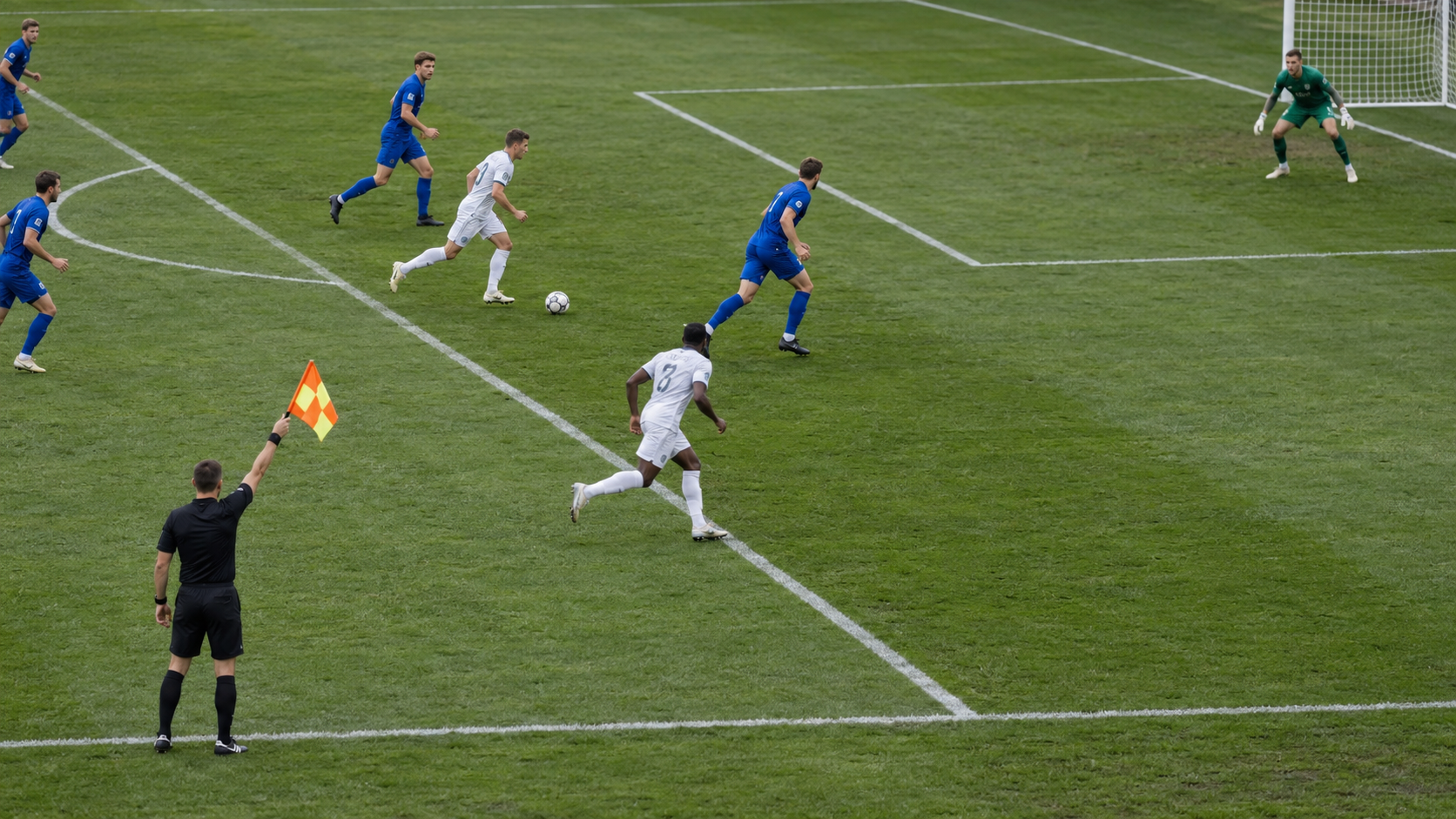
Soccer’s offside rule limits how far an attacker can move ahead of the defense before a teammate plays the ball. A player is in an offside position when any part of the head, body, or feet is in the opponents’ half and nearer the goal line than both the ball and the second-last opponent. Hands and arms do not count. Position alone is not an offense, however. The referee penalizes the player only if that position becomes relevant to active play.
The crucial snapshot is taken at the instant a teammate plays or touches the ball, not when the attacker receives it. An offside-positioned player can become involved by playing the ball, blocking an opponent’s line of vision, challenging for the ball, or gaining an advantage from a rebound or deliberate save. If the player stays away from the action, play can continue. A later touch by a teammate creates a new judgment, which is why a run that first looks offside may become legal before the decisive pass.
Imagine a winger receiving a through ball while a center forward stands beyond the defenders on the other side of the field. The center forward is not automatically penalized if the player neither touches the ball nor interferes with an opponent. If the winger then advances and passes when the forward has returned onside, the forward may legally receive it. A defender’s deliberate play can also begin a new phase, but a mere deflection or a deliberate save generally does not erase the earlier offside position.
There is no offside offense when a player receives the ball directly from a goal kick, throw-in, or corner kick. When an offense does occur, the restart is an indirect free kick from the place where the player became involved. Video review can help officials judge extremely close positions, but it does not change the underlying rule. For viewers, the most useful habit is to watch the passer’s touch and the second-last opponent rather than the attacker’s location when the ball finally arrives.
Offside keeps attackers from waiting permanently beside the goal and preserves a contest for space between attack and defense.
The law separates an offside position from an offside offense. A flag should come only after the positioned player becomes involved in active play.
Officials judge the attacker at the exact moment a teammate plays or touches the ball. The ball and the second-last opponent are the two reference lines.
An assistant referee may delay the flag until involvement is clear. Video review can supply calibrated lines in competitions that use it, but the same legal test applies.
A player cannot be offside directly from a goal kick, throw-in, or corner kick. Being level with the second-last opponent or with the ball is also onside.
A defender’s deliberate play may reset the phase, while a deflection or deliberate save generally does not. The distinction depends on the defender’s control, not simply on contact.
Explore more "Explainers"
Discover additional explainers across politics, science, business, technology, and other fields. Each explainer breaks down a complex idea into clear, everyday language—helping you better understand how major concepts, systems, and debates shape the world around us.