

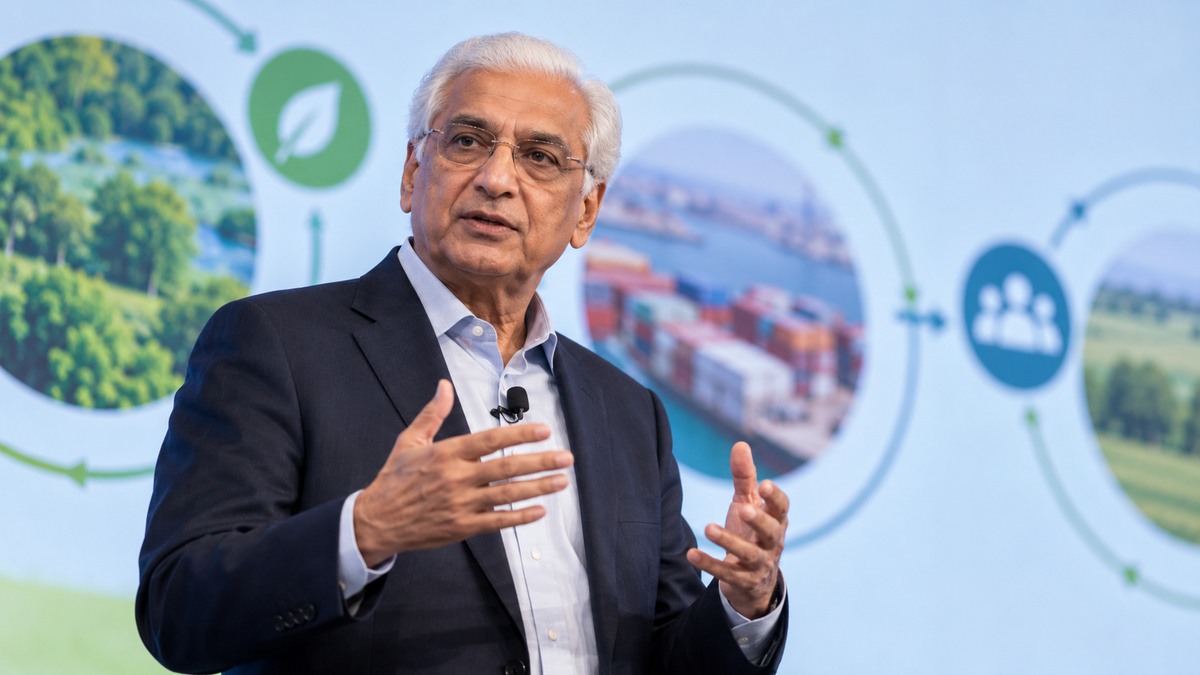
“Companies cannot afford to be just innocent bystanders in what’s happening around in society.”
Harish Manwani delivered this challenge in his 2013 TED talk on profit and responsibility. Speaking from experience at Unilever, he argued that growth should address social and environmental needs and that companies possess brands, reach, talent, and supply chains capable of influencing conditions beyond their gates. A business is embedded in infrastructure, communities, ecosystems, and public institutions. Claiming neutrality does not remove impact; it can leave existing costs and power relationships unexamined. Responsibility begins by tracing how value is created and which consequences the organization can materially influence. The business value of the line appears when it changes a real decision. It directs attention toward assumptions that routine can hide and invites a team to examine the system behind an outcome instead of treating the visible result as a complete explanation.
Companies can identify the most significant effects across products and supply chains, set measurable goals linked to operations, assign executive ownership, and report both progress and setbacks. Partnerships should respect local expertise rather than treating communities as audiences for a corporate campaign. Application therefore requires an explicit mechanism: what should people do differently, what signal should move, and when will the team examine the result? Writing those elements down turns general agreement into a testable management practice.
Corporate action can overreach democratic institutions or become reputation management. Firms should not use philanthropy to distract from labor, tax, safety, competition, or environmental practices. Commitments need independent evidence, grievance channels, and a clear distinction between public benefit and commercial promotion. Context matters because an idea that improves one situation can create harm in another. Leaders need boundaries, dissent, representative evidence, and a way to correct course. Accountability cannot be delegated to the quotation or the tool used to implement it.
Climate disruption, misinformation, public-health risk, and inequality cross industry boundaries. Businesses cannot solve them alone, but their procurement, product design, political activity, and employment practices shape outcomes. Consistency across those choices matters more than an isolated social initiative. Select one public commitment and trace it through the company’s core incentives, purchasing, product, and lobbying. Find the largest contradiction, assign an owner and deadline, and publish a measure that an affected stakeholder could use to judge real change. The review should preserve what was known when the choice was made, document what changed, and share the learning beyond one team. Repeated with discipline, that cycle converts a memorable sentence into better judgment rather than another short-lived management theme. It also makes the cost of assumptions visible, allowing future teams to reuse proven knowledge while recognizing the point at which a different customer, risk, or operating environment requires fresh testing.
Harish Manwani delivered this challenge in his 2013 TED talk on profit and responsibility. Speaking from experience at Unilever, he argued that growth should address social and environmental needs and that companies possess brands, reach, talent, and supply chains capable of influencing conditions beyond their gates.
A business is embedded in infrastructure, communities, ecosystems, and public institutions. Claiming neutrality does not remove impact; it can leave existing costs and power relationships unexamined. Responsibility begins by tracing how value is created and which consequences the organization can materially influence.
Companies can identify the most significant effects across products and supply chains, set measurable goals linked to operations, assign executive ownership, and report both progress and setbacks. Partnerships should respect local expertise rather than treating communities as audiences for a corporate campaign.
Corporate action can overreach democratic institutions or become reputation management. Firms should not use philanthropy to distract from labor, tax, safety, competition, or environmental practices. Commitments need independent evidence, grievance channels, and a clear distinction between public benefit and commercial promotion.
Climate disruption, misinformation, public-health risk, and inequality cross industry boundaries. Businesses cannot solve them alone, but their procurement, product design, political activity, and employment practices shape outcomes. Consistency across those choices matters more than an isolated social initiative.
Select one public commitment and trace it through the company’s core incentives, purchasing, product, and lobbying. Find the largest contradiction, assign an owner and deadline, and publish a measure that an affected stakeholder could use to judge real change.
Explore more "Quotes of The Day"
Discover more notable quotes from influential voices across politics, science, business, technology, sports, and culture. Each quote offers insight into how ideas, beliefs, and decisions shape the world around us.