

On This Day in Business: October 6, 1927
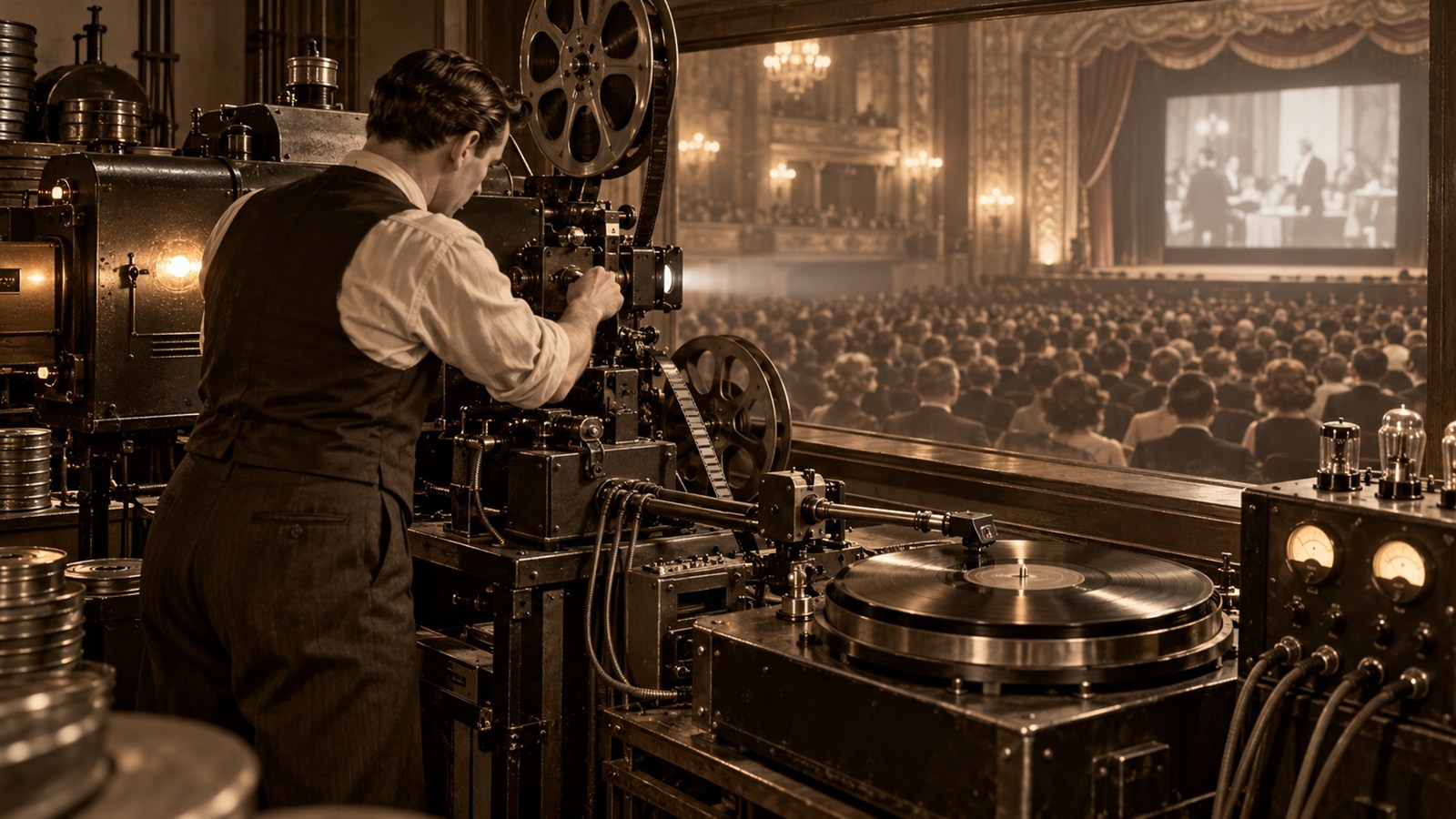
On October 6, 1927, Warner Bros. premiered The Jazz Singer in New York. The feature was mostly silent, with recorded music and sound effects, but it included synchronized songs and about two minutes of spoken dialogue by Al Jolson. Other experiments with moving pictures and recorded sound had come before it. What made this release decisive was commercial response: audiences experienced a popular performer whose voice seemed attached to the image, and exhibitors saw demand that could justify expensive new equipment. The film turned synchronized speech from a technical novelty into a competitive threat to every studio and theater built around silent pictures.
Warner Bros. used the Vitaphone system, which synchronized a projector with large soundtrack discs and amplified the result through electrical loudspeakers. The method required precision in production and projection; a damaged disc or lost synchronization could spoil a performance. The studio also had to persuade theaters to install compatible equipment. That made the innovation a platform investment rather than a single-film expense. Sam Warner had championed the technology after a Bell Labs demonstration, believing sound could give the smaller studio an advantage. The Jazz Singer cost about $422,000, and its success supplied revenue and credibility for further expansion.
Competitors moved quickly. Studios rewired sound stages, hired dialogue writers and voice coaches, revised contracts, and adopted competing sound-on-film systems. Theaters borrowed money for amplifiers, speakers, projectors, and acoustic improvements. Performers with marketable voices gained power while others lost work; musicians who had supplied live accompaniment faced disruption. Production slowed because noisy cameras required enclosures and microphones limited movement. Yet the audience premium was powerful. By the end of the decade, talking pictures had become the standard, reshaping distribution, exhibition, acting styles, and the international market for films.
The movie's legacy also requires recognizing Jolson's use of blackface, a racist performance tradition that helped sell the production while reinforcing stereotypes and exclusion. Business success did not erase that harm, and the transition to sound carried existing inequalities into a new medium. October 6 remains a turning point because it shows how adoption can accelerate once customers experience a technology in an emotionally persuasive product. Warner Bros. did not invent every component, but it combined talent, financing, exhibition relationships, and promotion at the right moment. The result changed the industry's cost structure and made audio rights, music, dialogue, and recorded performance central commercial assets in modern entertainment. The capital cycle was unforgiving. Studios and theaters that waited risked losing audiences, while those that moved early could select the wrong technical system. Successful adoption depended on standards and financing arriving quickly enough to prevent incompatible equipment from fragmenting the market.
The Jazz Singer premiered in New York on October 6, 1927.
The film was largely silent but included synchronized songs and a short passage of spoken dialogue.
Warner Bros. used the disc-based Vitaphone system and helped theaters finance compatible equipment.
Commercial success forced studios, performers, and exhibitors to reorganize rapidly around sound.
The production also carried the racist blackface tradition into the new medium and must be understood in that context.
Its impact shows how a persuasive product can turn an existing invention into an industry-wide standard.
Explore more of "On This Day ..."
Discover more events from the same date across news, politics, technology, sports, and other fields. Each link highlights significant moments that shaped history on different fronts.