

On This Day in Business: November 16, 2001
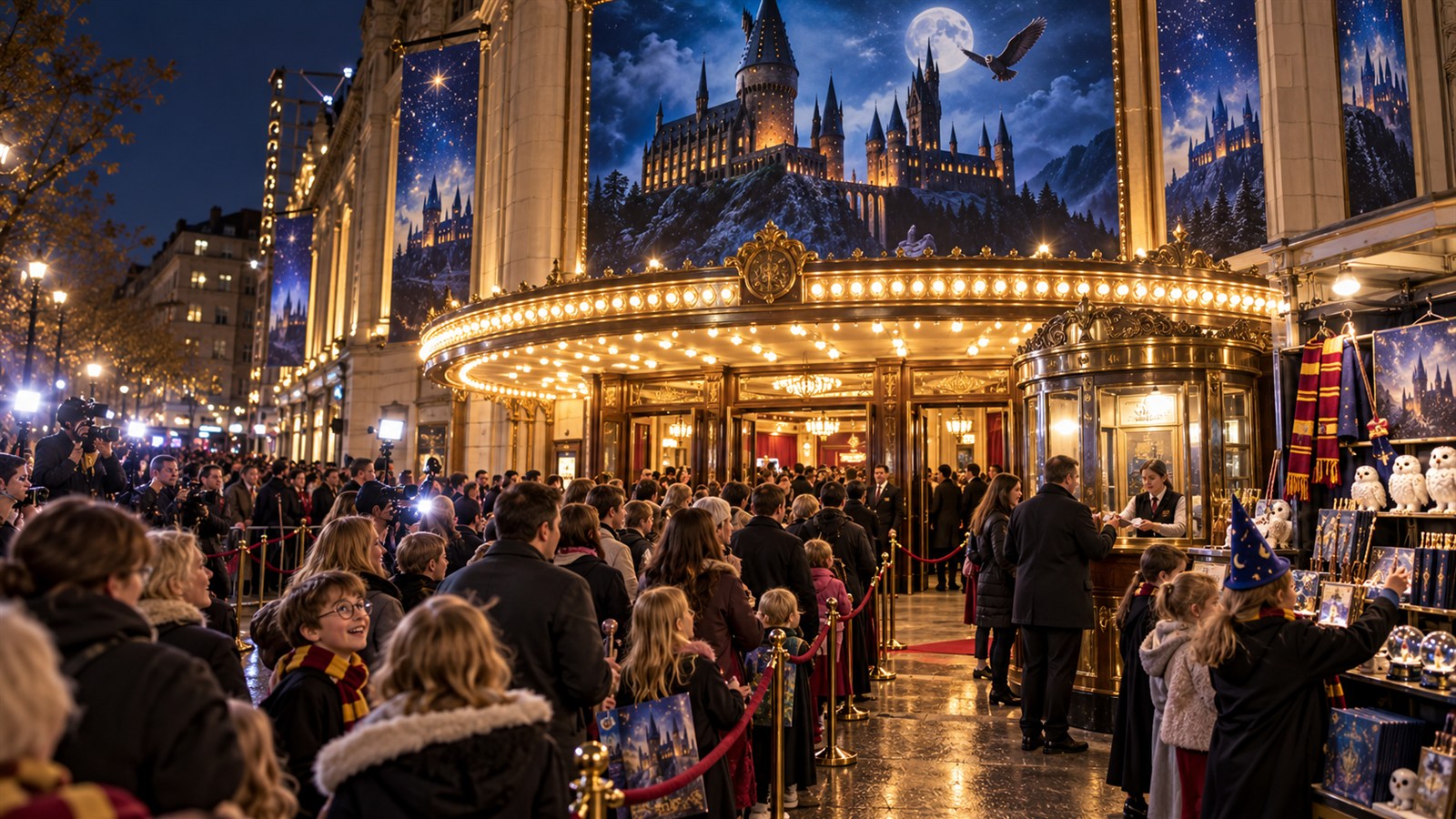
On November 16, 2001, Harry Potter and the Philosopher's Stone—titled Harry Potter and the Sorcerer's Stone in the United States—opened widely in both markets. Warner Bros. had acquired film rights to J.K. Rowling's bestselling novel and mounted a large production intended to satisfy existing readers while introducing the story to movie audiences around the world. The commercial importance extended beyond the object or performance itself. Cultural enterprises create markets by organizing attention, interpretation, and access. The institution, publisher, producer, or promoter must persuade audiences that a new work deserves time while also building the practical means to encounter it.
The adaptation required coordination across casting, visual effects, sets, music, distribution, licensing, and marketing. Choosing young performers created continuity possibilities but also imposed a demanding production calendar as the cast aged. The studio was not releasing one film in isolation; it was building a system capable of supporting sequels, merchandise, games, and later location-based experiences. Revenue rarely comes from a single channel. Tickets, editions, memberships, licensing, donations, touring, education, and later reuse can support the same underlying intellectual property or collection. That portfolio makes rights, preservation, and reputation central business assets rather than administrative details.
The film became the highest-grossing release of 2001 worldwide and demonstrated the power of transferring trusted intellectual property across media. Strong book sales reduced awareness risk, but the screen version still had to establish visual conventions and character performances that audiences would accept for years. Success increased the value of the entire franchise ecosystem. Success can be difficult to forecast because cultural value often grows through conversation and repetition. Critics, fans, schools, retailers, and other institutions become part of distribution. A work that initially looks risky may gain commercial power as more people use it to define a genre, an era, or a shared identity.
The opening is a case study in franchise management. Rights holders, creators, studios, distributors, retailers, and licensees all depended on consistent world-building. Expanding too quickly could dilute the property; moving too slowly could lose momentum. The durable value came from sequencing releases and experiences so each strengthened demand for the others. The lasting lesson is to pair creative risk with stewardship. Managers should preserve source materials, clarify ownership, cultivate audiences, and leave room for reinterpretation. Cultural businesses endure when they treat attention as a relationship to be renewed, not a commodity exhausted in one opening weekend. In practical terms, the advantage came from linking a clear customer promise to disciplined execution. Capital had to be allocated before demand was certain, employees and partners had to coordinate, and leaders had to keep learning after the initial milestone passed into history.
The first Harry Potter film opened widely on November 16, 2001.
The release covered the United States and United Kingdom.
Warner Bros. adapted an already successful publishing property.
Production planning anticipated sequels and a growing cast.
The movie became the highest-grossing film of 2001 worldwide.
The franchise expanded into games, merchandise, and location-based experiences.
Explore more of "On This Day ..."
Discover more events from the same date across news, politics, technology, sports, and other fields. Each link highlights significant moments that shaped history on different fronts.