

On This Day in Business: November 18, 1928
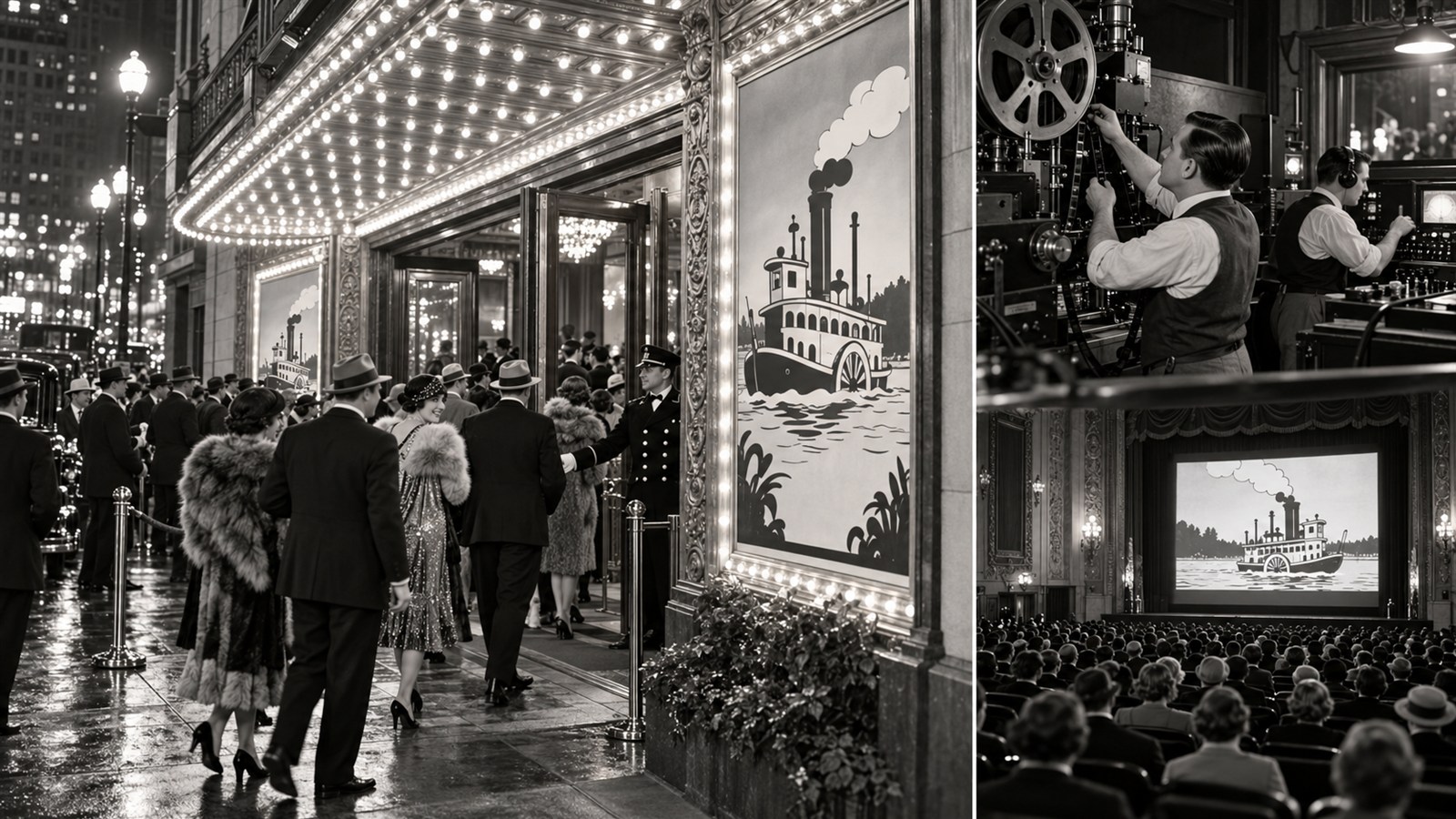
On November 18, 1928, Steamboat Willie opened at the Colony Theatre in New York. The short was the first Mickey Mouse cartoon released and used synchronized music, voices, and effects as a central attraction. Walt Disney and Ub Iwerks had already produced silent Mickey shorts, but distributors showed little interest until sound offered a way to distinguish the character. The commercial importance extended beyond the object or performance itself. Cultural enterprises create markets by organizing attention, interpretation, and access. The institution, publisher, producer, or promoter must persuade audiences that a new work deserves time while also building the practical means to encounter it.
Producing synchronization required technical experimentation and financing when the small studio could not assume that theaters would buy the film. Disney arranged recording through the Cinephone process after an unsuccessful first session. The finished short paired action tightly with sound, making the novelty easy for audiences and exhibitors to understand. Revenue rarely comes from a single channel. Tickets, editions, memberships, licensing, donations, touring, education, and later reuse can support the same underlying intellectual property or collection. That portfolio makes rights, preservation, and reputation central business assets rather than administrative details.
The enthusiastic response gave Disney a character around which it could build a continuing series, distribution relationships, and eventually licensed merchandise. Just as important, the company learned that technical presentation could strengthen personality and storytelling. Mickey became an owned creative asset whose appearances could compound audience recognition across films and products. Success can be difficult to forecast because cultural value often grows through conversation and repetition. Critics, fans, schools, retailers, and other institutions become part of distribution. A work that initially looks risky may gain commercial power as more people use it to define a genre, an era, or a shared identity.
The premiere shows the commercial importance of combining invention with a memorable experience. Synchronized sound existed beyond this one short, but Disney used it to make a character feel newly alive. Businesses create durable advantage when technology serves a clear emotional promise and when ownership allows successful work to be extended without losing control. The lasting lesson is to pair creative risk with stewardship. Managers should preserve source materials, clarify ownership, cultivate audiences, and leave room for reinterpretation. Cultural businesses endure when they treat attention as a relationship to be renewed, not a commodity exhausted in one opening weekend. In practical terms, the advantage came from linking a clear customer promise to disciplined execution. Capital had to be allocated before demand was certain, employees and partners had to coordinate, and leaders had to keep learning after the initial milestone passed into history.
Steamboat Willie premiered on November 18, 1928.
It was the first released Mickey Mouse cartoon.
Synchronized sound was central to the audience experience.
The short followed earlier silent Mickey productions.
Audience response helped establish a continuing film series.
Character ownership supported later licensing and merchandise growth.
Explore more of "On This Day ..."
Discover more events from the same date across news, politics, technology, sports, and other fields. Each link highlights significant moments that shaped history on different fronts.