

On This Day in Business: November 21, 1877
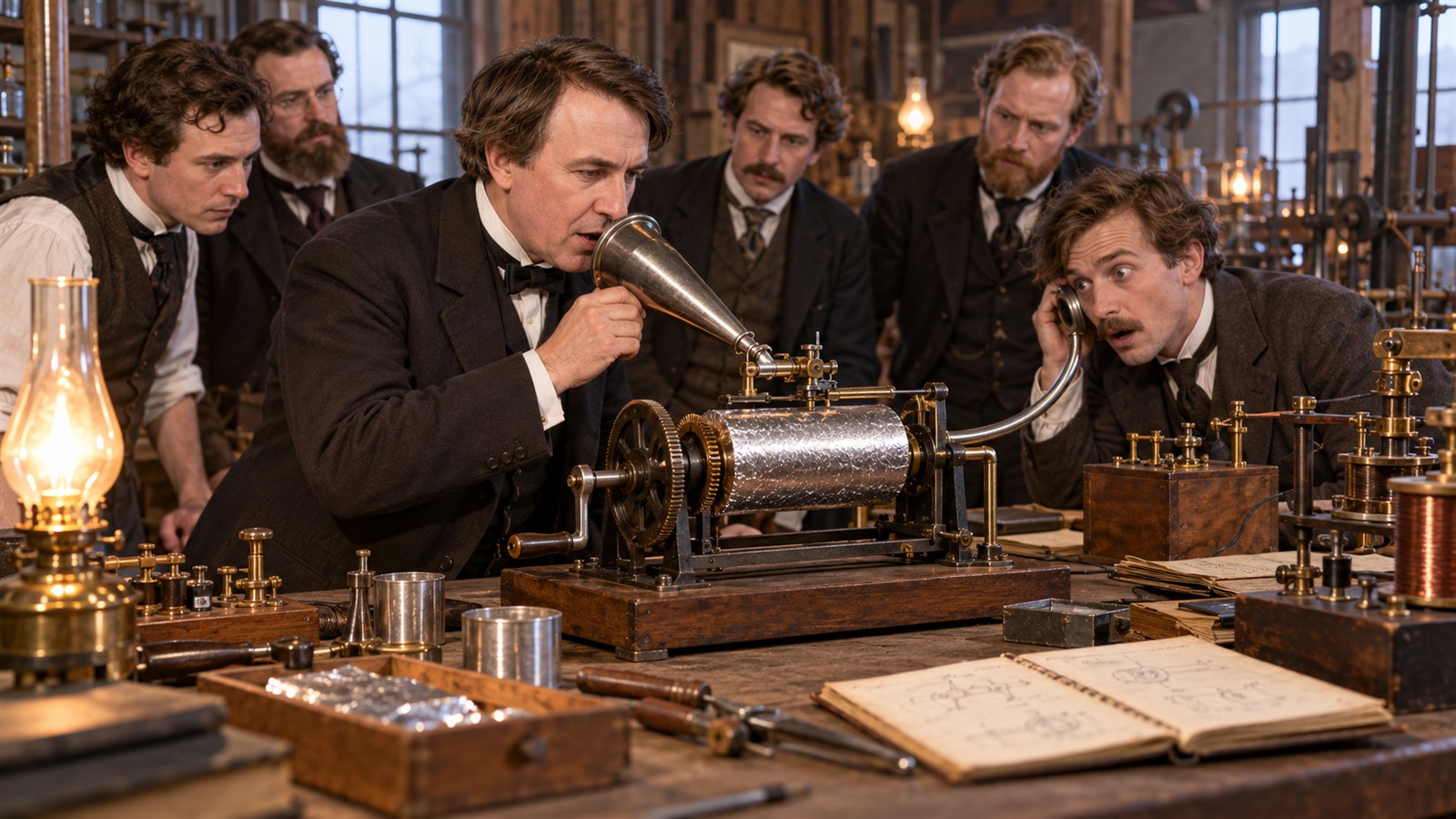
On November 21, 1877, Thomas Edison announced the phonograph, a device designed to record and reproduce sound. Edison's work on telegraph and telephone technologies led him toward a stylus that could impress vibrations into material wrapped around a cylinder. The early tinfoil machine suggested that speech, music, and other sounds could become repeatable records rather than fleeting events. The innovation addressed a basic business problem: turning activity into information that could be stored, compared, and acted upon. Better records reduce disputes, expose patterns, and make delegation possible because owners and managers no longer depend entirely on memory or personal supervision.
The first model was fragile and difficult to operate, so the commercial path was uncertain. Edison initially imagined dictation, books for blind readers, education, family records, toys, and music among possible uses. Those ideas identified several markets before the technology was reliable enough to serve them at scale. A useful information system must fit the work around it. Accuracy, speed, controls, and ease of use determine whether employees adopt the tool, while reports must reach people who can respond. The machine or method creates value only when it improves decisions and accountability.
Other inventors and companies improved recording media, playback, duplication, and distribution. Sound recording eventually created businesses in equipment, publishing, performance rights, retail, entertainment, and archives. The value moved from a single machine toward a system in which recordings could be produced once and experienced repeatedly. Once records become standardized, they support wider coordination—pricing, inventory, credit, auditing, planning, and performance measurement. That reach can improve productivity, but it also raises questions about surveillance, access, error correction, and who controls the resulting data.
The announcement matters because it separated sound from the moment of performance. That changed the economics of voice and music: time could be stored, copied, sold, and transported. Modern audio platforms still depend on the same transformation, even though the medium has shifted from cylinders and discs to files and streams. Modern firms still face the same design test. Collect only information tied to a clear purpose, protect it, and return useful signals to the people doing the work. Technology should make the business more understandable without turning measurement into a substitute for judgment. In practical terms, the advantage came from linking a clear customer promise to disciplined execution. Capital had to be allocated before demand was certain, employees and partners had to coordinate, and leaders had to keep learning after the initial milestone passed into history.
Edison announced the phonograph on November 21, 1877.
The machine could record and reproduce sound.
Early versions embossed vibrations into tinfoil on a cylinder.
Edison proposed uses in dictation, education, toys, and music.
Later improvements created a commercial recording industry.
Recorded sound transformed performances into repeatable assets.
Explore more of "On This Day ..."
Discover more events from the same date across news, politics, technology, sports, and other fields. Each link highlights significant moments that shaped history on different fronts.