

On This Day in Business: November 25, 1952
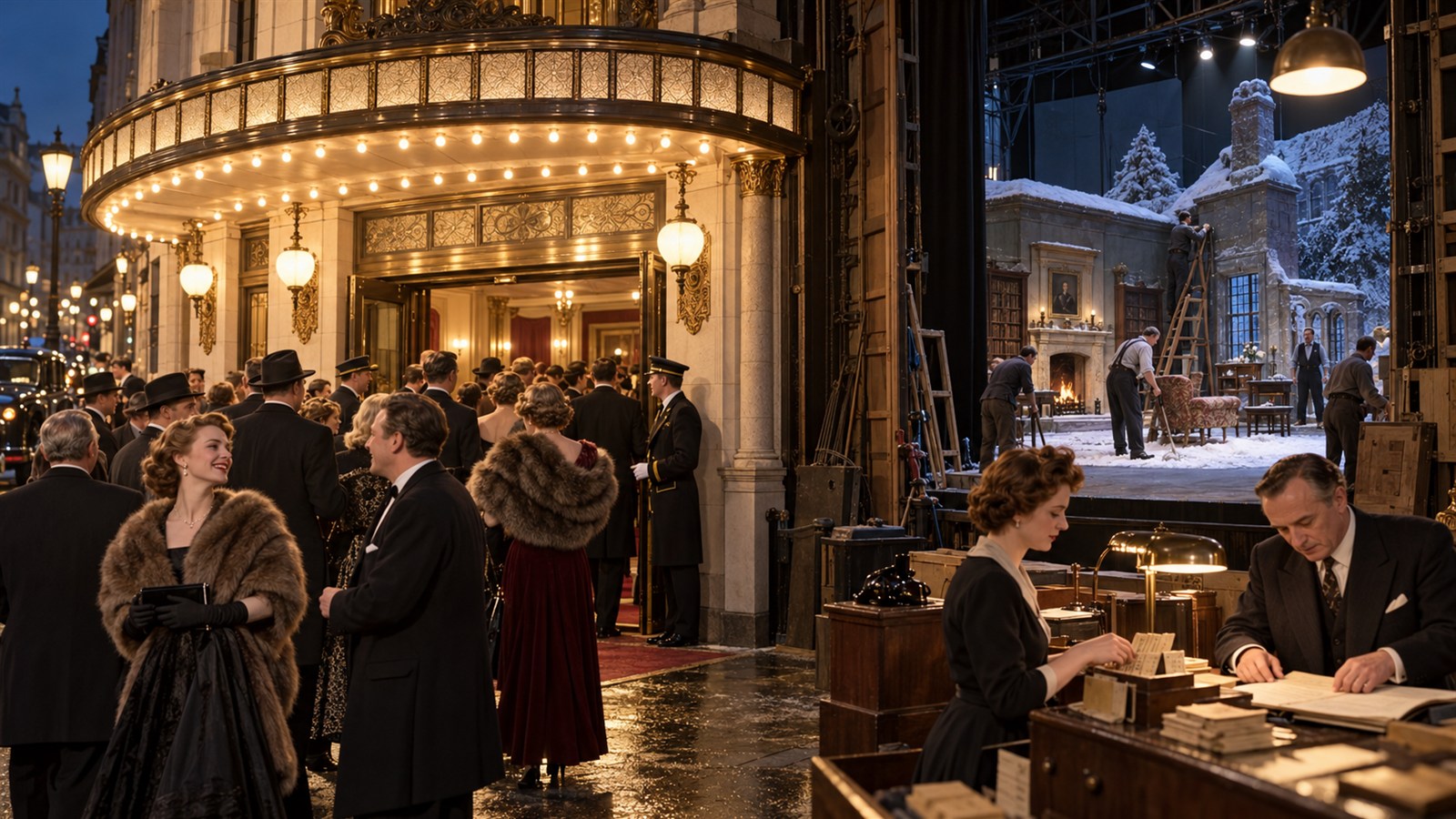
On November 25, 1952, Agatha Christie's The Mousetrap opened at the Ambassadors Theatre in London after a regional tour. Produced by Peter Saunders, the murder mystery featured Richard Attenborough and Sheila Sim in the original London cast. The production's contained setting and ensemble made it theatrically manageable, while the secret of its ending gave audiences a reason to participate in its tradition. The commercial importance extended beyond the object or performance itself. Cultural enterprises create markets by organizing attention, interpretation, and access. The institution, publisher, producer, or promoter must persuade audiences that a new work deserves time while also building the practical means to encounter it.
A West End show carries substantial fixed costs before ticket revenue becomes predictable. Theater rental, rehearsals, cast, crew, scenery, advertising, and advance sales must align for each performance. The Mousetrap's clear genre promise and word of mouth helped fill seats, and the production asked audiences not to reveal the culprit, turning discretion into part of the experience. Revenue rarely comes from a single channel. Tickets, editions, memberships, licensing, donations, touring, education, and later reuse can support the same underlying intellectual property or collection. That portfolio makes rights, preservation, and reputation central business assets rather than administrative details.
The play became the world's longest-running stage production, moving to St Martin's Theatre in 1974 and pausing only when the COVID-19 shutdown interrupted performances. Cast changes, maintenance, marketing, and ticket operations kept the same core work viable for generations of visitors, including tourists seeking a recognizable London attraction. Success can be difficult to forecast because cultural value often grows through conversation and repetition. Critics, fans, schools, retailers, and other institutions become part of distribution. A work that initially looks risky may gain commercial power as more people use it to define a genre, an era, or a shared identity.
Its longevity shows how consistency can itself become a selling point. The production grew from a play into an institution whose record generated fresh publicity and demand. Long-running businesses still need renewal behind the scenes: succession, quality control, cost discipline, and audience service preserve the promise even when the product appears unchanged. The lasting lesson is to pair creative risk with stewardship. Managers should preserve source materials, clarify ownership, cultivate audiences, and leave room for reinterpretation. Cultural businesses endure when they treat attention as a relationship to be renewed, not a commodity exhausted in one opening weekend. In practical terms, the advantage came from linking a clear customer promise to disciplined execution. Capital had to be allocated before demand was certain, employees and partners had to coordinate, and leaders had to keep learning after the initial milestone passed into history.
The Mousetrap opened in London on November 25, 1952.
The first London venue was the Ambassadors Theatre.
Peter Saunders produced the West End run.
The mystery's concealed ending became part of the audience tradition.
The production later transferred to St Martin's Theatre.
Continuity and careful operations supported a record-setting run.
Explore more of "On This Day ..."
Discover more events from the same date across news, politics, technology, sports, and other fields. Each link highlights significant moments that shaped history on different fronts.