

On This Day in Business: November 26, 1922
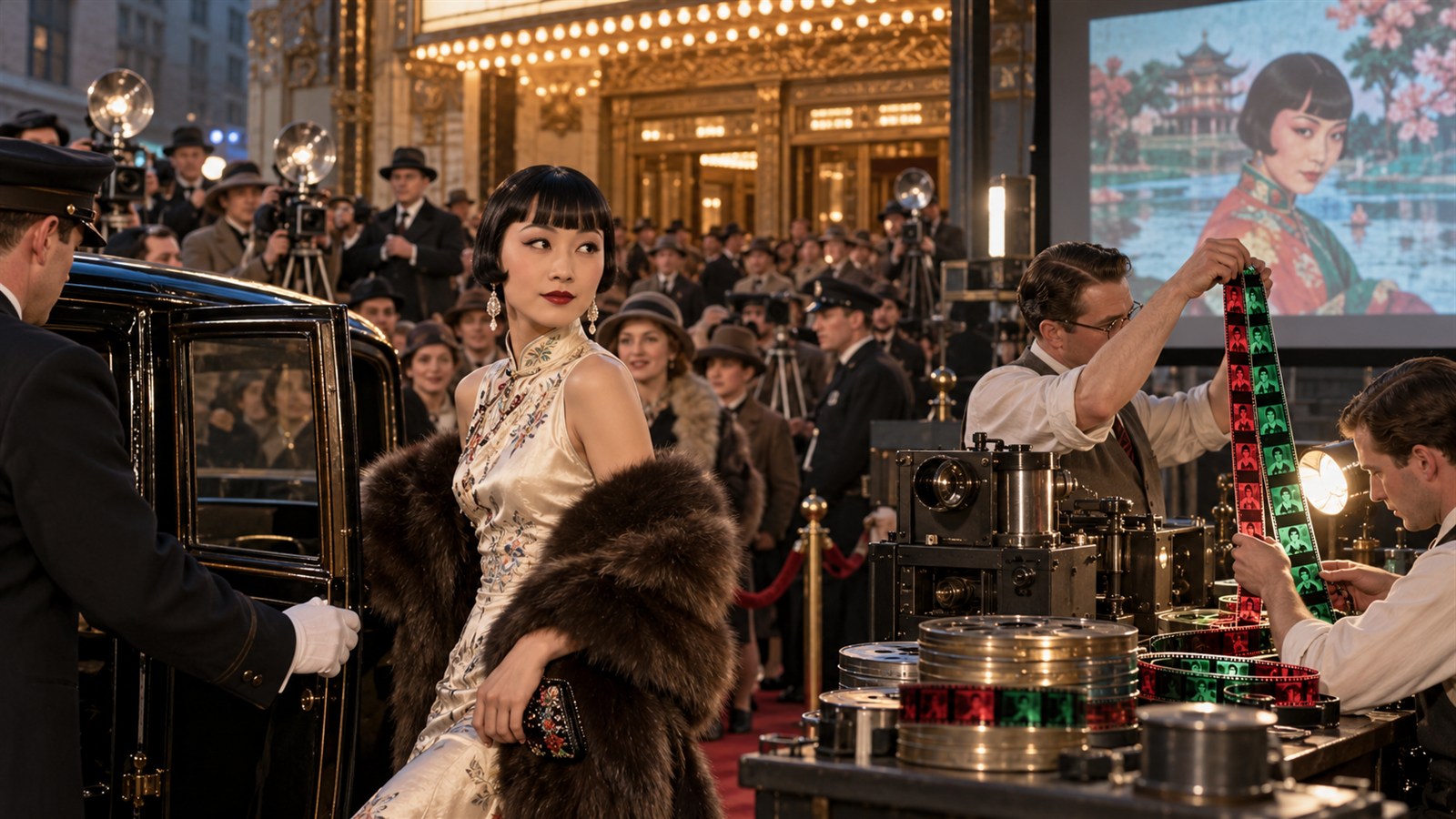
On November 26, 1922, The Toll of the Sea premiered at New York's Rialto Theatre. Produced by the Technicolor Motion Picture Corporation and starring Anna May Wong in her first leading role, the film used a two-color subtractive process. Unlike an earlier Technicolor system, its release prints could run through standard theater projectors, lowering a major barrier to exhibition. The commercial importance extended beyond the object or performance itself. Cultural enterprises create markets by organizing attention, interpretation, and access. The institution, publisher, producer, or promoter must persuade audiences that a new work deserves time while also building the practical means to encounter it.
The process photographed red and green color information separately and combined dyed film strips into a single print. The result could not reproduce the full spectrum, and manufacturing the prints was slow and expensive. Still, compatibility with installed projectors mattered commercially because theaters did not have to buy specialized equipment for every screening. Revenue rarely comes from a single channel. Tickets, editions, memberships, licensing, donations, touring, education, and later reuse can support the same underlying intellectual property or collection. That portfolio makes rights, preservation, and reputation central business assets rather than administrative details.
The film demonstrated both creative and technical promise. It provided a showcase for Wong and offered studios evidence that color could support a feature narrative rather than a brief novelty. Technicolor continued improving its processes, laboratory capacity, and relationships with producers until color became a powerful differentiator in the motion-picture market. Success can be difficult to forecast because cultural value often grows through conversation and repetition. Critics, fans, schools, retailers, and other institutions become part of distribution. A work that initially looks risky may gain commercial power as more people use it to define a genre, an era, or a shared identity.
The premiere highlights a recurring innovation principle: compatibility can matter as much as performance. A new system spreads faster when customers can adopt it without replacing every surrounding asset. Technicolor's challenge was therefore not only to make attractive images, but to fit cameras, laboratories, distributors, projectors, and theater economics into a workable chain. The lasting lesson is to pair creative risk with stewardship. Managers should preserve source materials, clarify ownership, cultivate audiences, and leave room for reinterpretation. Cultural businesses endure when they treat attention as a relationship to be renewed, not a commodity exhausted in one opening weekend. In practical terms, the advantage came from linking a clear customer promise to disciplined execution. Capital had to be allocated before demand was certain, employees and partners had to coordinate, and leaders had to keep learning after the initial milestone passed into history.
The Toll of the Sea premiered on November 26, 1922.
Anna May Wong appeared in her first leading role.
The film used Technicolor's two-color subtractive process.
Prints could be shown on standard theater projectors.
Limited color range and slow print production constrained scale.
The project helped move color film from novelty toward a commercial system.
Explore more of "On This Day ..."
Discover more events from the same date across news, politics, technology, sports, and other fields. Each link highlights significant moments that shaped history on different fronts.