

On This Day in Business: November 29, 1972
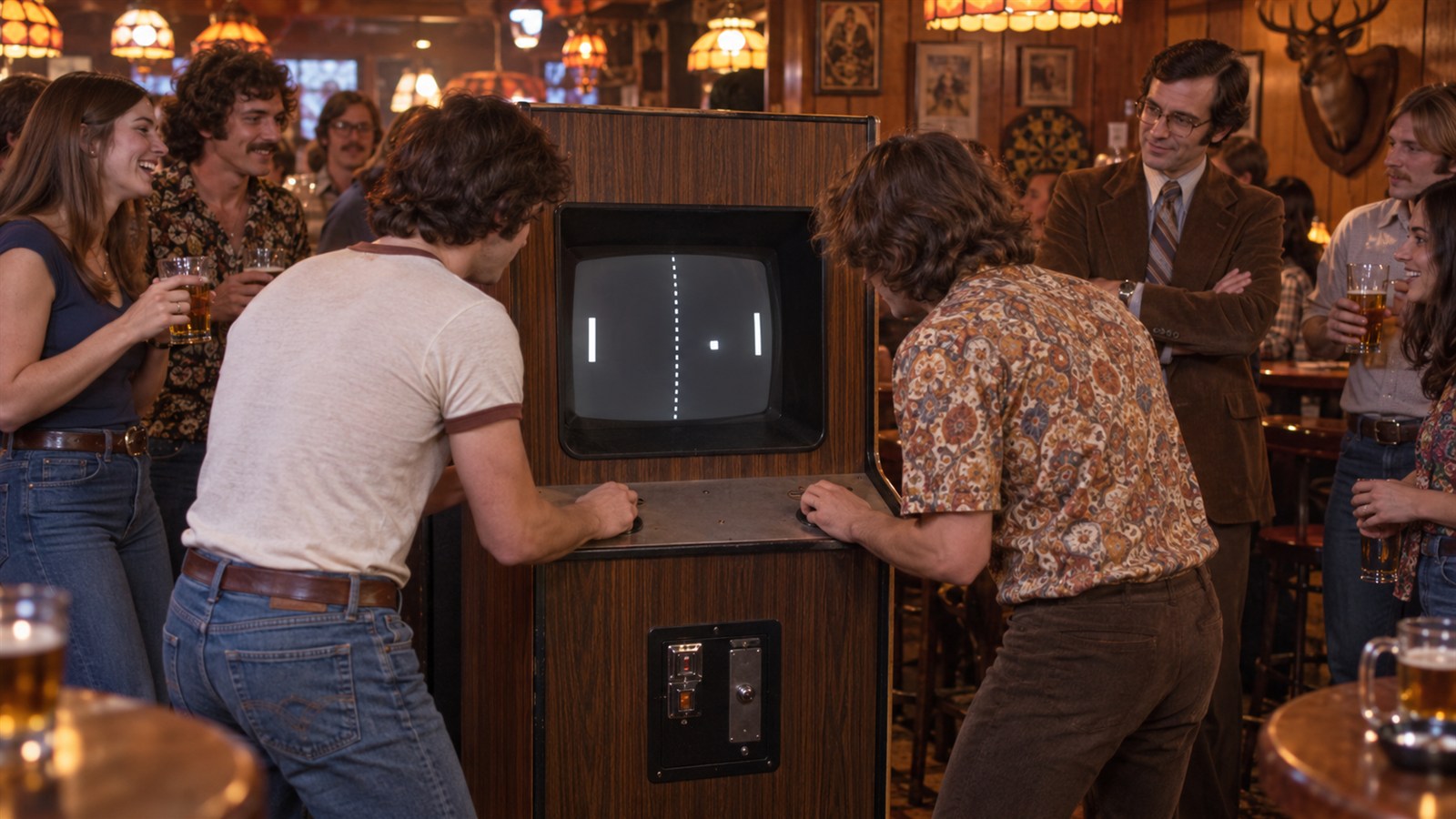
On November 29, 1972, Atari's Pong entered the young coin-operated games market. Engineer Allan Alcorn built the simple table-tennis game after co-founder Nolan Bushnell assigned it as an early project. A prototype placed in Andy Capp's Tavern in Sunnyvale reportedly attracted so much play that the coin container filled and interfered with the machine. The immediate product was only one layer of the opportunity. A platform becomes valuable when developers, distributors, customers, and complementary products can coordinate around it. That makes compatibility, documentation, pricing, and timing as important as the features visible in the first demonstration.
Pong succeeded because players understood it almost immediately. Two paddles, a moving square, and a score created competition without lengthy instructions. The cabinet turned a television-like screen from a passive display into an interactive paid experience, while the coin mechanism gave location owners and Atari a direct measure of demand. Adoption also carried switching costs. Buyers had to learn new interfaces, convert files, test hardware, and trust that support would continue. The vendor therefore needed an ecosystem, not merely code: tools, training, partners, and a roadmap that reduced the perceived risk of committing to the new standard.
Orders grew, manufacturing expanded, and competing versions appeared quickly. Atari's success helped establish the video-game arcade as a business and financed further development. A home version later used retail distribution to bring interactive play into living rooms, widening the company's market beyond bars and amusement locations. As participation increased, network effects strengthened the proposition. More users attracted more applications and services, which attracted still more users. That flywheel could create durable advantage, but it also made governance consequential because technical decisions by one company affected an expanding community.
The launch demonstrates the commercial power of simplicity. Pong's technology was not the last word in electronic games, but its feedback loop, understandable rules, and social competition made the value obvious in seconds. New products often benefit when the first experience teaches itself and the revenue model is embedded directly in use. For today's technology leaders, the lesson is to design the surrounding market along with the product. Open interfaces, dependable support, backward compatibility, and clear incentives can turn a clever invention into infrastructure. Neglect those relationships and even superior technology may remain an isolated demonstration. In practical terms, the advantage came from linking a clear customer promise to disciplined execution. Capital had to be allocated before demand was certain, employees and partners had to coordinate, and leaders had to keep learning after the initial milestone passed into history.
Atari released Pong in 1972.
Allan Alcorn engineered the game from a table-tennis concept.
A tavern prototype proved unusually popular.
Simple controls made the game easy to understand.
Coin operation connected play directly to revenue.
Pong helped establish Atari and the commercial arcade industry.
Explore more of "On This Day ..."
Discover more events from the same date across news, politics, technology, sports, and other fields. Each link highlights significant moments that shaped history on different fronts.