

On This Day in Business: November 28, 1895
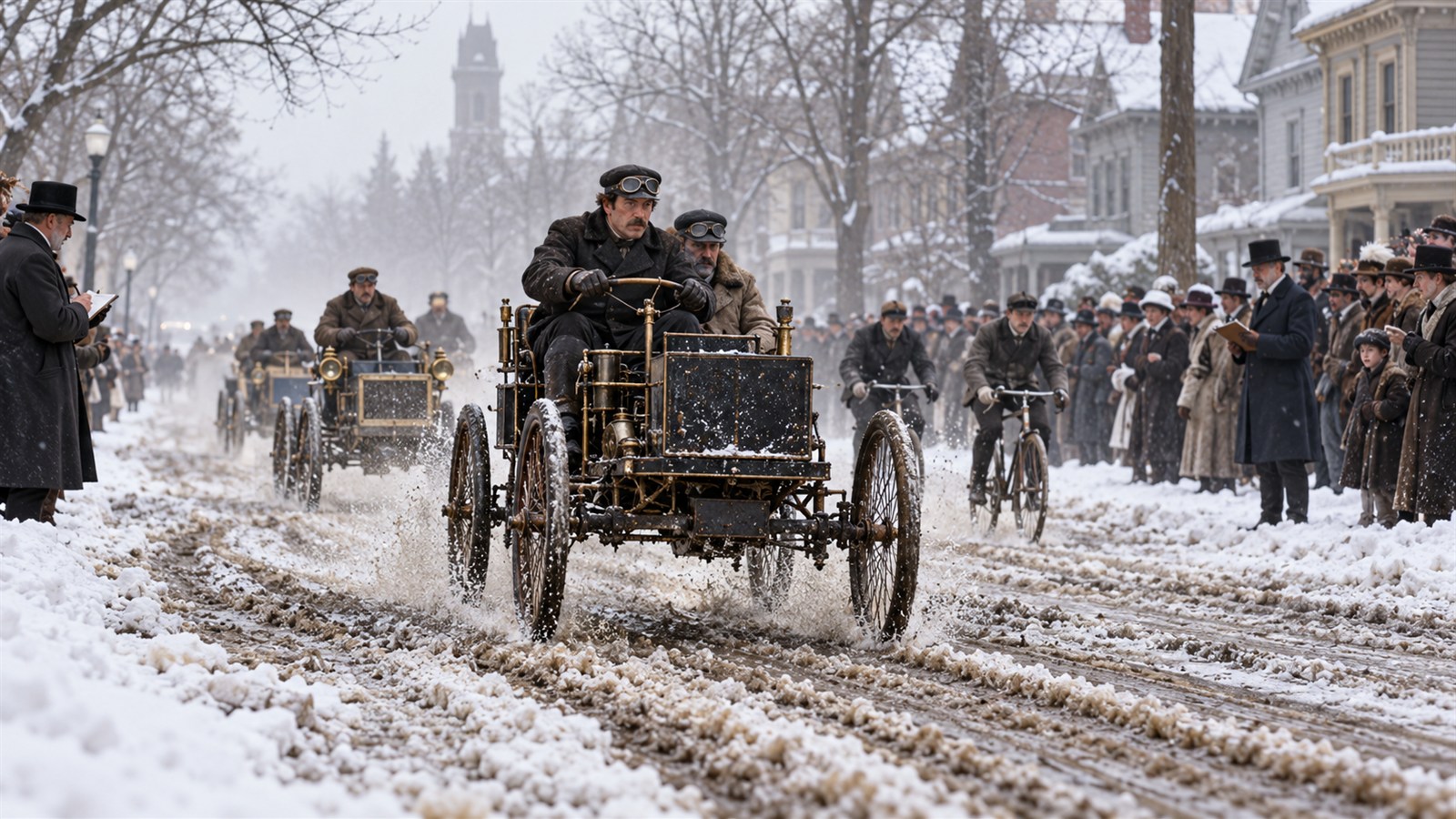
On November 28, 1895, six vehicles started the Chicago Times-Herald automobile race through snow and slush on a route from Chicago to Evanston and back. Frank Duryea drove the winning gasoline-powered motor wagon. The contest was both an endurance test and a publicity event intended to demonstrate that horseless vehicles could operate on real American roads. Behind the ceremony sat a harder operating question: whether management could translate a proven product into a new labor market without losing quality, speed, or cost discipline. The answer depended on training, supplier coordination, process control, and patient capital rather than publicity alone.
Conditions exposed the weaknesses of the young technology. Cold, rough surfaces, breakdowns, and long hours challenged drivers and machines, while judges compared reliability as well as speed. The race gave inventors feedback that a controlled workshop demonstration could not provide and supplied newspapers with a story the public could understand. The investment also changed relationships with workers, vendors, governments, and customers. Local production shortened some supply paths and created new dependencies at the same time, making the plant part of a regional system whose performance mattered as much as the design of the product itself.
The Duryea brothers moved into commercial production, and the event encouraged interest in automobiles, components, roads, fuel, and repair. Racing later became an important development and marketing tool across the industry. Competition made performance visible and allowed manufacturers to attach a reputation to engineering claims. Commercial success therefore came from repetition. Each unit had to meet the same standard while volumes rose, problems surfaced, and competitors reacted. That is the unglamorous core of industrial advantage: learning faster than rivals and turning that learning into routines that can survive growth.
The race shows why demonstrations matter in emerging markets. Customers may not know which specifications are important until products confront ordinary obstacles. Public trials create evidence, but companies must translate that attention into manufacturable designs, service, and affordable ownership. Winning a race can open a market; building dependable units is what sustains it. For modern companies, the milestone is a reminder that market entry is an operating commitment, not a launch event. Capacity, workforce development, quality assurance, and supplier resilience must reinforce one another. When those pieces align, a factory can become both a production asset and a long-term source of trust. In practical terms, the advantage came from linking a clear customer promise to disciplined execution. Capital had to be allocated before demand was certain, employees and partners had to coordinate, and leaders had to keep learning after the initial milestone passed into history.
The Chicago Times-Herald race ran on November 28, 1895.
Six vehicles started in severe winter conditions.
Frank Duryea drove the winning gasoline motor wagon.
The event tested reliability on public roads.
Newspaper coverage promoted interest in automobiles and supporting businesses.
Public competition turned engineering claims into visible evidence.
Explore more of "On This Day ..."
Discover more events from the same date across news, politics, technology, sports, and other fields. Each link highlights significant moments that shaped history on different fronts.