

On This Day in Lifestyles: October 15, 1951
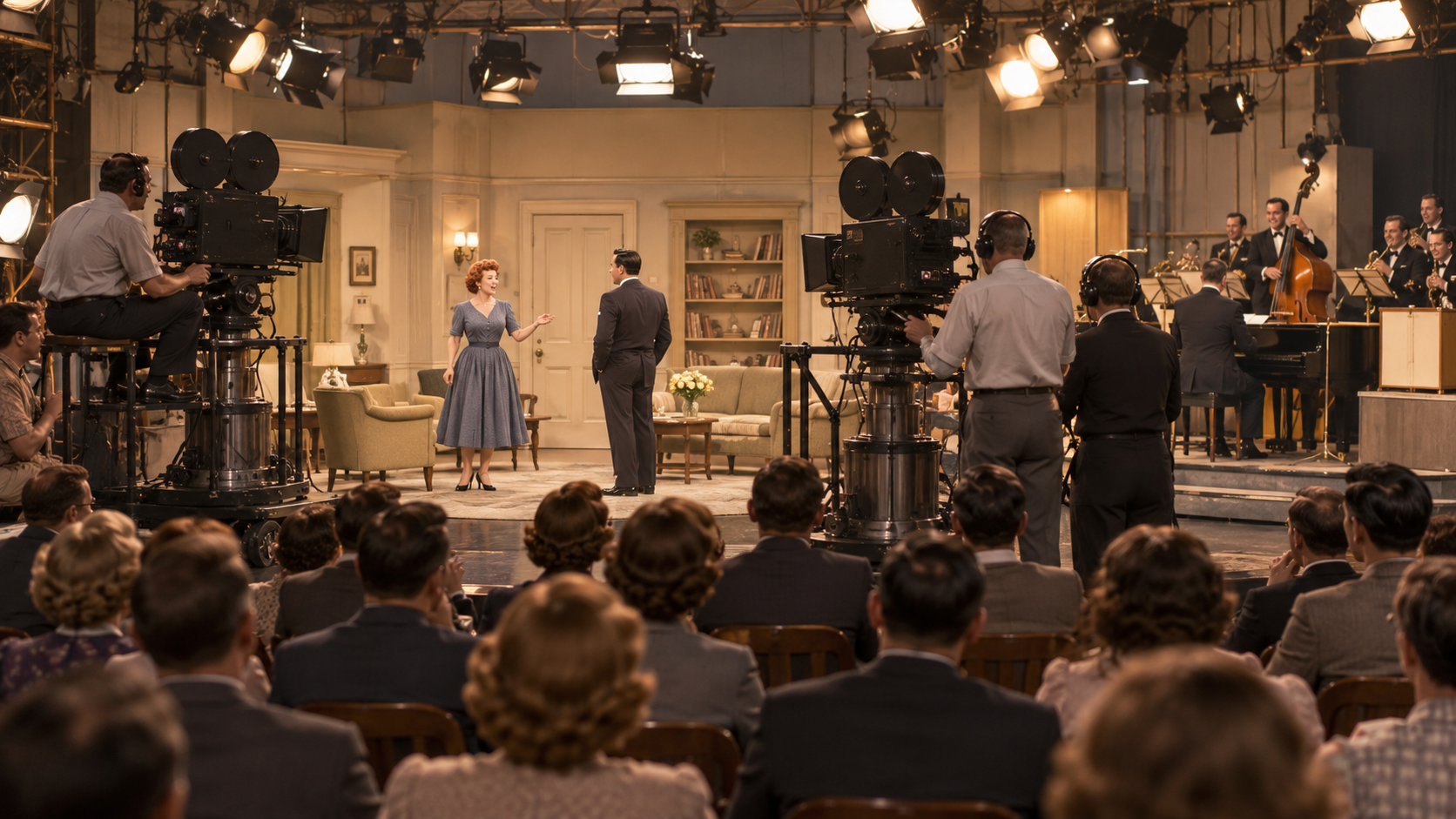
On October 15, 1951, CBS premiered I Love Lucy, starring Lucille Ball and Desi Arnaz as a married couple in a New York apartment. The date matters in lifestyle history because a domestic comedy changed how television was produced, preserved, sold, and shared at home. It was not merely a headline for institutions or specialists; it touched the settings, objects, expectations, and shared rituals through which people organized ordinary days. A 1951 studio audience watched three film cameras cover a generic apartment comedy set as performers rehearsed a precisely timed scene Seen at human scale, the episode shows how a public milestone becomes meaningful through repeated personal choices, conversations, and memories.
The series was filmed before a live audience in Hollywood using multiple 35 mm cameras, a production choice that captured performances from several angles without losing comic timing. Ball and Arnaz formed Desilu Productions and resisted pressure to replace Arnaz, a Cuban-born bandleader, with another actor. Cinematographer Karl Freund helped create lighting that worked across the connected sets. The setting is essential to understanding why the event attracted attention. New ideas rarely arrive in isolation: they meet existing technology, commerce, custom, law, and desire. Contemporary newspapers, public spaces, shops, schools, workplaces, or homes carried the story outward, giving people practical ways to interpret it. Some welcomed the change, others doubted it, and many first encountered it indirectly. That mixture of novelty and familiarity helped the moment travel from a single date into a broader change in behavior.
The program made domestic misunderstandings, friendship, work, marriage, and performance into a weekly national ritual. High-quality film prints allowed broadcasts across time zones and later reruns, creating lasting economic value and consistent picture quality. Its pregnancy storyline and interracial marriage tested some network conventions while still reflecting many limits of 1950s television. In daily life, the consequences appeared through altered routines, new expectations, and different ways of spending time or money. The multi-camera audience sitcom became an industry standard, and syndication made older episodes part of everyday viewing for new generations. Desilu’s business success also expanded Ball’s role as a producer and studio leader, complicating the image of her as only an on-screen comedian. The benefits were never the whole story; major changes also exposed questions about access, responsibility, fairness, cost, and who had power to define progress. Those tensions deserve a place beside the celebration because they show how culture actually develops. The event mattered not because everyone experienced it in the same way, but because it opened a durable argument about how people wanted to live.
Today, the legacy remains visible: sitcoms, reruns, streaming libraries, studio audiences, and multi-camera production continue to shape how comedy becomes familiar household culture. Familiarity can make that inheritance easy to overlook, yet the practices surrounding it were built through years of experimentation, adaptation, criticism, and use. Looking back does more than celebrate an anniversary. It reveals the chain between public decisions and private habits, between ambitious ideas and the small acts that make them ordinary. On this day, one historical moment became part of the texture of modern life. Remembering the full setting lets the milestone feel less like a frozen fact and more like a living part of experience.
On October 15, 1951, CBS premiered I Love Lucy, starring Lucille Ball and Desi Arnaz as a married couple in a New York apartment.
The series was filmed before a live audience in Hollywood using multiple 35 mm cameras, a production choice that captured performances from several angles without losing comic timing. Ball and Arnaz formed Desilu Productions and resisted pressure to replace Arnaz, a Cuban-born bandleader, with another actor. Cinematographer Karl Freund helped create lighting that worked across the connected sets.
The program made domestic misunderstandings, friendship, work, marriage, and performance into a weekly national ritual. High-quality film prints allowed broadcasts across time zones and later reruns, creating lasting economic value and consistent picture quality. Its pregnancy storyline and interracial marriage tested some network conventions while still reflecting many limits of 1950s television.
The event matters in lifestyle history because a domestic comedy changed how television was produced, preserved, sold, and shared at home.
The multi-camera audience sitcom became an industry standard, and syndication made older episodes part of everyday viewing for new generations. Desilu's business success also expanded Ball's role as a producer and studio leader, complicating the image of her as only an on-screen comedian.
The legacy remains visible today: sitcoms, reruns, streaming libraries, studio audiences, and multi-camera production continue to shape how comedy becomes familiar household culture.
Explore more of “This Day in Lifestyles”
Discover more moments in everyday life, design, education, travel, food, fashion, and culture. Each story connects a calendar date with an event that changed how people lived.