

On This Day in Lifestyles: October 24, 1901
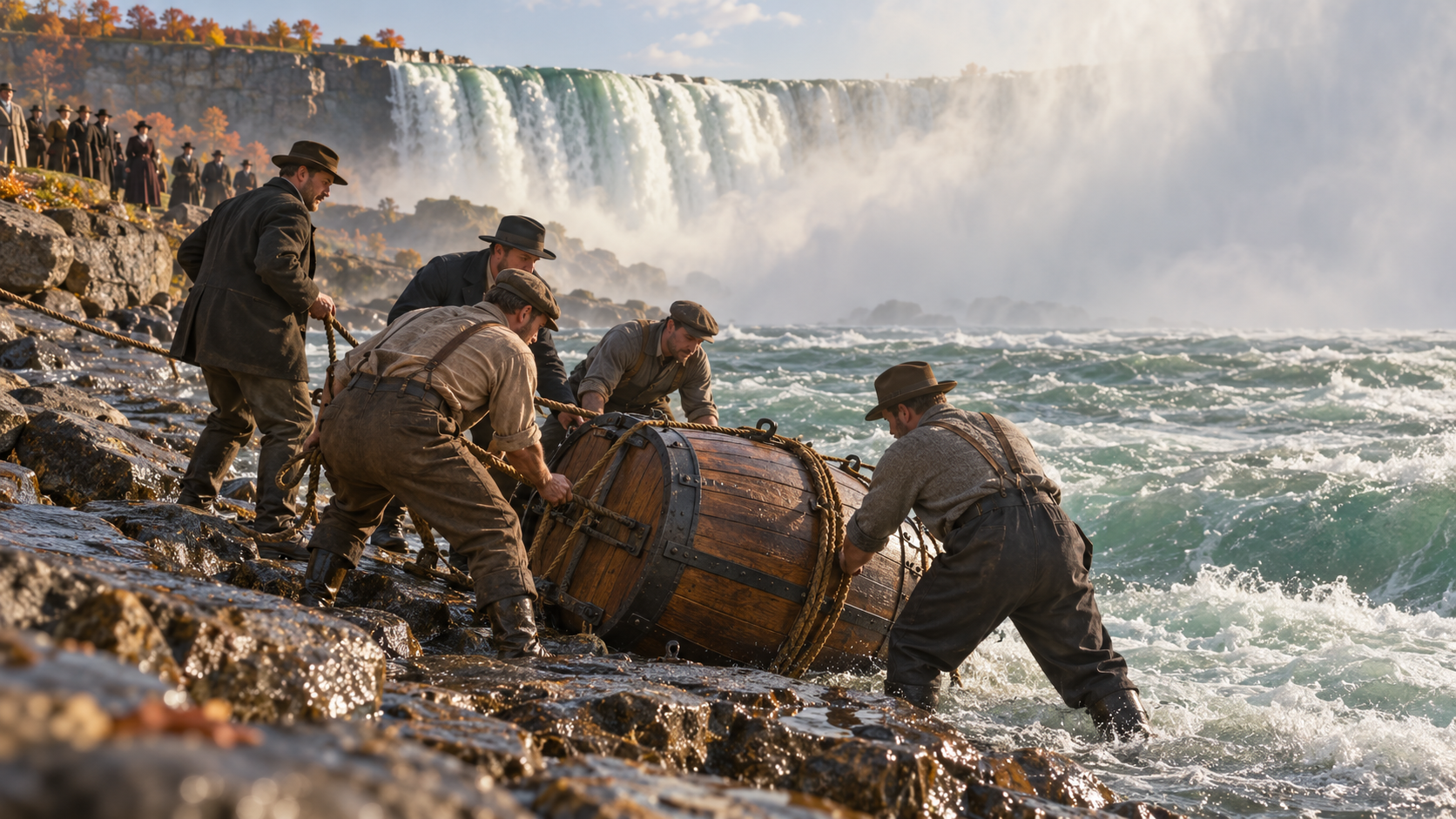
On October 24, 1901, Annie Edson Taylor survived a plunge over Horseshoe Falls inside a specially built wooden barrel. The date matters in lifestyle history because a dangerous publicity feat exposed both the possibilities and limits of turning attention into a livelihood. It was not merely a headline for institutions or specialists; it touched the settings, objects, expectations, and shared rituals through which people organized ordinary days. Rescuers in 1901 work clothes pulled an oak-and-iron barrel from turbulent water below Horseshoe Falls as crowds watched from a safe distance Seen at human scale, the episode shows how a public milestone becomes meaningful through repeated personal choices, conversations, and memories.
Taylor was a widowed schoolteacher seeking financial security and publicity when she attempted the feat on her sixty-third birthday. Her oak-and-iron barrel was padded and weighted, then towed into the Niagara River upstream. Rescuers recovered it below the falls and found her alive with a cut and bruising. The setting is essential to understanding why the event attracted attention. New ideas rarely arrive in isolation: they meet existing technology, commerce, custom, law, and desire. Contemporary newspapers, public spaces, shops, schools, workplaces, or homes carried the story outward, giving people practical ways to interpret it. Some welcomed the change, others doubted it, and many first encountered it indirectly. That mixture of novelty and familiarity helped the moment travel from a single date into a broader change in behavior.
The stunt drew large crowds and newspaper attention, turning a natural wonder into a stage for modern publicity. Taylor hoped lectures and souvenirs would bring lasting income, but managers, imitation acts, and public tastes undermined that plan. Her story reveals how fame could be spectacular yet economically fragile, especially for an older woman working outside conventional roles. In daily life, the consequences appeared through altered routines, new expectations, and different ways of spending time or money. Later daredevils used barrels and other devices until deaths and safety rules ended such stunts legally. Taylor remains central to Niagara’s tourism history, not only for survival but for the gap between public recognition and personal reward. Her own warning against repeating the act gives the anniversary an important caution. The benefits were never the whole story; major changes also exposed questions about access, responsibility, fairness, cost, and who had power to define progress. Those tensions deserve a place beside the celebration because they show how culture actually develops. The event mattered not because everyone experienced it in the same way, but because it opened a durable argument about how people wanted to live.
Today, the legacy remains visible: extreme stunts still mix risk, sponsorship, media attention, regulation, and the uncertain economics of becoming briefly famous. Familiarity can make that inheritance easy to overlook, yet the practices surrounding it were built through years of experimentation, adaptation, criticism, and use. Looking back does more than celebrate an anniversary. It reveals the chain between public decisions and private habits, between ambitious ideas and the small acts that make them ordinary. On this day, one historical moment became part of the texture of modern life. Remembering the full setting lets the milestone feel less like a frozen fact and more like a living part of experience.
On October 24, 1901, Annie Edson Taylor survived a plunge over Horseshoe Falls inside a specially built wooden barrel.
Taylor was a widowed schoolteacher seeking financial security and publicity when she attempted the feat on her sixty-third birthday. Her oak-and-iron barrel was padded and weighted, then towed into the Niagara River upstream. Rescuers recovered it below the falls and found her alive with a cut and bruising.
The stunt drew large crowds and newspaper attention, turning a natural wonder into a stage for modern publicity. Taylor hoped lectures and souvenirs would bring lasting income, but managers, imitation acts, and public tastes undermined that plan. Her story reveals how fame could be spectacular yet economically fragile, especially for an older woman working outside conventional roles.
The event matters in lifestyle history because a dangerous publicity feat exposed both the possibilities and limits of turning attention into a livelihood.
Later daredevils used barrels and other devices until deaths and safety rules ended such stunts legally. Taylor remains central to Niagara's tourism history, not only for survival but for the gap between public recognition and personal reward. Her own warning against repeating the act gives the anniversary an important caution.
The legacy remains visible today: extreme stunts still mix risk, sponsorship, media attention, regulation, and the uncertain economics of becoming briefly famous.
Explore more of “This Day in Lifestyles”
Discover more moments in everyday life, design, education, travel, food, fashion, and culture. Each story connects a calendar date with an event that changed how people lived.