

On This Day in Sports: January 19, 2002
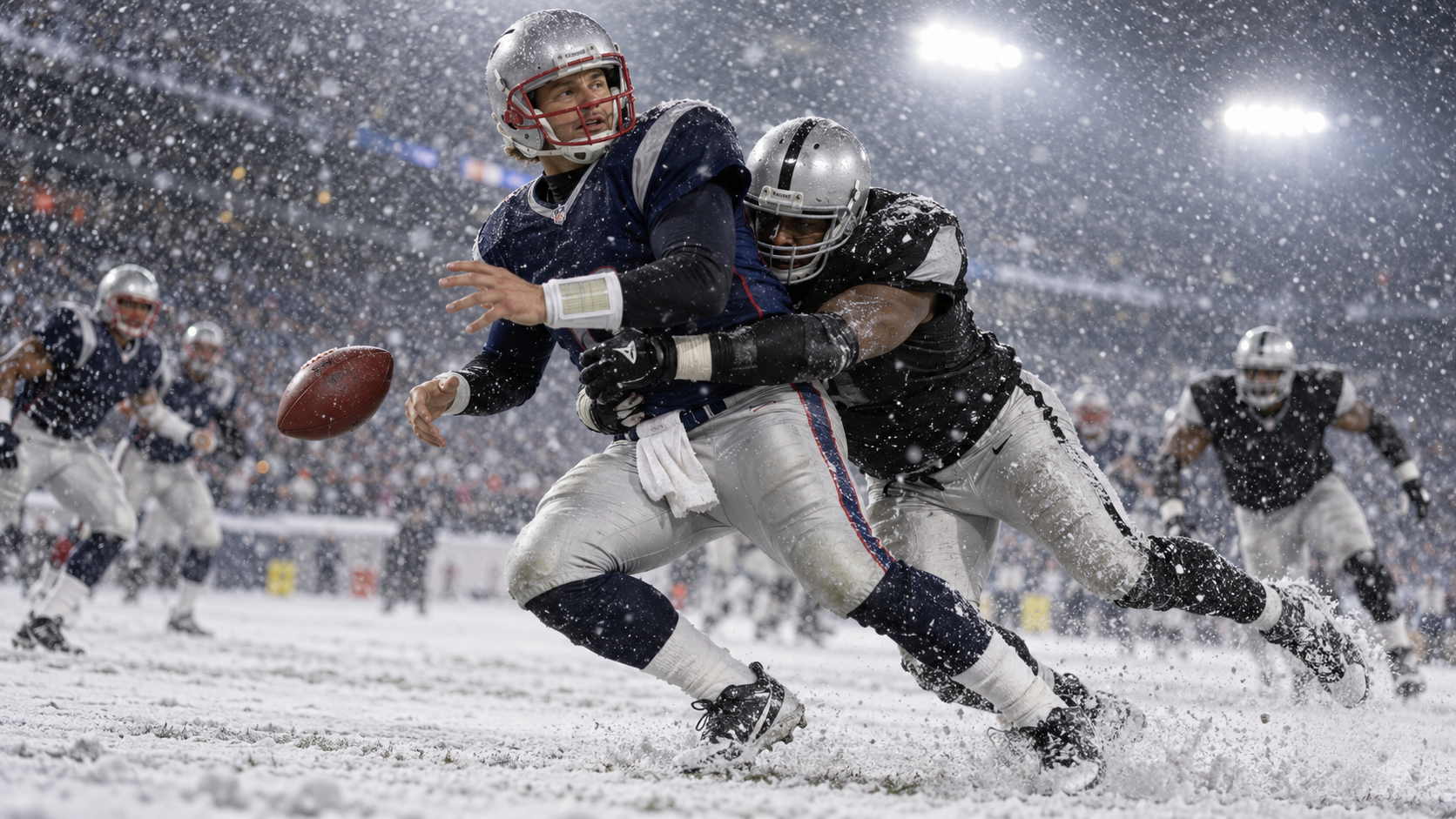
On January 19, 2002, the New England Patriots and Oakland Raiders played a snowy AFC divisional playoff that became inseparable from two words: tuck rule. Oakland led 13–10 late in the fourth quarter at Foxboro Stadium when cornerback Charles Woodson struck Patriots quarterback Tom Brady from the blind side. The ball came loose and linebacker Greg Biekert recovered for the Raiders, apparently ending New England’s season. Instead, a replay review turned a routine-looking fumble into one of the most debated rulings in NFL history.
Referee Walt Coleman applied the league rule then governing a quarterback’s forward arm motion. Because Brady had begun a passing motion and had not completed tucking the ball back against his body, the play was ruled an incomplete pass rather than a fumble. New England kept possession. The decision was faithful to the language on the books, but it felt counterintuitive to countless viewers who believed Brady had decided not to throw. The collision between technical wording and football instinct ensured that the argument would last far longer than the game itself.
The Patriots still had to survive brutal conditions. Adam Vinatieri drove a 45-yard field goal through heavy snow with 27 seconds remaining to tie the game, a kick remembered as one of the most difficult in postseason history. New England won the overtime coin toss, controlled the ball on a patient drive and sent Vinatieri out again for a 23-yard winner. The 16–13 victory closed the final game ever played at Foxboro Stadium and sent the Patriots to the AFC Championship Game.
Three weeks later, New England upset St. Louis in Super Bowl XXXVI, launching the franchise’s era of sustained dominance. That later success magnified every detail of the Oakland game and turned the replay into an origin point for a dynasty. The tuck rule remained in place until teams overwhelmingly voted to remove it in 2013. Its repeal did not settle the old debate, but the play remains a powerful lesson in how a single rule interpretation can redirect a postseason, define rival fan bases and alter the history of the league. The controversy also illustrates why replay can clarify one question while intensifying another. Slow motion showed exactly where Brady’s arm and the football were positioned, yet interpretation still depended on a rule few fans had ever studied. Oakland supporters remember a victory taken away; Patriots supporters remember a correct ruling followed by two extraordinary kicks. Both memories remain central to the game’s enduring mythology.
Oakland appeared to clinch the game when Woodson knocked the ball from Brady and Biekert recovered with less than two minutes remaining.
Replay officials ruled the pass incomplete because Brady’s arm had moved forward and he had not fully tucked the ball back into his body.
Vinatieri’s 45-yard tying kick cut through a snowstorm and is widely regarded as one of the greatest pressure kicks ever made.
The Patriots won 16–13 in overtime on Vinatieri’s second field goal after controlling the only possession of the extra period.
New England went on to win its first Super Bowl, making the tuck-rule decision a defining chapter in the birth of a dynasty.
NFL teams voted in 2013 to eliminate the rule, but the Raiders–Patriots controversy remains part of football vocabulary.
Explore more "On This Day in Sports"
Discover more landmark games, records, championships, and turning points from sports history. Each day revisits the athletes, teams, and moments that shaped competition and culture.