

On This Day in Sports: January 27, 1991
On January 27, 1991, the New York Giants defeated the Buffalo Bills 20–19 in Super Bowl XXV, a game remembered forever by the phrase wide right. Played in Tampa during the Gulf War, the night carried an atmosphere unlike any previous Super Bowl. Whitney Houston’s national anthem became an iconic performance, and intense security surrounded the stadium. Once the game began, the contrast was clear: Buffalo’s fast no-huddle offense tried to create space and speed, while New York planned to shorten the contest through ball control, patient running and disciplined defense.
The Bills struck for a 12–3 lead, but the Giants answered with a touchdown just before halftime. Backup quarterback Jeff Hostetler, starting because Phil Simms was injured, stayed composed against Buffalo’s pass rush and repeatedly converted crucial third downs. Running back Ottis Anderson carried 21 times for 102 yards, absorbing contact and keeping the clock moving. New York ultimately held the ball for a Super Bowl-record 40 minutes and 33 seconds, limiting the possessions available to a Buffalo offense that had scored 51 points in the AFC Championship Game.
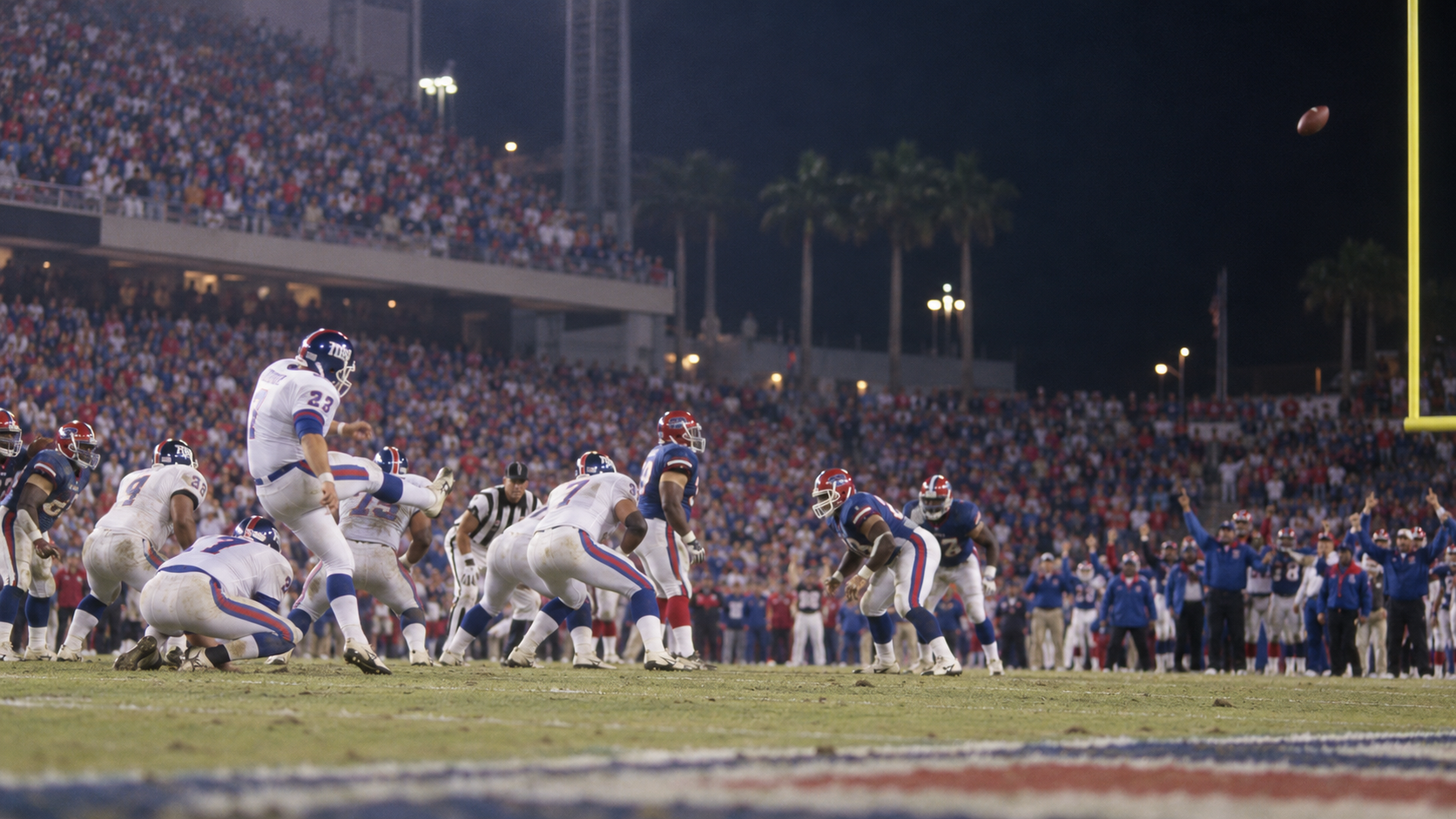
Buffalo still had the final chance. Trailing by one, Jim Kelly guided the Bills into field-goal range with eight seconds remaining. Scott Norwood attempted a 47-yard kick from the right hash, long enough to win the championship, but the ball drifted outside the right upright. The Giants spilled onto the field as the final seconds vanished. Anderson was named the game’s most valuable player, but the ending made Norwood’s miss one of the most painful and recognizable moments in football history.
The victory gave coach Bill Parcells his second championship and highlighted a defensive plan designed by coordinator Bill Belichick, whose game plan was later displayed by the Pro Football Hall of Fame. New York accepted that Buffalo would gain rushing yards in exchange for limiting explosive passes and forcing the Bills to execute patiently. The one-point result remains the smallest margin in Super Bowl history. For Buffalo, it was the first of four consecutive Super Bowl defeats; for the Giants, it was proof that preparation, possession and situational discipline could neutralize the league’s most explosive attack. The game’s emotional power endures because every strategy and drive ultimately came down to a single kick. The narrow finish also humanized both sides. Norwood remained a respected teammate despite becoming associated with the miss, while Giants defenders understood that inches had separated triumph from heartbreak. That balance—one team executing a deliberate plan and another coming one kick from defeating it—has kept Super Bowl XXV among the most rewatched and debated championship games ever played.
The Giants controlled the ball for 40 minutes and 33 seconds, then a Super Bowl possession record.
Hostetler managed the offense effectively after replacing the injured Simms late in the regular season.
Anderson rushed for 102 yards and earned MVP honors as the center of New York’s ball-control plan.
Norwood’s 47-yard attempt sailed wide right with eight seconds left, preserving the Giants’ one-point victory.
Belichick’s defensive plan emphasized preventing big passing plays even if Buffalo gained yards on the ground.
The game began Buffalo’s unprecedented run of four straight Super Bowl appearances, all ending in defeat.
Explore more "On This Day in Sports"
Discover more landmark games, records, championships, and turning points from sports history. Each day revisits the athletes, teams, and moments that shaped competition and culture.