

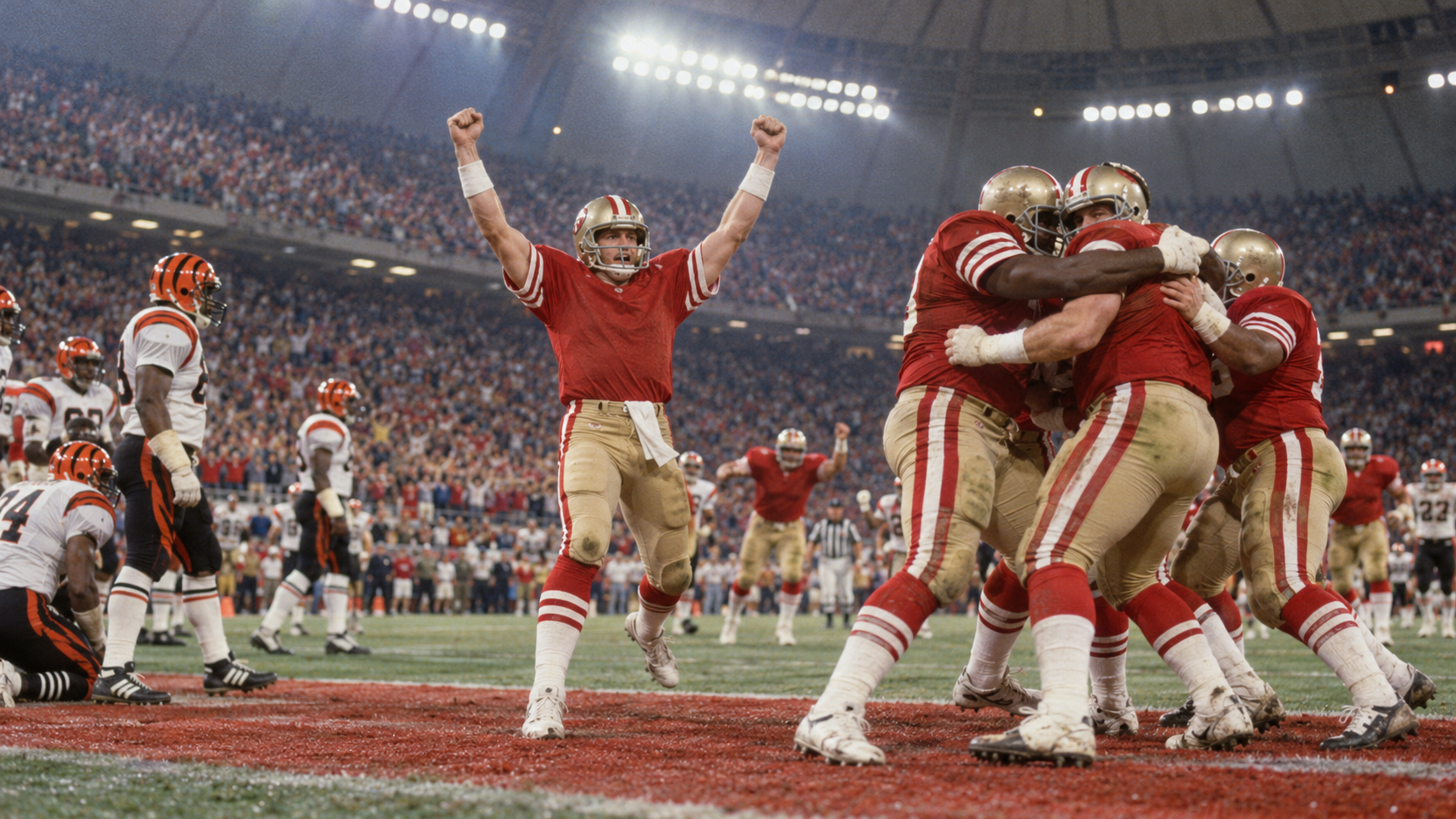
On This Day in Sports: January 24, 1982
On January 24, 1982, the San Francisco 49ers defeated the Cincinnati Bengals 26–21 in Super Bowl XVI at the Pontiac Silverdome. The matchup brought together two franchises that had never won an NFL championship and two quarterbacks selected in the same 1979 draft. San Francisco struck first and built a 20–0 halftime lead, the largest first-half advantage in Super Bowl history at that point. Joe Montana scored on a one-yard run and threw an 11-yard touchdown pass to Earl Cooper, while Ray Wersching added two field goals before intermission.
Cincinnati refused to disappear. Ken Anderson led the Bengals on a touchdown drive to open the second half, then threatened again after recovering a fumble. The ensuing goal-line stand became the game’s defining defensive sequence. From inside the San Francisco five, the Bengals had multiple chances to score, but linebacker Dan Bunz stopped Charles Alexander just short on third down and the 49ers held on fourth. Instead of cutting the margin to one score, Cincinnati came away empty.
The Bengals eventually narrowed the gap, but Wersching’s four field goals gave San Francisco enough room to survive the late pressure. Montana completed 14 of 22 passes for 157 yards, added the rushing touchdown and was selected as the game’s most valuable player. His statistics were modest compared with the enormous Super Bowl performances that came later, yet his poise shaped the contest. He directed efficient scoring drives, protected the football and answered every moment when Cincinnati threatened to seize control.
The championship completed one of the fastest turnarounds in NFL history. Coach Bill Walsh had inherited a 2–14 team only three seasons earlier and installed the precise, adaptable offense that would become known as the West Coast system. San Francisco’s first title launched a dynasty that won four championships during the 1980s and five before any other franchise reached that total. Super Bowl XVI therefore marked both an ending and a beginning: the end of the 49ers’ long wait for a championship, and the beginning of Montana and Walsh as defining figures in modern professional football. The goal-line stand ensured that their new era began with defense as well as offensive innovation. Cincinnati actually finished with more total yards and more first downs, evidence that the final result turned on efficiency and situational execution rather than complete domination. San Francisco’s six takeaways and critical short-field stops repeatedly denied the Bengals the value of their movement. That pattern gave the young 49ers a blueprint they would use throughout the decade: precision on offense and opportunism everywhere else.
San Francisco led 20–0 at halftime, then the largest halftime margin in Super Bowl history.
Montana accounted for two first-half touchdowns and earned MVP honors in his first championship appearance.
Bunz’s third-down tackle helped create a famous goal-line stand that kept Cincinnati from completing its comeback.
Wersching kicked four field goals, tying the Super Bowl record and providing the points the 49ers needed late.
Walsh guided San Francisco from a 2–14 record in 1978 to a championship only three seasons later.
The victory launched a dynasty that would win four Super Bowls in the 1980s and five overall by 1995.
Explore more "On This Day in Sports"
Discover more landmark games, records, championships, and turning points from sports history. Each day revisits the athletes, teams, and moments that shaped competition and culture.