

On This Day in Business: December 14, 1944
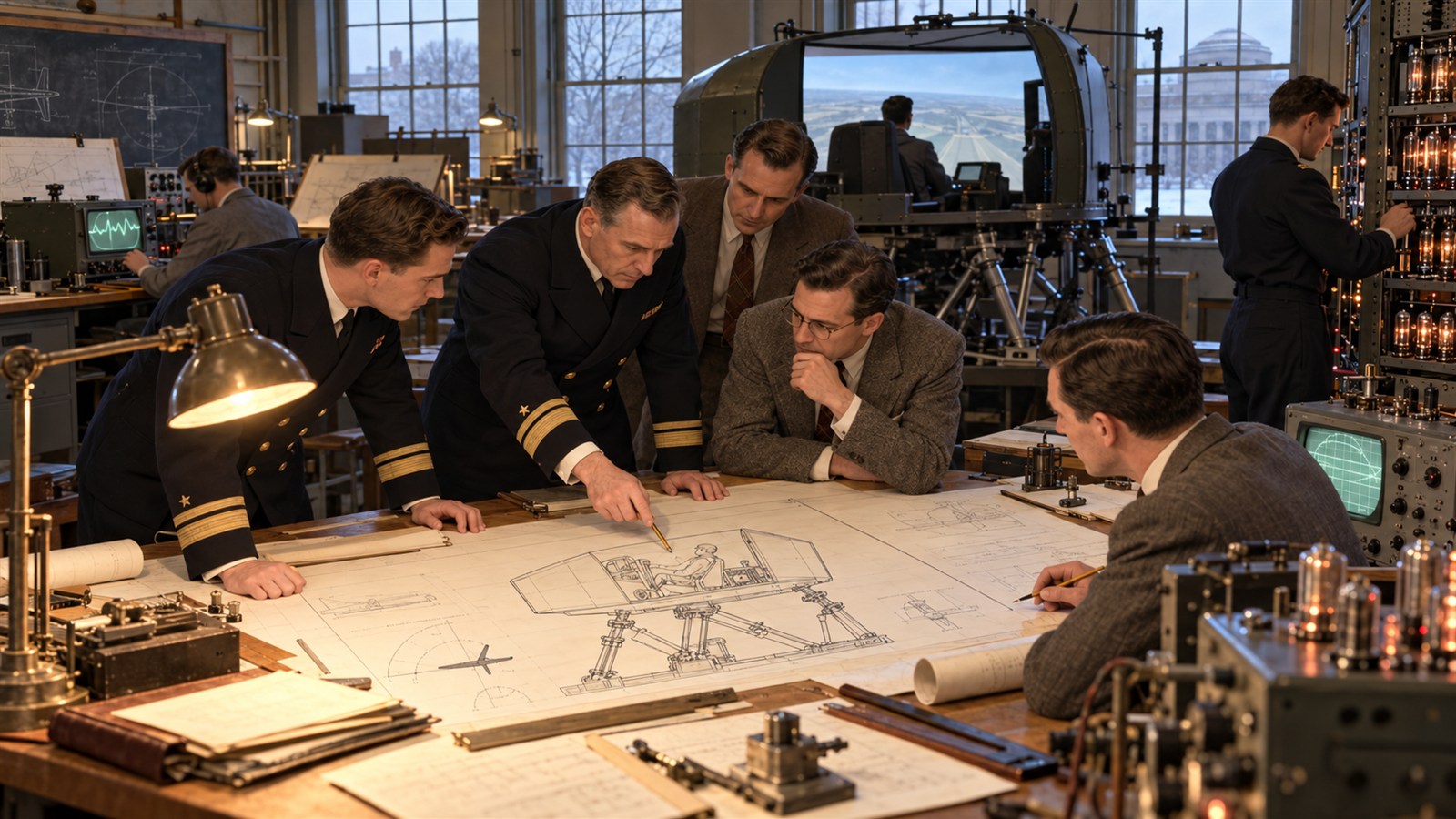
On December 14, 1944, the U.S. Navy sent MIT a letter of intent for work that became Project Whirlwind. The original goal was a universal flight trainer capable of responding immediately to a pilot's controls rather than replaying a fixed sequence. The immediate invention was only one layer of the opportunity. Commercial value depended on interfaces, complementary products, training, support, and confidence that the new system would keep improving. Early adopters were not simply buying hardware or software; they were accepting workflow change and uncertainty about an emerging standard.
The simulation problem pushed researchers toward a high-speed electronic digital computer that could process changing inputs in real time. That requirement differed from machines designed mainly to complete batches of calculations, placing reliability, memory speed, displays, and operator interaction at the center of the engineering effort. Adoption required translation between specialists and ordinary users. Performance claims had to become understandable tasks, while cost, reliability, and compatibility determined whether an impressive demonstration could survive outside the laboratory. Documentation and service therefore mattered nearly as much as the breakthrough itself.
Whirlwind eventually contributed to magnetic-core memory and to the SAGE air-defense system. Its development linked military funding, university research, component suppliers, programmers, and operators, creating knowledge that moved into later commercial computers and interactive systems. As more organizations participated, learning and network effects strengthened the proposition. New uses attracted investment, investment improved tools, and better tools brought additional users. That cycle could create durable advantage, but it also made governance important because technical choices by a small group affected a widening market.
The project's history shows how a demanding use case can produce capabilities far beyond the initial contract. Sponsors asked for a training system, while researchers developed techniques for responsive computing. Innovation portfolios benefit when goals are clear but teams retain room to solve underlying problems in unexpected ways. The modern lesson is to design the ecosystem along with the product. Dependable support, open pathways for complements, sensible standards, and clear incentives can turn a clever prototype into infrastructure. Without those surrounding relationships, even remarkable technology may remain isolated or arrive before customers are ready. In practical terms, the advantage came from linking a clear public or customer promise to disciplined execution. Capital and attention had to be committed before demand was certain, partners had to coordinate, and leaders had to keep learning after the first milestone passed into history. The strongest legacy was not the announcement alone, but the repeatable capability, institution, or market that people built around it afterward.
The Navy issued MIT a letter of intent on December 14, 1944.
The original project sought a responsive universal flight trainer.
Simulation needs pushed the team toward real-time digital computing.
Speed, memory, displays, and reliability became central design problems.
Whirlwind influenced magnetic-core memory and the SAGE system.
Military research created techniques later used in commercial computing.
Explore more of "On This Day ..."
Discover more events from the same date across news, politics, technology, sports, and other fields. Each link highlights significant moments that shaped history on different fronts.