

On This Day in Business: December 20, 1951
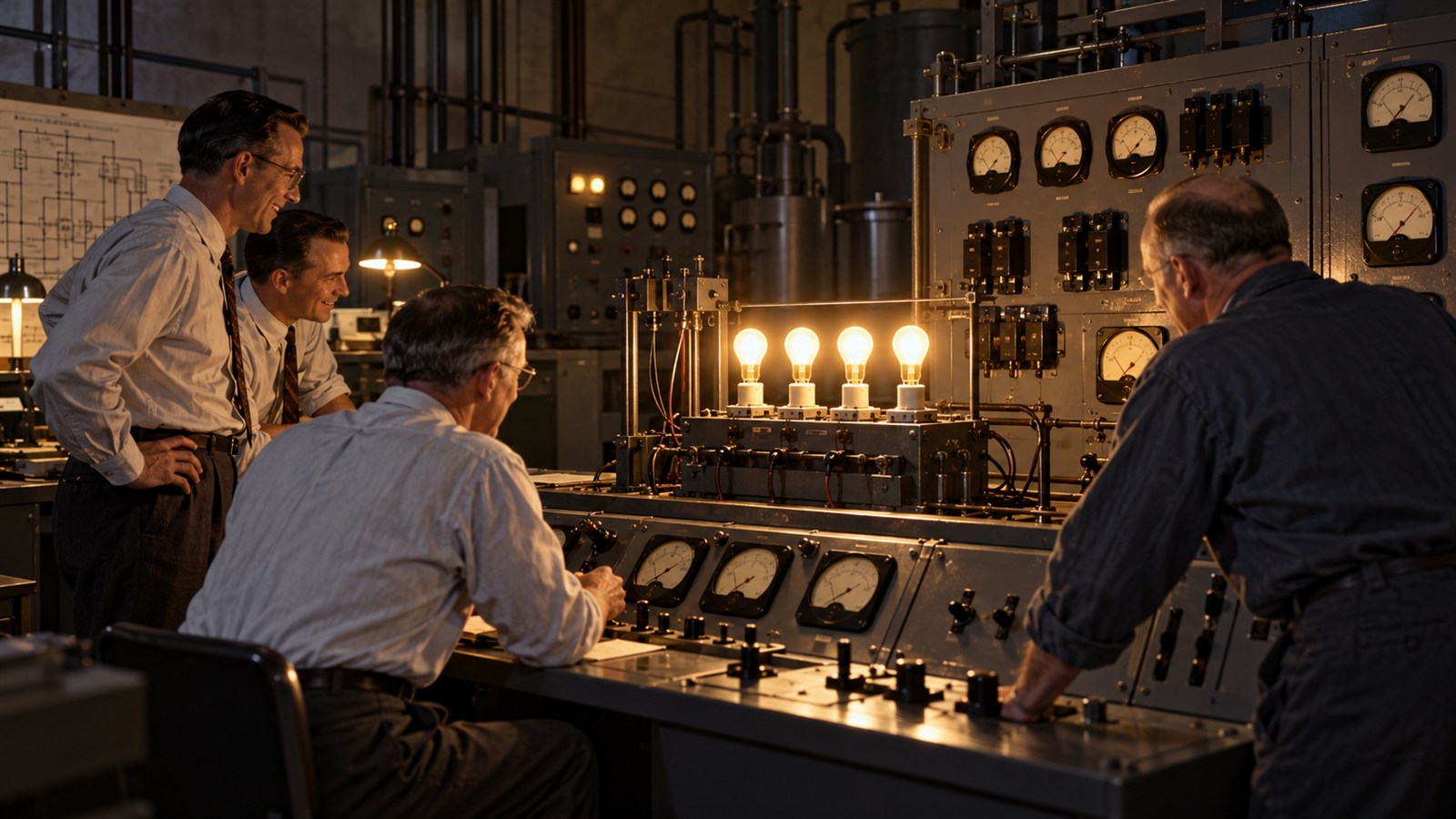
On December 20, 1951, Experimental Breeder Reactor I near Arco, Idaho, generated electricity from nuclear fission and lit four 200-watt bulbs. The next day it produced enough power for the building, turning a laboratory reactor into a visible proof that controlled nuclear heat could drive an electrical system. The event was the visible end of financing, engineering, negotiation, and labor. Infrastructure concentrates risk before benefits appear, so sponsors must coordinate technical design with regulation, capital, rights of way, and the practical needs of customers expected to use the system.
The demonstration was modest in output but large in implication. A reactor, coolant system, turbine, generator, controls, and trained operators had to function together. Nuclear power would require far more than a successful chain reaction: materials, maintenance, fuel handling, safety analysis, and public oversight were essential. Once operating, the asset changed more than a single transaction. It reorganized where firms could locate, how information or goods moved, which markets became reachable, and how reliably people could plan. Those second-order effects often created more value than the direct fee collected by the operator.
EBR-I also explored breeding fuel, reflecting concern about how nuclear resources might be used efficiently. Government laboratories could accept technical uncertainty that private utilities would not, generating data that informed later reactor designs, licensing approaches, and investment decisions. Scale also brought public obligations. Safety, access, maintenance, resilience, and monopoly power could not be treated as side issues because a failure in shared infrastructure reached far beyond the owner. Durable performance required governance strong enough to protect commerce and the communities carrying its costs.
The four glowing bulbs became a powerful symbol because they connected complex science to an ordinary service. Infrastructure innovation earns public and commercial legitimacy when people can see a useful outcome, yet scaling must preserve safety and accountability. A dramatic demonstration begins the proof; reliable lifetime operation completes it. The modern lesson is to judge infrastructure across its full life cycle. Opening headlines fade quickly; maintenance, capacity, security, and public legitimacy determine whether the asset keeps creating value. The best systems connect engineering discipline with transparent rules and a realistic plan for decades of operation. In practical terms, the advantage came from linking a clear public or customer promise to disciplined execution. Capital and attention had to be committed before demand was certain, partners had to coordinate, and leaders had to keep learning after the first milestone passed into history. The strongest legacy was not the announcement alone, but the repeatable capability, institution, or market that people built around it afterward.
EBR-I lit four 200-watt bulbs on December 20, 1951.
The reactor produced enough power for its building the following day.
The test connected controlled fission to a complete electrical system.
Government research carried technical risk before commercial utilities could.
Fuel use, materials, controls, and safety were all part of the challenge.
The demonstration made nuclear electricity visible to a broad public.
Explore more of "On This Day ..."
Discover more events from the same date across news, politics, technology, sports, and other fields. Each link highlights significant moments that shaped history on different fronts.