

On This Day in Business: December 28, 1895
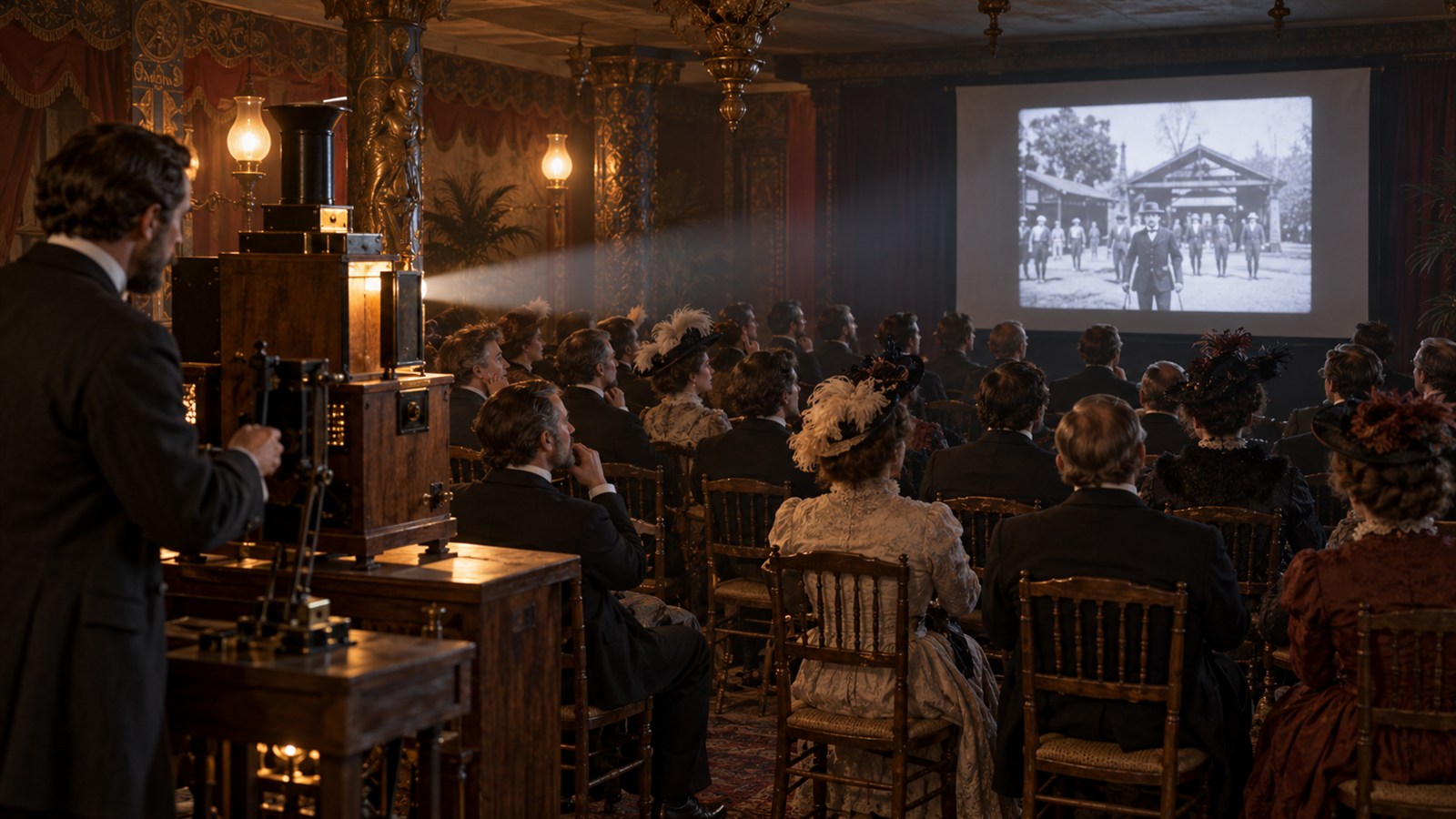
On December 28, 1895, the Lumiere company presented ten short films to thirty-three paying spectators in the Salon Indien of the Grand Cafe in Paris. The event is widely treated as the first commercial public screening by the Cinematographe, a compact device that could record, print, and project motion pictures. The venture joined creative ambition to a distribution system capable of reaching an audience. Content has limited economic value without access, while a channel has little reason to exist without work distinctive enough to make readers, listeners, viewers, or players return. The operating model connected those two sides.
Earlier demonstrations had shown moving images, but charging admission created a repeatable business proposition. A shared screen turned film into a social venue experience, while the portable apparatus allowed operators to travel, record new scenes, and reproduce the program for audiences in many cities. Leaders had to commit to talent, rights, equipment, promotion, and scheduling before demand was fully known. They were effectively buying an option on future attention, accepting near-term uncertainty for the chance to establish habits and a recognizable position in a changing market.
Demand expanded quickly as Lumiere operators carried equipment and films around the world. Exhibitors, camera makers, producers, performers, distributors, and theater owners formed an industry around a stream of new subjects. Standardization and rights questions grew as audiences and competitors multiplied. Once an audience formed, the enterprise could extend value through advertising, subscriptions, licensing, syndication, merchandise, sequels, or repeat exhibition. Scale also raised expectations: the brand had to deliver consistently, protect credibility, and adapt as competitors copied the format or distribution technology changed.
The screening shows how commercialization changes an invention. The machine mattered, but so did venue, pricing, program length, trained operators, and a supply of new material. Cinema became scalable when technical capability was packaged as an experience people would pay to share and entrepreneurs could reproduce. The durable lesson is that media companies are built from both stories and systems. Creative work attracts attention, but rights ownership, operational reliability, audience insight, and distribution determine how long that attention can become revenue. A launch matters most when it begins a repeatable relationship. In practical terms, the advantage came from linking a clear public or customer promise to disciplined execution. Capital and attention had to be committed before demand was certain, partners had to coordinate, and leaders had to keep learning after the first milestone passed into history. The strongest legacy was not the announcement alone, but the repeatable capability, institution, or market that people built around it afterward.
The Lumiere company held the paid screening on December 28, 1895.
Thirty-three spectators watched ten short films in Paris.
The Cinematographe could record, print, and project moving images.
Admission transformed a demonstration into a commercial experience.
Traveling operators expanded production and exhibition internationally.
A new industry formed around equipment, content, venues, and distribution.
Explore more of "On This Day ..."
Discover more events from the same date across news, politics, technology, sports, and other fields. Each link highlights significant moments that shaped history on different fronts.