

On This Day in Business: December 31, 1935
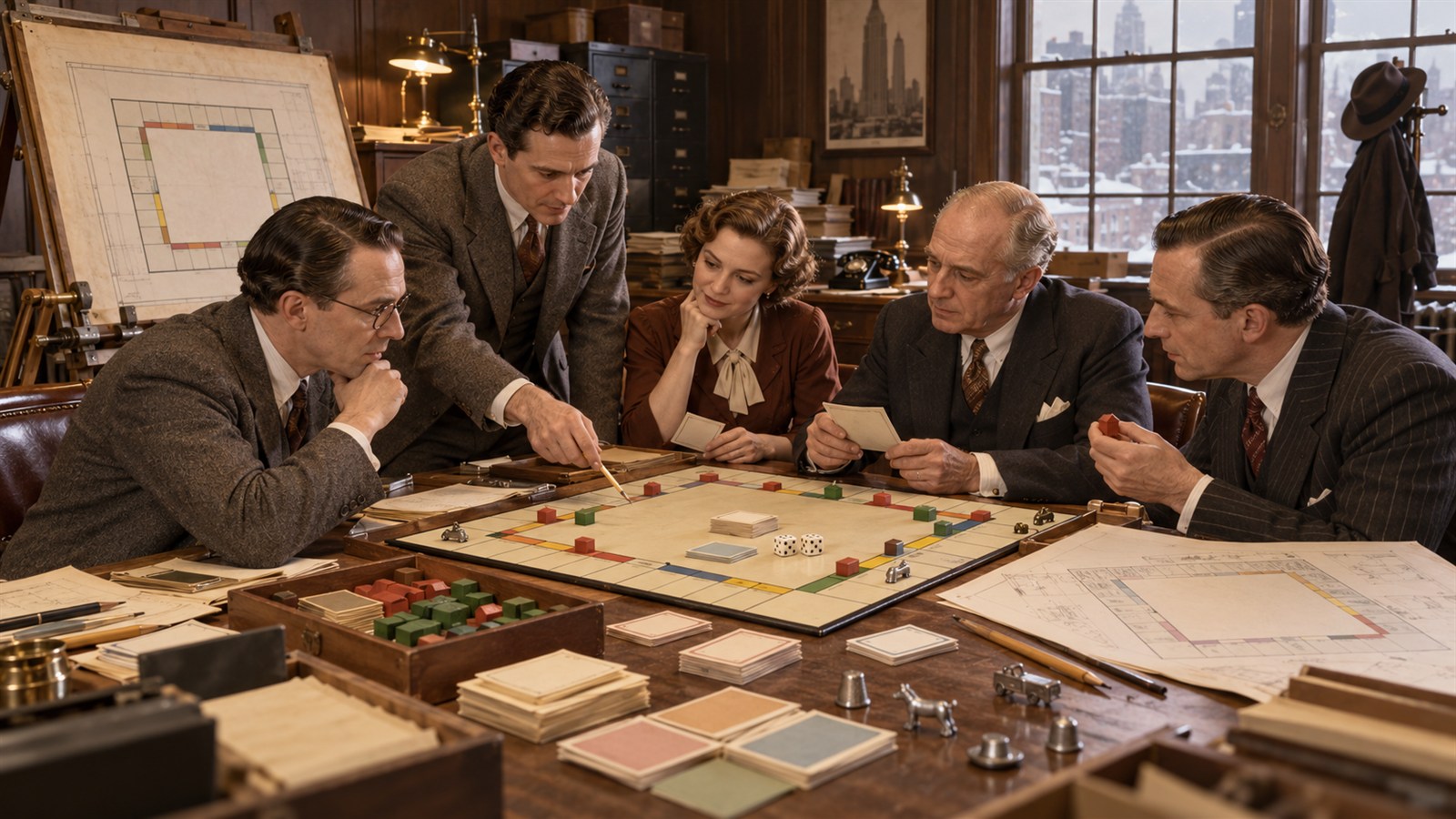
On December 31, 1935, the United States issued Charles Darrow Patent 2,026,082 for a board-game apparatus associated with Monopoly. Parker Brothers had acquired and marketed his version after initially rejecting it, and the game became a strong seller during the Depression. The venture joined creative ambition to a distribution system capable of reaching an audience. Content has limited economic value without access, while a channel has little reason to exist without work distinctive enough to make readers, listeners, viewers, or players return. The operating model connected those two sides.
The commercial story rested on earlier designs. Elizabeth Magie patented The Landlord's Game in 1904 to illustrate ideas about property and taxation, and players developed related versions over decades. Parker Brothers later purchased Magie's rights while consolidating the product sold under the Monopoly name. Leaders had to commit to talent, rights, equipment, promotion, and scheduling before demand was fully known. They were effectively buying an option on future attention, accepting near-term uncertainty for the chance to establish habits and a recognizable position in a changing market.
A recognizable board, rules, pieces, packaging, and distribution turned a circulating folk design into a managed consumer brand. Localized editions, licensing, advertising, and mass manufacturing extended the property far beyond the patent's technical claims and created repeat value for retailers and the rights owner. Once an audience formed, the enterprise could extend value through advertising, subscriptions, licensing, syndication, merchandise, sequels, or repeat exhibition. Scale also raised expectations: the brand had to deliver consistently, protect credibility, and adapt as competitors copied the format or distribution technology changed.
The patent date highlights both the power and complexity of intellectual property. Formal rights can support investment and standardization, but origin stories may simplify collective development. Responsible brand stewardship requires accurate credit, clear contracts, and an understanding that legal ownership and creative contribution are not always identical. The durable lesson is that media companies are built from both stories and systems. Creative work attracts attention, but rights ownership, operational reliability, audience insight, and distribution determine how long that attention can become revenue. A launch matters most when it begins a repeatable relationship. In practical terms, the advantage came from linking a clear public or customer promise to disciplined execution. Capital and attention had to be committed before demand was certain, partners had to coordinate, and leaders had to keep learning after the first milestone passed into history. The strongest legacy was not the announcement alone, but the repeatable capability, institution, or market that people built around it afterward.
Patent 2,026,082 issued on December 31, 1935.
Charles Darrow's game was marketed by Parker Brothers.
Elizabeth Magie's earlier Landlord's Game influenced the design history.
Packaging, rules, manufacturing, and retail made the product scalable.
Licensing and localized editions later expanded the brand worldwide.
The history distinguishes legal ownership from the full chain of creative contribution.
Explore more of "On This Day ..."
Discover more events from the same date across news, politics, technology, sports, and other fields. Each link highlights significant moments that shaped history on different fronts.