

On This Day in Lifestyles: December 20, 1946
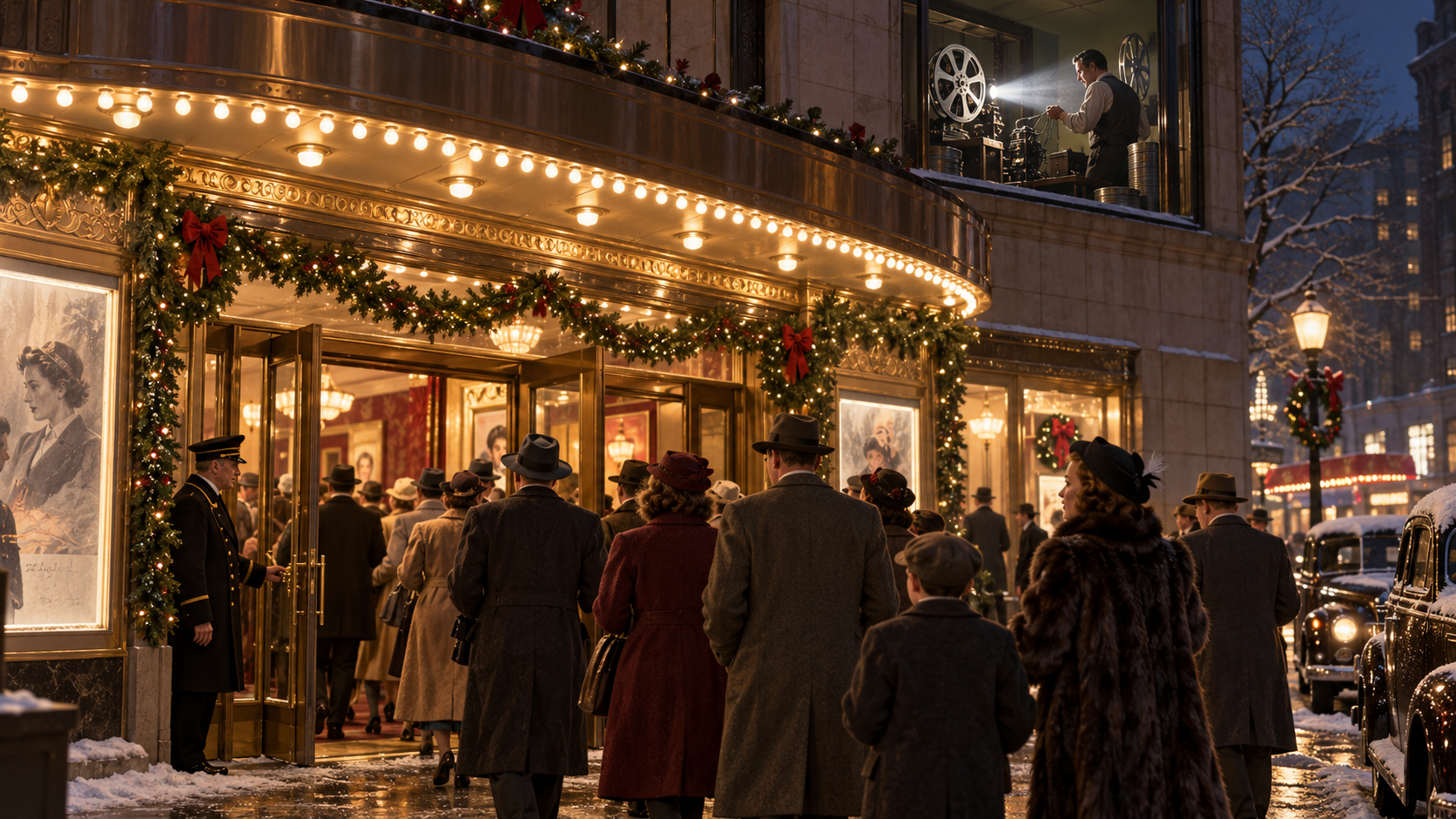
On December 20, 1946, Frank Capra’s It’s a Wonderful Life opened in New York City. The date matters in lifestyle history because a film about one man’s ordinary relationships slowly became a ritual through repetition in family living rooms. It was not merely a headline for institutions or specialists; it touched the settings, objects, expectations, and shared rituals through which people organized ordinary days. New Yorkers entered a decorated movie theater on opening day while a projectionist prepared reels and lobby staff greeted winter crowds Seen at human scale, the episode shows how a public milestone becomes meaningful through repeated personal choices, conversations, and memories.
Liberty Films adapted Philip Van Doren Stern’s privately printed story about a discouraged man shown how his life affected his community. James Stewart returned to the screen after wartime service, with Donna Reed and a large ensemble supporting Capra’s mix of comedy, domestic drama, financial anxiety, and fantasy. The production built the town of Bedford Falls on an extensive set. The setting is essential to understanding why the event attracted attention. New ideas rarely arrive in isolation: they meet existing technology, commerce, custom, law, and desire. Contemporary newspapers, public spaces, shops, schools, workplaces, or homes carried the story outward, giving people practical ways to interpret it. Some welcomed the change, others doubted it, and many first encountered it indirectly. That mixture of novelty and familiarity helped the moment travel from a single date into a broader change in behavior.
Initial reviews and box office results were respectable but not overwhelming, and the film received five Academy Award nominations without winning. Its portrait of sacrifice, frustrated ambition, banking, friendship, and mutual aid nevertheless gave postwar audiences unusually dark material within an ultimately hopeful story. In daily life, the consequences appeared through altered routines, new expectations, and different ways of spending time or money. Frequent television showings decades later helped transform the film into a seasonal tradition. Preservation and repertory screenings now keep it widely available. Viewers continue to debate its economics, gender roles, mental-health crisis, sentiment, and vision of a community capable of rescuing one of its own. The benefits were never the whole story; major changes also exposed questions about access, responsibility, fairness, cost, and who had power to define progress. Those tensions deserve a place beside the celebration because they show how culture actually develops. The event mattered not because everyone experienced it in the same way, but because it opened a durable argument about how people wanted to live.
Today, the legacy remains visible: holiday viewing, repertory cinemas, streaming, family discussion, and charitable themes keep the film active across generations. Familiarity can make that inheritance easy to overlook, yet the practices surrounding it were built through years of experimentation, adaptation, criticism, and use. Looking back does more than celebrate an anniversary. It reveals the chain between public decisions and private habits, between ambitious ideas and the small acts that make them ordinary. On this day, one historical moment became part of the texture of modern life. Remembering the full setting lets the milestone feel less like a frozen fact and more like a living part of experience.
On December 20, 1946, Frank Capra's It's a Wonderful Life opened in New York City.
Liberty Films adapted Philip Van Doren Stern's privately printed story about a discouraged man shown how his life affected his community. James Stewart returned to the screen after wartime service, with Donna Reed and a large ensemble supporting Capra's mix of comedy, domestic drama, financial anxiety, and fantasy. The production built the town of Bedford Falls on an extensive set.
Initial reviews and box office results were respectable but not overwhelming, and the film received five Academy Award nominations without winning. Its portrait of sacrifice, frustrated ambition, banking, friendship, and mutual aid nevertheless gave postwar audiences unusually dark material within an ultimately hopeful story.
The event matters in lifestyle history because a film about one man's ordinary relationships slowly became a ritual through repetition in family living rooms.
Frequent television showings decades later helped transform the film into a seasonal tradition. Preservation and repertory screenings now keep it widely available. Viewers continue to debate its economics, gender roles, mental-health crisis, sentiment, and vision of a community capable of rescuing one of its own.
The legacy remains visible today: holiday viewing, repertory cinemas, streaming, family discussion, and charitable themes keep the film active across generations.
Explore more of “This Day in Lifestyles”
Discover more moments in everyday life, design, education, travel, food, fashion, and culture. Each story connects a calendar date with an event that changed how people lived.