

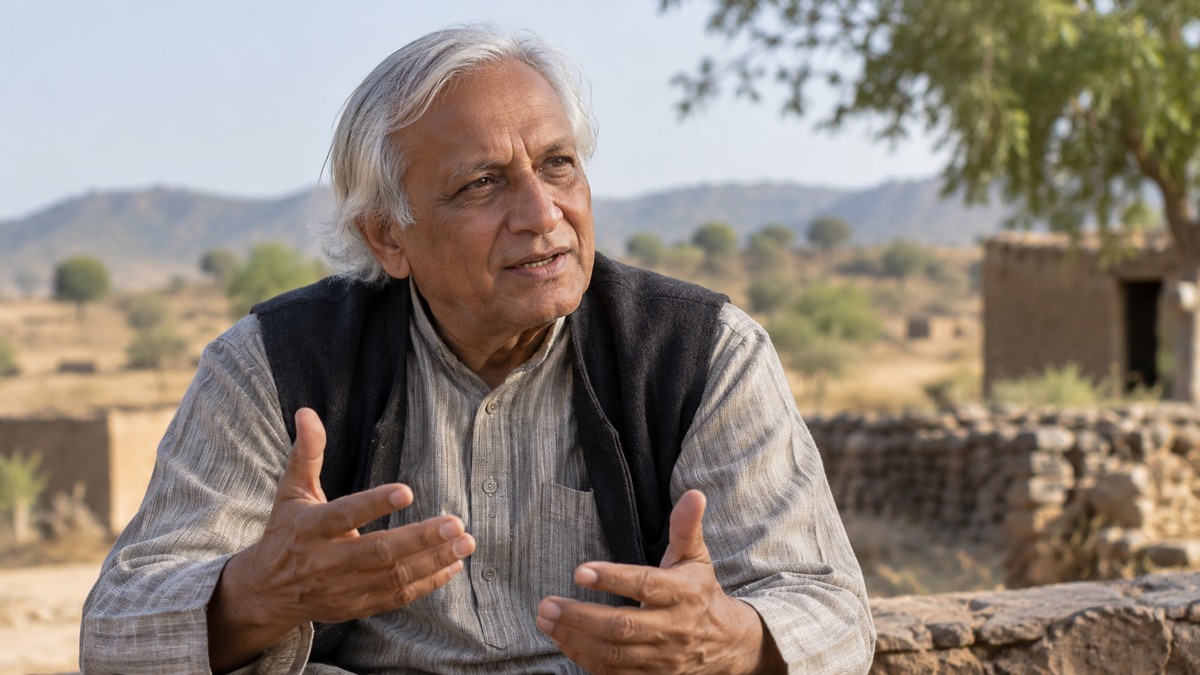
“You have to listen to the people on the ground.”
Educator Bunker Roy’s 2011 TEDGlobal talk described Barefoot College, where rural communities develop local capabilities in areas such as solar engineering, health, and water. His examples challenged assumptions about credentials and expertise. Listening on the ground means treating communities as partners with knowledge, not as passive recipients of a predesigned solution. Local experience helps reveal which tools, training, and governance can survive after outsiders leave. Business relevance appears when the thought changes the allocation of time, resources, attention, or decision rights. The distinction matters because organizations often preserve the visible result while forgetting the less visible habits and relationships that produced it.
A business entering a new market can begin with paid local research, community-led pilots, and training designed for the actual language and conditions. Success should include local ownership and the ability to maintain the solution. The next step should be specific enough that another person can observe whether it occurred. Reviewing the mechanism prevents a favorable outcome from being mistaken for proof that every assumption was correct.
Participation can be staged or captured by the most visible representatives. Companies must include marginalized voices, disclose commercial interests, and avoid extracting knowledge without compensation or shared control. Good governance keeps dissent and correction available, especially for people closest to the consequences. People responsible for execution should help define the measure because they see consequences a dashboard may flatten or miss.
Global supply chains and development partnerships often fail at the point of local adoption. Roy’s lesson remains valuable because durable solutions depend on capability, trust, and maintenance where the work is actually lived. Choose one initiative designed far from its users and pause expansion long enough for a local team to redesign a pilot. Fund their time, record which assumptions change, and transfer a meaningful decision right. The final measure is whether the practice creates durable value without hiding costs elsewhere in the system. The next team can reuse the insight while still testing whether its customers, risks, and operating environment are different. Leaders should also state what existing activity will end if the new practice continues. Without that choice, improvement becomes another layer of work and the organization mistakes busyness for progress. Removing an old report, approval, feature, or meeting demonstrates that the lesson has changed priorities. The saved capacity should be visible to the people doing the work, not quietly consumed by a new demand. That is how an experiment becomes a sustainable redesign rather than temporary overload. The team should revisit the choice after novelty fades and ordinary operating pressure returns to the schedule.
Educator Bunker Roy’s 2011 TEDGlobal talk described Barefoot College, where rural communities develop local capabilities in areas such as solar engineering, health, and water. His examples challenged assumptions about credentials and expertise.
Listening on the ground means treating communities as partners with knowledge, not as passive recipients of a predesigned solution. Local experience helps reveal which tools, training, and governance can survive after outsiders leave.
A business entering a new market can begin with paid local research, community-led pilots, and training designed for the actual language and conditions. Success should include local ownership and the ability to maintain the solution.
Participation can be staged or captured by the most visible representatives. Companies must include marginalized voices, disclose commercial interests, and avoid extracting knowledge without compensation or shared control.
Global supply chains and development partnerships often fail at the point of local adoption. Roy’s lesson remains valuable because durable solutions depend on capability, trust, and maintenance where the work is actually lived.
Choose one initiative designed far from its users and pause expansion long enough for a local team to redesign a pilot. Fund their time, record which assumptions change, and transfer a meaningful decision right.
Explore more "Quotes of The Day"
Discover more notable quotes from influential voices across politics, science, business, technology, sports, and culture. Each quote offers insight into how ideas, beliefs, and decisions shape the world around us.