

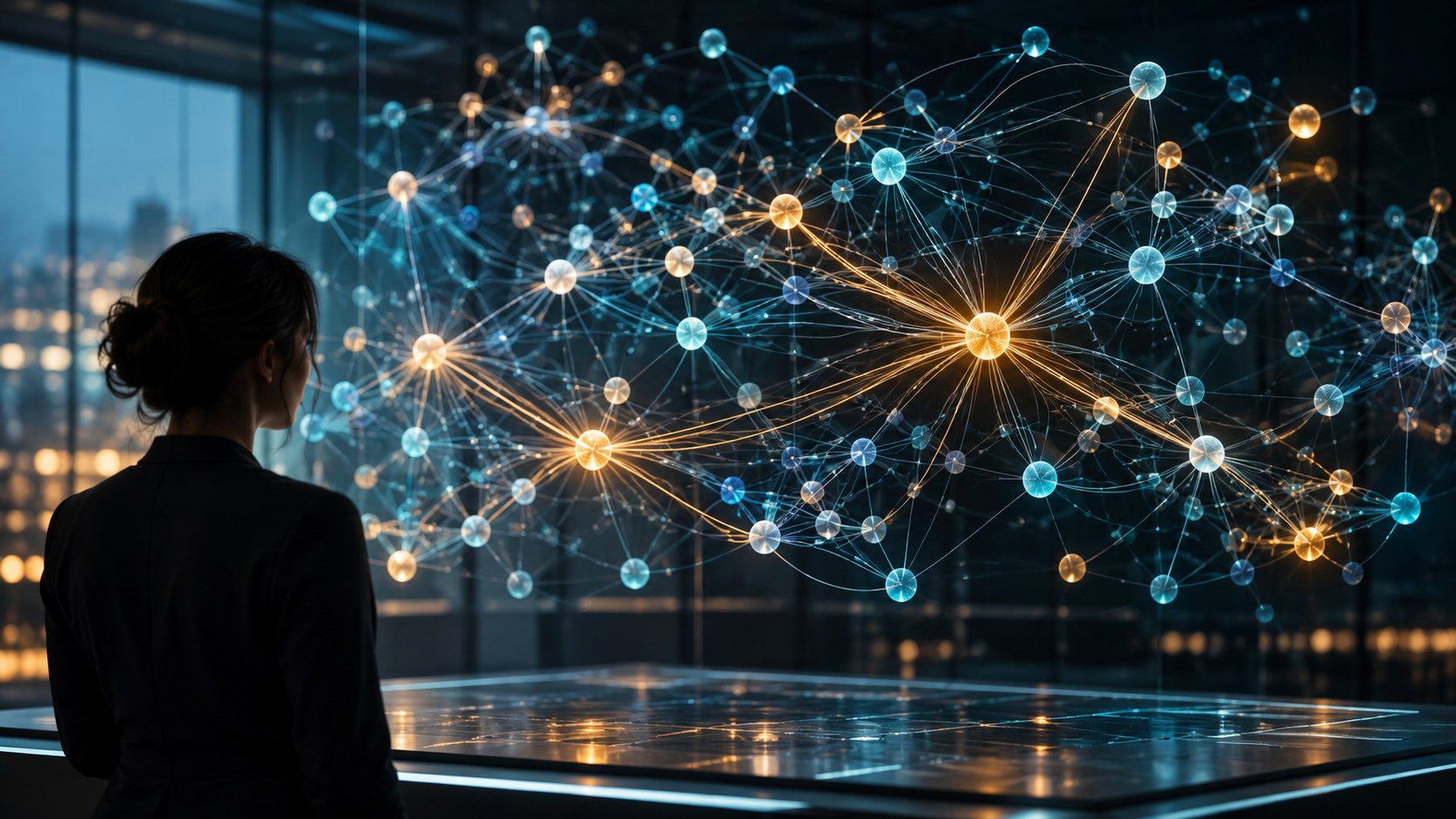
Transformer Models Explainer
A transformer is a neural-network architecture designed to process sequences by using attention. Introduced in the 2017 paper Attention Is All You Need, the original transformer replaced the recurrence used by many earlier sequence models with layers that could compare positions directly and perform much of their work in parallel.
Self-attention creates query, key, and value representations for tokens. The model calculates which tokens are most relevant to each other and combines their information using learned weights. Because attention alone does not tell the model the order of a sequence, transformers also add positional information.
Transformers can be built as encoders, decoders, or encoder-decoder systems. Stacked attention and feed-forward layers power language models, translation systems, image models, audio systems, and multimodal tools. Their ability to scale with data and computing has made them central to modern generative AI.
Attention is powerful but not free. Standard self-attention becomes expensive as a sequence grows because the model compares many token pairs. Transformers can still hallucinate, reflect training-data bias, and struggle with exact reasoning. Architecture explains how information is processed; it does not by itself guarantee accuracy, safety, or understanding.
A transformer is a neural-network architecture that uses attention to relate each token to other relevant tokens in a sequence.
Key terms include transformer, token, attention, self-attention, query, key, value, positional encoding, encoder and decoder.
<a href="https://arxiv.org/abs/1706.03762" target="_blank" rel="noopener noreferrer">Attention Is All You Need</a> and <a href="https://papers.neurips.cc/paper/7181-attention-is-all-you-need" target="_blank" rel="noopener noreferrer">NeurIPS: Attention Is All You Need</a> provide the primary references for this explainer.
Each token produces query, key, and value vectors. Similarities between queries and keys become attention weights that determine how much of each value contributes to the next representation.
Multiple attention heads can learn different relationships at once, while position signals preserve information about order.
Transformers support parallel training and transfer well across language, vision, audio, and mixed-media tasks. They are the architecture behind many foundation models.
Long sequences can demand large memory and computation, and strong pattern modeling does not eliminate factual, security, or bias risks.
Explore more "Explainers"
Discover additional explainers across politics, science, business, technology, and other fields. Each explainer breaks down a complex idea into clear, everyday language—helping you better understand how major concepts, systems, and debates shape the world around us.