

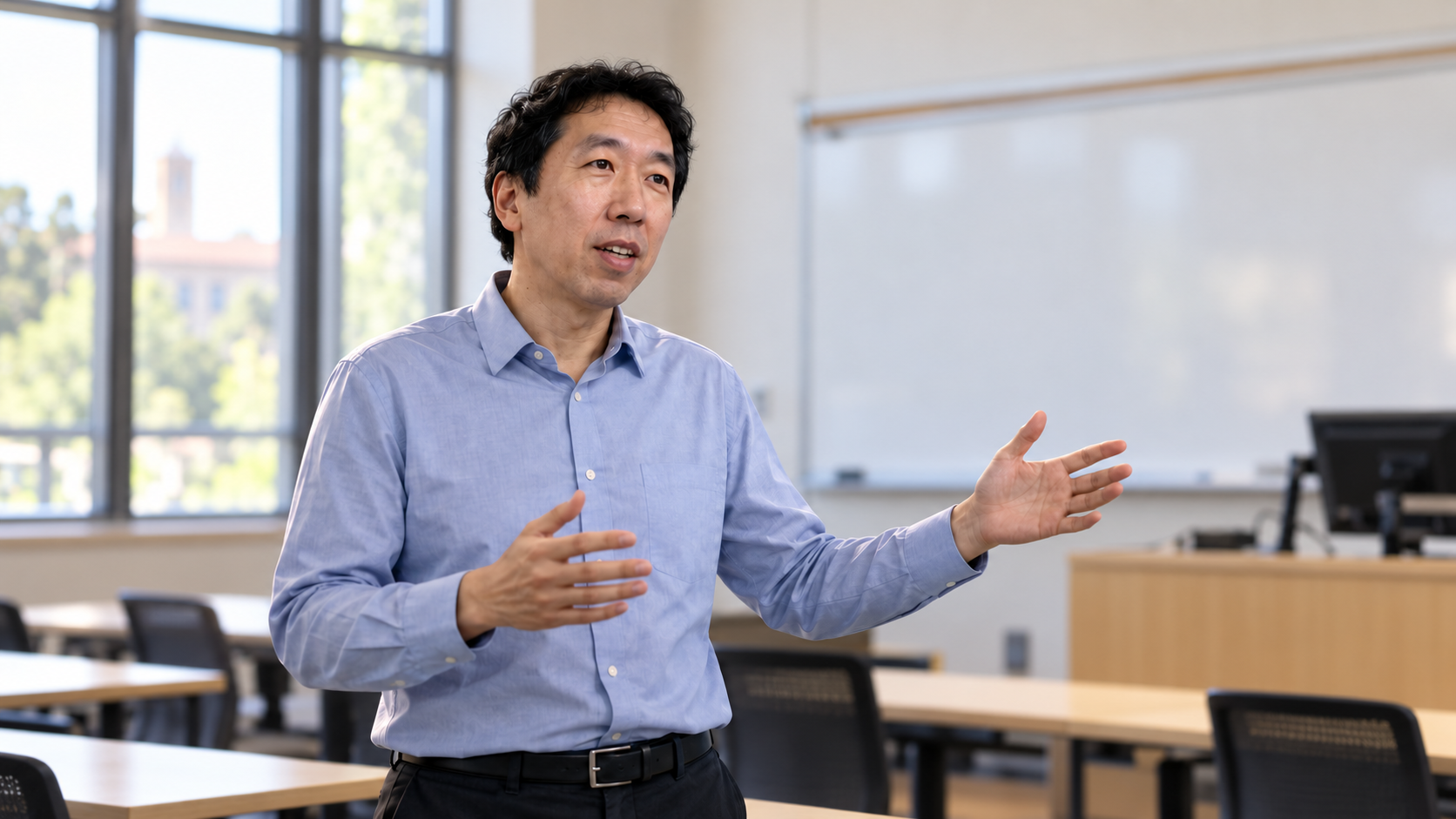
“AI is the new electricity.”
Andrew Ng’s phrase “AI is the new electricity” compares artificial intelligence with a technology that quietly transformed nearly every sector. Electricity first powered particular machines, then reorganized factories, homes, transportation, communication, and daily life. Ng’s analogy suggests that AI will follow a similarly broad path. Instead of remaining a specialized product, machine learning can become a capability woven into many processes: detecting disease, forecasting maintenance, translating language, personalizing education, improving logistics, and helping scientists search complicated spaces. The value lies not in one spectacular demonstration but in thousands of applications that change how work is organized.
The history of electrification also adds useful caution to the metaphor. Factories did not gain the full benefit simply by replacing a steam engine with an electric motor. They had to redesign layouts, workflows, and management around distributed power. In the same way, attaching a model to an old process may produce only superficial gains. Organizations need reliable data, trained staff, evaluation practices, clear responsibility, and a realistic understanding of where human expertise belongs. AI transformation is institutional work. It succeeds when technology, process, incentives, and professional judgment are redesigned together around a worthwhile outcome.
Electricity became powerful because it was supported by standards, safety rules, public infrastructure, and a workforce that could install and maintain it. AI needs equivalents. Shared measurement methods, cybersecurity, privacy protections, documentation, and education help useful applications spread without making every organization rediscover the same failures. Access matters too. If computing resources, high-quality data, and expertise remain concentrated, the analogy may describe a utility that many people depend on but few can shape. Public research and interoperable tools can widen participation and create alternatives to a small number of private systems.
The quote is most valuable when it inspires patient construction rather than inevitable hype. Electricity created prosperity, but its benefits were neither instant nor evenly distributed. AI will also produce tradeoffs, disruptions, and uses that should be refused. The right question is not whether every activity can be automated. It is where learning systems can improve health, knowledge, creativity, safety, or opportunity, and what safeguards those uses require. Ng’s analogy points toward scale; history supplies the responsibility. A general-purpose technology becomes socially valuable through the networks, rules, skills, and choices built around it. Like a power grid, the surrounding system will determine reliability and reach. Investment in maintenance, public capacity, and resilient alternatives may be less glamorous than a breakthrough model, but it is what turns a promising capability into infrastructure people can safely depend on.
Electric power became a flexible input that changed many industries rather than one isolated product category.
Ng argues that AI can spread in the same way, becoming a capability inside health, manufacturing, education, logistics, and more.
Early electric factories improved only after owners reorganized processes around the new technology.
Likewise, useful AI adoption requires changes to workflows, roles, data practices, evaluation, and accountability.
Standards, safety practices, skills, and public investment helped electricity become dependable and widely available.
AI needs comparable foundations so benefits are not limited to organizations with the most compute, data, and capital.
Explore more "Quotes of The Day"
Continue exploring how writers, thinkers, artists, and advocates have described the choices that shape an everyday life.