

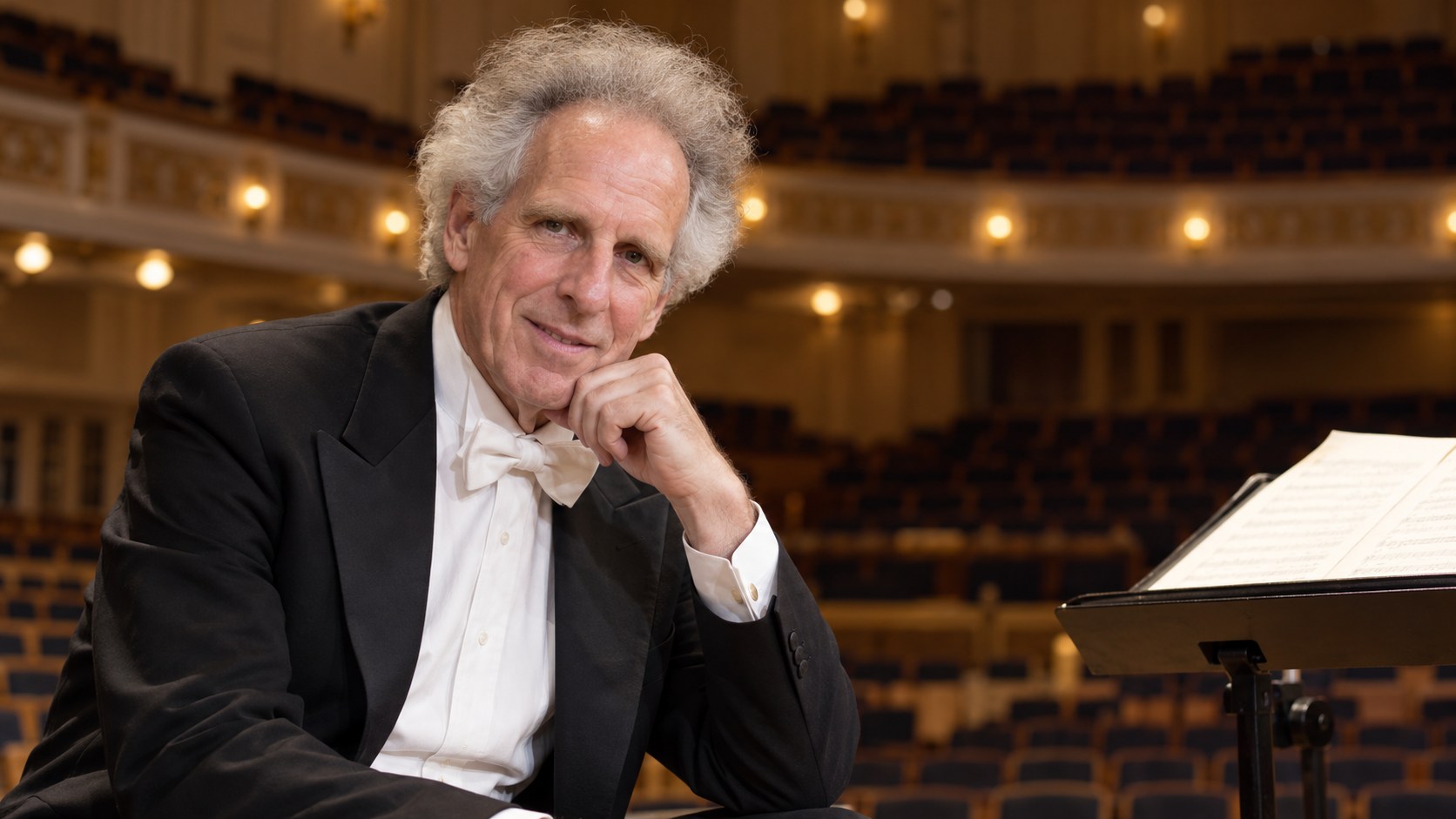
“A conductor doesn't make a sound.”
July 6 uses The Transformative Power of Classical Music (2008) as Benjamin Zander's documented setting. Zander uses conducting to illustrate leadership whose visible result depends entirely on the capacity awakened in other people. Zander points to the orchestra's most visible figure and then notes the obvious paradox: the conductor produces no audible note. The musicians make the sound. His demonstration turns a concert role into a question about leadership—whether authority can awaken interpretation, confidence, and coordinated expression in others. July 6 is NewsStreets placement for Benjamin Zander; 2008 is Benjamin Zander's date for The Transformative Power of Classical Music.
Authority is measured not by how much space the leader occupies but by the quality, confidence, and expression that others can produce together. The featured wording—“A conductor doesn't make a sound.”—compresses that distinction for Benjamin Zander. The observation shifts evidence of leadership away from personal display. A conductor's preparation is heard through phrasing, attention, and ensemble response rather than through a solo. In other settings, the analogous result is not obedience but people who understand the frame well enough to contribute judgment.
Enabling others is not passive; it requires preparation, expertise, clear interpretation, feedback, and responsibility for the conditions of performance. For Benjamin Zander, the boundary guards The Transformative Power of Classical Music from overreach. There is substantial work behind apparent enablement: studying the score, setting tempo, hearing imbalance, and correcting drift. Leaders cannot invoke empowerment to avoid decisions or blame performers for unclear direction. Making space for others is itself an exacting form of responsibility.
Many workplaces still reward individual visibility even when the most consequential leadership appears through other people's growth. Organizations often promote the person most associated with a result, even when quieter leadership built everyone else's capacity. One meeting offers a useful trial: define the purpose, invite an interpretation you did not supply, and notice what the group can now do without your constant intervention. Their growth is part of the outcome. This standard also changes feedback. Instead of asking whether the leader looked decisive, ask whether musicians, colleagues, or students received a frame clear enough to exercise skill. If every contribution still requires the leader's approval, capacity has not truly expanded. Authority has succeeded more fully when quality can persist after the central figure steps away. For Benjamin Zander, a practical July 6 trial is this: In one group task, give a clear frame, invite another person's interpretation, and evaluate your contribution by what became possible for the group. On July 6, readers can test The Transformative Power of Classical Music through Benjamin Zander's guidance.
Benjamin Zander used the line in The Transformative Power of Classical Music, associated with 2008. Zander uses conducting to illustrate leadership whose visible result depends entirely on the capacity awakened in other people.
The source year identifies the documented work; July 6 is only this Quote of the Day series position, not the date when the words were first spoken or published.
Authority is measured not by how much space the leader occupies but by the quality, confidence, and expression that others can produce together.
Enabling others is not passive; it requires preparation, expertise, clear interpretation, feedback, and responsibility for the conditions of performance.
Many workplaces still reward individual visibility even when the most consequential leadership appears through other people's growth.
In one group task, give a clear frame, invite another person's interpretation, and evaluate your contribution by what became possible for the group.
Explore more "Quotes of The Day"
Continue exploring how writers, thinkers, artists, and advocates have described the choices that shape an everyday life.