

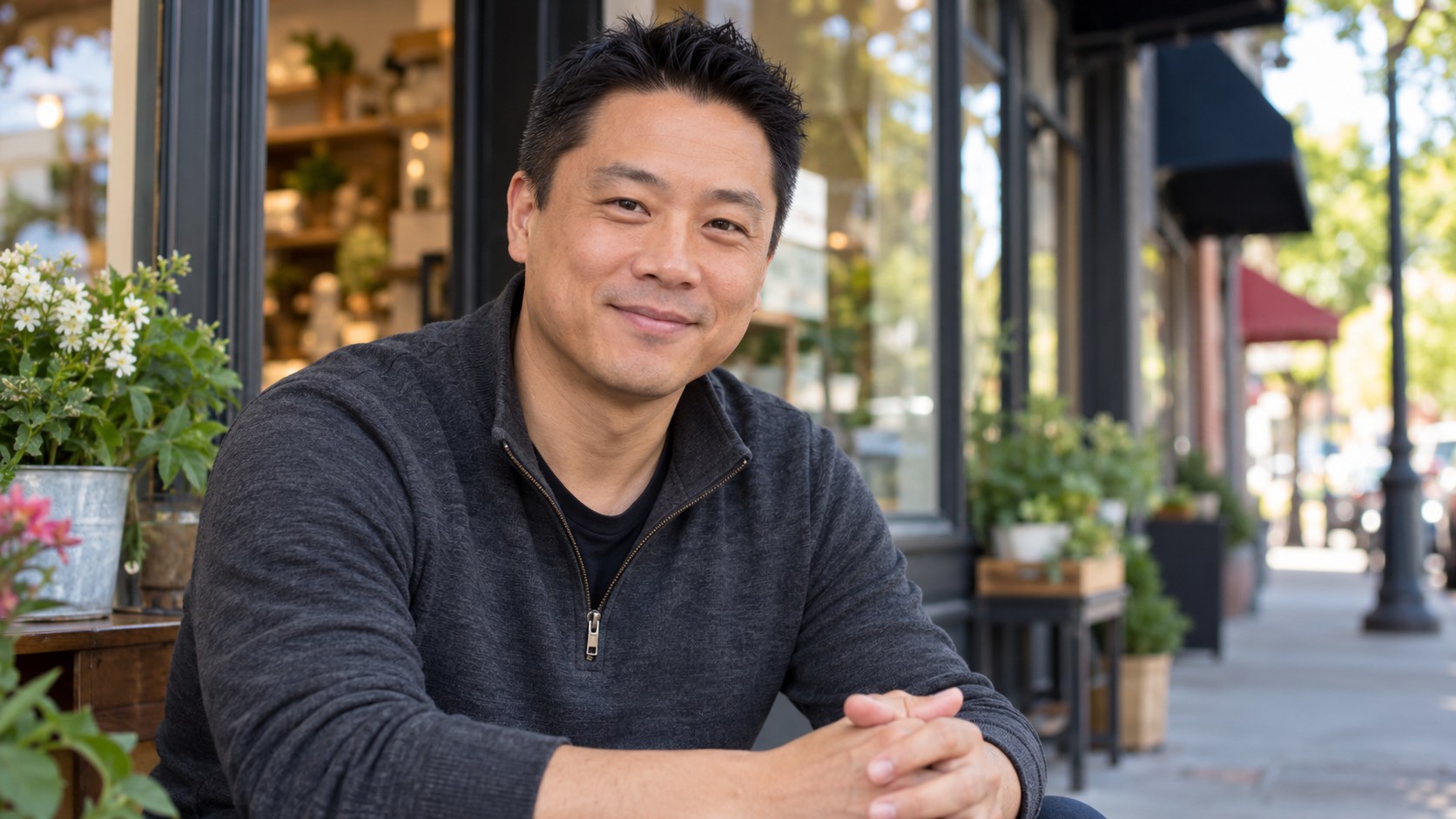
“If I just don't run, if I got rejected, I could actually turn a 'no' into a 'yes.'”
July 23 uses What I Learned from 100 Days of Rejection (2015) as Jia Jiang's documented setting. Jiang describes deliberately seeking rejection and learning to stay in the conversation long enough to ask why, adapt, or receive a referral. Jiang's “100 days of rejection” project deliberately exposed him to answers he feared. He learned that remaining calm after a refusal sometimes revealed a reason, adjustment, or referral. The quote describes those negotiable situations; it is not a general instruction to keep pushing whenever another person says no. July 23 is NewsStreets placement for Jia Jiang; 2015 is Jia Jiang's date for What I Learned from 100 Days of Rejection.
A refusal can contain information about fit, timing, method, or another path instead of serving as a total judgment of the person asking. The featured wording—“If I just don't run, if I got rejected, I could actually turn a 'no' into a 'yes.'”—compresses that distinction for Jia Jiang. Rejection often arrives as a global feeling even when the decision concerns fit, timing, price, authority, or method. A curious follow-up can turn the answer into information and preserve dignity on both sides. Sometimes the information is simply that the boundary is final, which is also useful knowledge.
No remains a complete answer when consent, safety, or boundaries are involved, and persistence must never become pressure or entitlement. For Jia Jiang, the boundary guards What I Learned from 100 Days of Rejection from overreach. Consent changes the rule completely. Persistence around bodies, safety, privacy, or personal boundaries can become coercion, and nobody owes an explanation for refusal. The experiment is ethical only when the request is respectful and the requester can accept the answer without punishment or manipulation.
Fear of a negative answer can stop requests for opportunity, help, feedback, and connection before another person has even responded. Fear often rejects an idea before another human has considered it. Make one bounded request whose downside is manageable, receive the response cleanly, and ask a single question only if the context welcomes it. Success can be accurate information and recovered willingness to ask again elsewhere, not merely conversion to yes. The practice can be graded by how well it preserves the other person's freedom. A respectful asker remains curious without making refusal costly, embarrassing, or exhausting. That standard is useful in sales, networking, creative work, and everyday favors. Courage is the willingness to risk hearing no; maturity is the ability to let no remain an answer. For Jia Jiang, a practical July 23 trial is this: Make one respectful request, receive the answer without argument, and if appropriate ask a single curious question about what would make a better fit. On July 23, readers can test What I Learned from 100 Days of Rejection through Jia Jiang's guidance.
Jia Jiang used the line in What I Learned from 100 Days of Rejection, associated with 2015. Jiang describes deliberately seeking rejection and learning to stay in the conversation long enough to ask why, adapt, or receive a referral.
The source year identifies the documented work; July 23 is only this Quote of the Day series position, not the date when the words were first spoken or published.
A refusal can contain information about fit, timing, method, or another path instead of serving as a total judgment of the person asking.
No remains a complete answer when consent, safety, or boundaries are involved, and persistence must never become pressure or entitlement.
Fear of a negative answer can stop requests for opportunity, help, feedback, and connection before another person has even responded.
Make one respectful request, receive the answer without argument, and if appropriate ask a single curious question about what would make a better fit.
Explore more "Quotes of The Day"
Continue exploring how writers, thinkers, artists, and advocates have described the choices that shape an everyday life.