

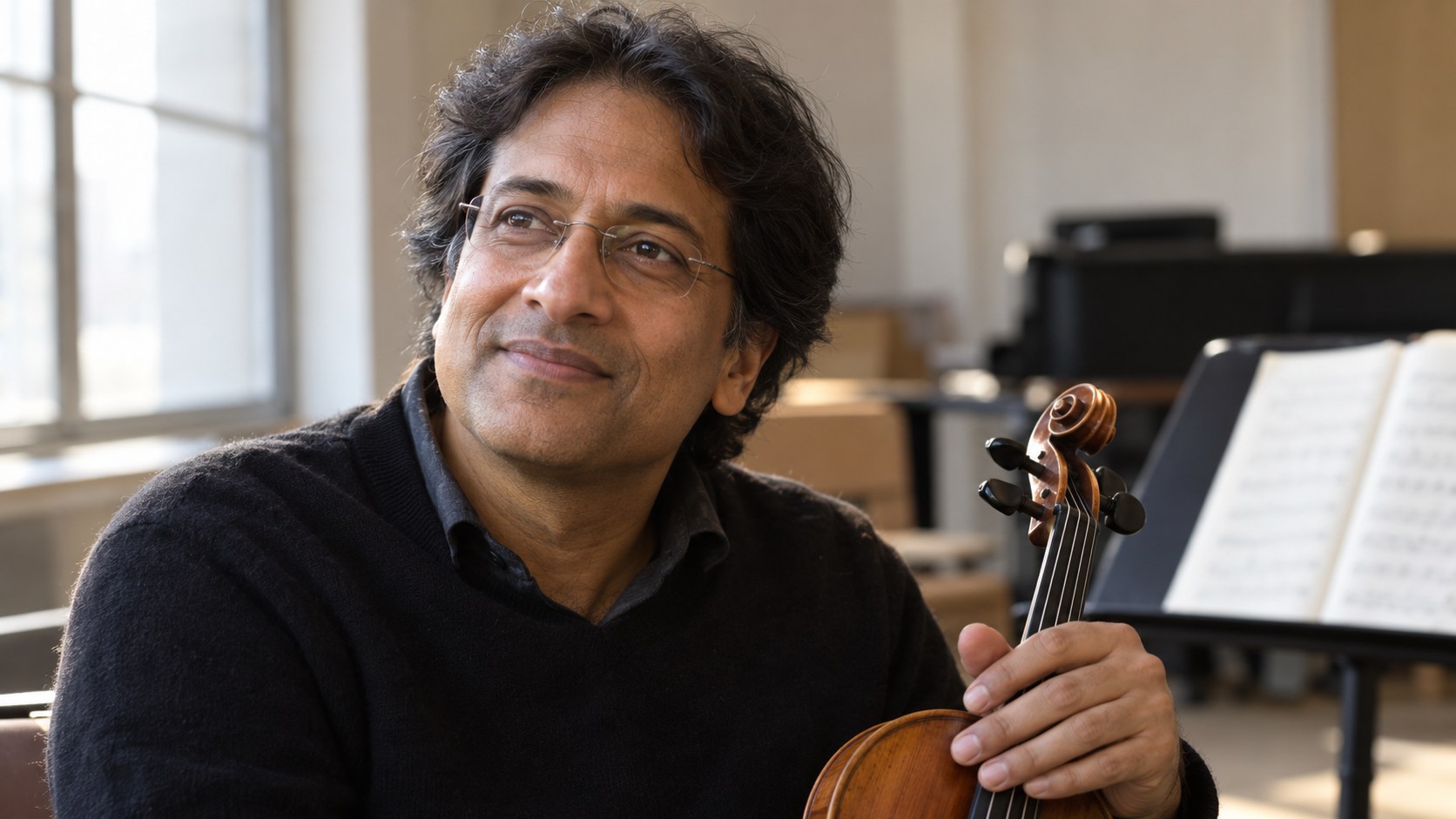
“Music is medicine, music is sanity.”
July 31 uses Music Is Medicine, Music Is Sanity (2010) as Robert Gupta's documented setting. Gupta describes teaching violinist Nathaniel Ayers and witnessing music reach him during a mental-health crisis when ordinary conversation could not. Gupta recounts teaching violinist Nathaniel Ayers and describes using music during a crisis when ordinary conversation could not reach him. The setting is intimate and specific. The phrase about medicine and sanity expresses music's relational force in that encounter, not a clinical claim that art universally cures mental illness. July 31 is NewsStreets placement for Robert Gupta; 2010 is Robert Gupta's date for Music Is Medicine, Music Is Sanity.
Music can organize attention, feeling, memory, and relationship in ways that offer dignity and connection beyond the concert hall. The featured wording—“Music is medicine, music is sanity.”—compresses that distinction for Robert Gupta. Music can organize time, attention, movement, and shared feeling without requiring every experience to be translated into prose. Playing together may offer recognition and continuity when other forms of contact feel inaccessible. Its value can be artistic, social, and therapeutic at once without those categories becoming identical.
Art can support care but is not a universal cure or substitute for evidence-based treatment, housing, safety, and the person's own preferences. For Robert Gupta, the boundary guards Music Is Medicine, Music Is Sanity from overreach. Art remains an adjunct, not a substitute for housing, consent, safety, medication when appropriate, psychotherapy, or other evidence-based care. Preferences also differ; an intervention that comforts one person may distress another. The participant's response must guide whether music is support or intrusion.
Arts programs are often treated as optional even where isolation, trauma, illness, and institutional life make expression especially important. Care settings often treat arts programs as optional even when isolation is a central burden. Offer or seek one consent-based opportunity for active music-making and evaluate it through the participants' experience. The humane standard is not a dramatic cure story, but greater dignity, connection, expression, or calm. Evaluation should attend to modest changes that dramatic narratives miss: willingness to remain in the room, a calmer breath, shared timing, or renewed contact with skill. These outcomes may be temporary and still matter. Music's contribution is respected when it is observed carefully and offered collaboratively, without forcing art to justify itself by promising a medical miracle. For Robert Gupta, a practical July 31 trial is this: Offer or seek one form of active music-making in a care or community setting, with consent, and evaluate its value through the participants' experience. On July 31, readers can test Music Is Medicine, Music Is Sanity through Robert Gupta's guidance.
Robert Gupta used the line in Music Is Medicine, Music Is Sanity, associated with 2010. Gupta describes teaching violinist Nathaniel Ayers and witnessing music reach him during a mental-health crisis when ordinary conversation could not.
The source year identifies the documented work; July 31 is only this Quote of the Day series position, not the date when the words were first spoken or published.
Music can organize attention, feeling, memory, and relationship in ways that offer dignity and connection beyond the concert hall.
Art can support care but is not a universal cure or substitute for evidence-based treatment, housing, safety, and the person's own preferences.
Arts programs are often treated as optional even where isolation, trauma, illness, and institutional life make expression especially important.
Offer or seek one form of active music-making in a care or community setting, with consent, and evaluate its value through the participants' experience.
Explore more "Quotes of The Day"
Continue exploring how writers, thinkers, artists, and advocates have described the choices that shape an everyday life.