

How Cricket Free Hits Work Explainer
In limited-overs international cricket, the delivery after a no-ball is a free hit for the batter facing it. The batting side still receives the no-ball penalty and any runs from the delivery, while the next legal ball carries special protection against most methods of dismissal.
On a free hit, the striker can be dismissed only in ways that would also apply from a no-ball, such as run out, obstructing the field, or hitting the ball twice in the circumstances allowed by the Laws. A catch, bowled, leg before wicket, or stumping cannot dismiss the striker from that delivery.
If the free-hit ball is itself a no-ball or a wide, the next delivery also becomes a free hit. The field generally cannot be rearranged between the no-ball and free hit unless the striker changes or a fielding restriction breach must be corrected under the playing conditions.
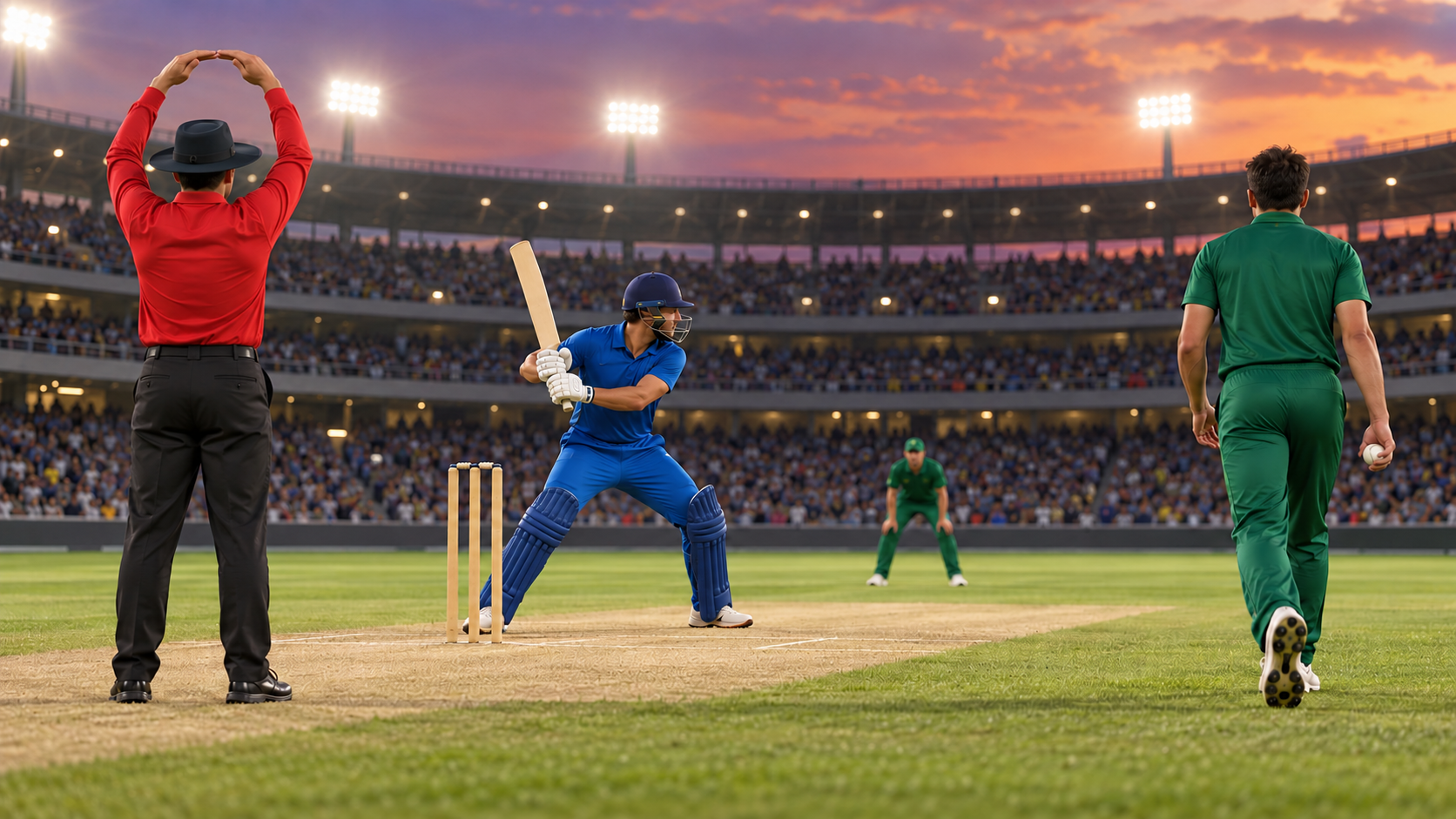
A free hit is not a guaranteed boundary. Bowlers can change pace, target difficult areas, and force a low-risk result, while batters still risk run-outs. Watch the umpire’s circular raised-arm signal and remember that only a legitimate delivery can complete the free-hit opportunity.
In applicable limited-overs playing conditions, any no-ball makes the next delivery a free hit.
No. Most ordinary dismissals, including caught, bowled, LBW, and stumped, do not apply to the striker.
If it is a no-ball or wide, the following delivery remains a free hit.
Explore more "Explainers"
Discover additional explainers across politics, science, business, technology, and other fields. Each explainer breaks down a complex idea into clear, everyday language—helping you better understand how major concepts, systems, and debates shape the world around us.