

How Hockey Delayed Penalties Work Explainer
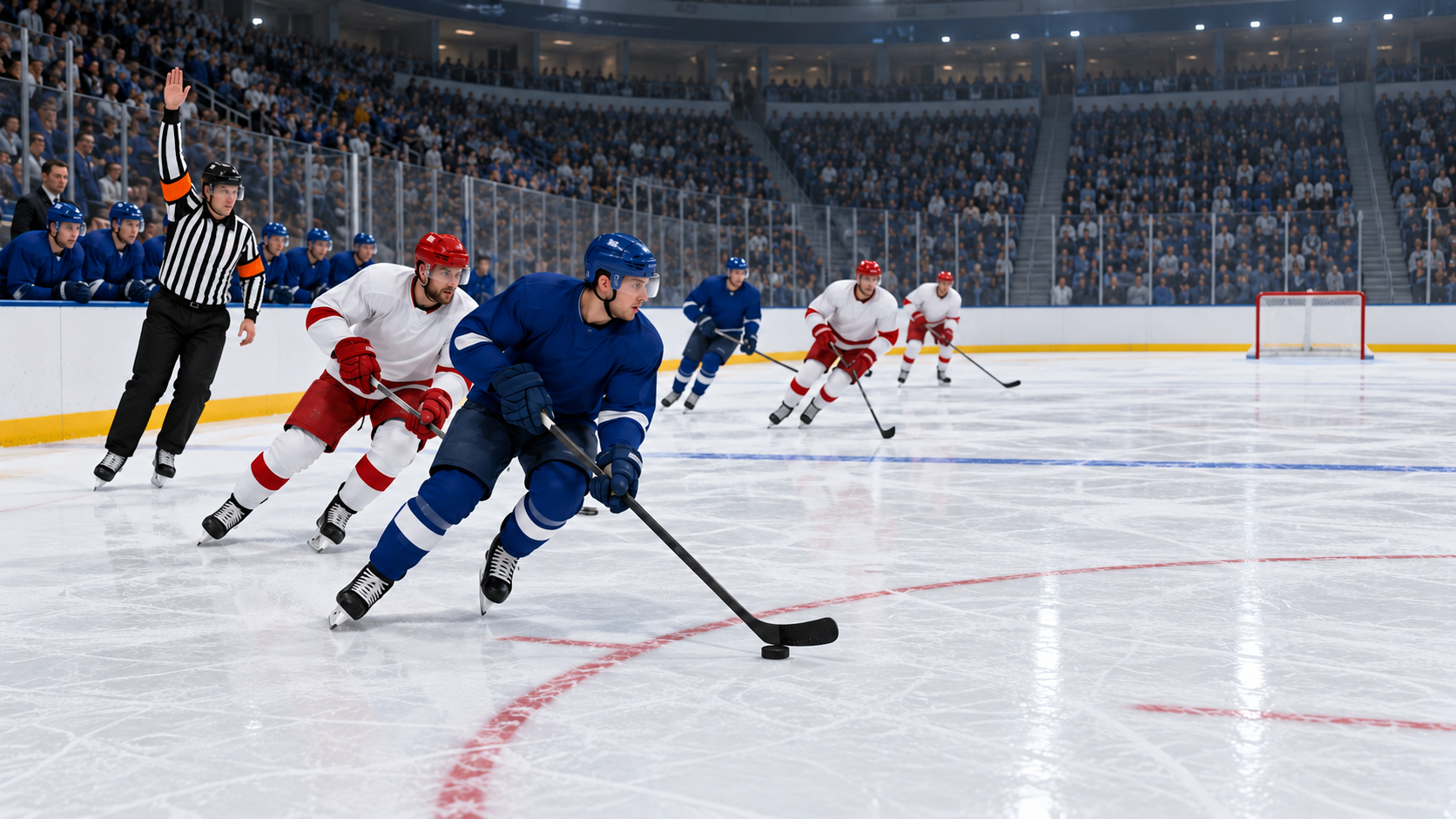
A delayed penalty occurs when an official identifies an infraction but the non-offending team still controls the puck. The referee raises an arm and allows play to continue so that team is not deprived of its possession and attacking opportunity by an immediate whistle.
The whistle sounds when the offending team gains possession and control, when another reason stops play, or when the rules otherwise require it. A mere deflection or brief accidental touch may not be enough; officials look for control. The penalty is then reported and served in the normal way.
The attacking team often removes its goaltender for an extra skater because the whistle will normally stop play once the penalized team controls the puck. That creates a temporary six-on-five attack. The empty net still carries risk in unusual situations, including an own goal caused without opponent control.
If the non-offending team scores during the delay, the treatment of the penalty depends on which penalties are pending and their severity. A goal may wipe out a delayed minor, while major or additional penalties can still be enforced. Follow the referee’s raised arm, then the announced assessment after the whistle.
Usually when the offending team gains possession and control of the puck or another stoppage occurs.
The non-offending team adds an attacker because play should stop before the penalized team can mount a normal controlled attack.
No. A delayed minor may be affected, but major, match, or multiple penalties can still be assessed under the rule.
Explore more "Explainers"
Discover additional explainers across politics, science, business, technology, and other fields. Each explainer breaks down a complex idea into clear, everyday language—helping you better understand how major concepts, systems, and debates shape the world around us.